Avisha Rana, Sr. Project Associate – Nutrition, WIN Foundation)
India faces a
dual challenge when it comes to food: ensuring food and nutrition security for
its large population and tackling the massive food wastage that occurs along
the supply chain. The country wastes around 67 million tons of food each year,
enough to feed millions. In a country where agricultural production is the
backbone of the economy, inefficient storage, spoilage, and supply chain
disruptions significantly contribute to food loss. It also means loss of income
for the farmers, including the vast numbers of poor and marginal farmers, and
other participants in the supply chain. Also, losses in perishables like
fruits, vegetables and herbs, lead to serious impact on our nutrition outcomes,
and also disincentivises growing of fruit and vegetables, in favour of cash
crops or grains.
Smart packaging technologies are emerging as a
promising solution, especially in India’s rapidly modernizing food industry. By
integrating advanced materials, sensors, and data analytics, smart packaging
can extend shelf life, reduce spoilage, and improve food safety.
India faces
significant challenges in food waste and supply chain inefficiencies. Innovative
Smart packaging offers solutions by extending shelf life, prevent spoilage,
improving food safety, and reducing environmental impact of packaging and food
waste.
Packaging
innovations like Active packaging, intelligent packaging, edible and
biodegradable packaging, and reusable packaging are set to transform how food
is packaged, stored, and consumed in India.
This article
explores the potential of smart packaging in revolutionizing India's food
industry and addressing the challenges associated with food waste.

This technology
works by extending the freshness of food through packaging that interacts with
its environment. For example, oxygen scavengers absorb excess oxygen,
which helps keep snacks, bread, and packaged foods from spoiling. Moisture
regulators, like desiccants and humidity control pouches, help maintain the
right moisture levels in dried goods such as spices, pulses, and snacks,
preventing them from going bad.
Antimicrobial packaging is particularly
useful for fresh meat, dairy, and ready-to-eat meals, as it slows down the
growth of bacteria and fungi, keeping the food fresh for longer and reducing
the risk of illness. These smart packaging solutions are becoming increasingly
important, especially in India's urban areas, where the demand for processed
and packaged food is growing.
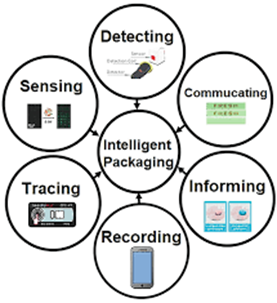
Intelligent packaging is also gaining traction, offering real-time monitoring of food quality through time-temperature indicators (TTIs), freshness sensors, and pH indicators. Intelligent
packaging solutions are increasingly being used in India’s growing retail sector, including supermarkets and e-commerce platforms. As more Indians turn to online food shopping, ensuring food safety and freshness is critical, and intelligent packaging provides the tools for real-time monitoring. This type of packaging equipped with sensors and indicators, provides real-time monitoring of food quality, ensuring that products are stored and transported under optimal conditions.
In particular, Time-temperature indicators (TTIs) are especially useful for dairy, seafood, and meat

industries in India. They track if the food has been kept at the right temperature during transport, even when there are power outages or delays. Freshness sensors detect gases released by spoiling fruits and vegetables, which can help reduce waste in India’s agriculture sector. pH indicators in packaging are also being used more in meat and seafood products, giving instant updates on food safety for both shoppers and store owners.
Edible and biodegradable packaging is becoming relevant as India is increasingly focusing on

sustainability, driven by initiatives like the Swachh Bharat Mission and progressive bans on single-use plastics. They provide eco-friendly packaging solutions, which can significantly reduce plastic pollution in the country’s vast food industry.

starch, can replace plastic wraps for items such as sweets, fruits, and vegetables, which are popular in India.
On the other hand, biodegradable packaging made from plant-based materials, including agricultural waste, offers a sustainable option for Indian manufacturers aiming to lessen their environmental impact. By utilizing materials like bagasse, a byproduct of sugarcane, India can leverage locally sourced biodegradable options to help minimize

landfill waste and promote a healthier environment. These eco-friendly packaging options not only align with India's sustainability goals but also offer practical solutions for reducing plastic pollution and promoting a cleaner, greener future. The usage of agricultural waste also enables greater earning opportunity to farmers, farm waste supply chain and manufacturers of these packaging materials.
Reusable and
refillable packaging models reflect another
dimension of India’s growing concern about plastic waste. Some Brands in India
are embracing these solutions to combat the environmental impact of single-use
plastics and promote sustainability.

A good example is Loop (LOOP Mission is a circular economy company fighting food waste by repurposing the outcasts of the food industry), a company that offers products in strong containers made of stainless steel or glass. These containers can be returned to the store for refilling, which helps cut down on single-use plastics. This idea is becoming popular, especially in big cities, where more people are aware of how harmful plastic waste can be.
As a result,
consumers in urban areas are looking for packaging that is better for the
environment. This change is an important step towards a more sustainable
future, where materials are reused instead of throwing away.
The Future of
Smart Packaging in India
Smart packaging technologies
holds immense potential to transform India’s food supply chain by addressing
inefficiencies, extending product shelf life, and improving food safety. With
the government’s (National Mission on Food Processing) increasing
investment in food processing and cold chain infrastructure, smart packaging
technologies will play an essential role in reducing food waste and creating
more sustainable supply chains. As India’s food processing industry grows —
projected to reach USD 535 billion by 2025 — the need for smarter, more
sustainable packaging solutions will continue to rise. As sustainability
becomes a key concern, the push for biodegradable, edible, and reusable
packaging solutions will reshape India’s packaging industry, reducing its
reliance on harmful plastics.
The food
industry in India is not homogenous, and has national, regional and very small
players. The vast food diversity across India means that all players, in
addition to food made at home play their role in building India’s nutrition security
and maximize farmers’ incomes. So appropriate solutions using such smart
technologies have to be developed also for smaller producers including food
micro-entrepreneurs. Some of the technologies may also have impact in storage
at home for fresh and cooked food to retain nutrition and freshness and reduce
waste. This will also provide opportunities for Indian startups to develop
technologies for various players in food industry.
Consumers are
becoming increasingly conscious of food safety and sustainability, driving
demand for smart packaging solutions. Technological advancements in materials
science, sensor technology, and data analytics are enabling the development of
innovative smart packaging solutions.
In conclusion,
smart packaging technologies offer a pathway to a more sustainable and
efficient future for India’s food industry. By reducing spoilage, extending
shelf life, and offering eco-friendly solutions, smart packaging is not just a
trend but an essential innovation for addressing India’s food waste and
environmental challenges. As India continues to modernize its food sector, the
adoption of these technologies will be vital for ensuring food security,
minimizing waste, and building a more sustainable future for the country.
References:
National Mission on Food
Processing: https://www.mofpi.gov.in/
Swachh Bharat Mission: https://sbmurban.org/
National Food Security Act: https://nfsa.gov.in/portal/nfsa-act
Indian Council of
Agricultural Research:
Food Safety and Standards
Authority of India: https://fssai.gov.in/

 The distribution of undernourishment is heterogeneous across the country. Interestingly, while the prevalence of stunting and underweight in children has decreased over the past 5 years, the total number of anaemic individuals has increased. These trends could be attributed to macro- and micronutrient intake with fewer than 1/3rd of all women consuming adequate amounts of both. Consumption of macronutrients in the form of carbohydrates and proteins is consistently below the recommended dietary allowance (RDA) levels prescribed by the Indian Council for Medical Research (ICMR). The household consumption of micronutrients in the form of vitamins and minerals such as iron ranges from inadequate to severely deficient. Iron deficiency is associated with the majority of anaemia prevalent in India. A mind-boggling 67% of children in 2019-21 had varying degrees of anaemia, an increase of 8% from 2015-16.
 Over the past two decades, codification of food safety norms in the country and alignment with global standards such as in labelling of packaged foods have gradually improved consumer confidence. One example of enlightened food manufacturing is the fortification of packaged grains, cereals and oils with micronutrients such as vitamins and minerals. Further, the Indian government has announced that all rice distributed under public food security schemes will be fortified with iron and folic acid by 2024. In spite of these positive developments, two key aspects of food entrepreneurship and manufacturing need to be rejuvenated.
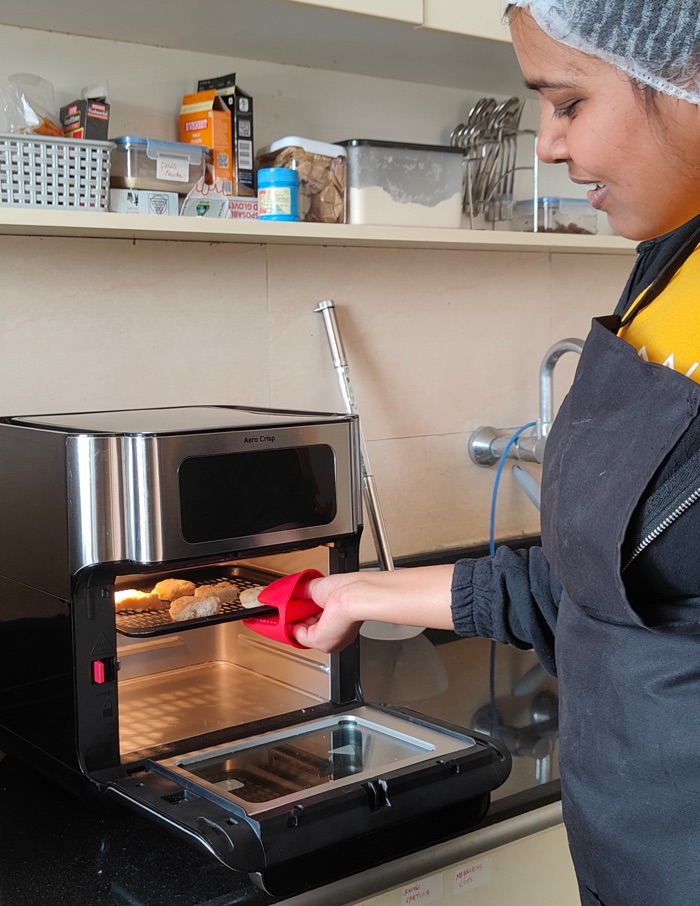 Large numbers of women in such socio-cultural contexts manage the food habits of their entire family. Training women microentrepreneurs in the art of assimilating scientific inputs is likely to amplify good health practices in their immediate families. Second, entrepreneurial efforts emerging from economically affluent sections need to be inclusive of customers from across all economic backgrounds. It is not uncommon to see a child of migrant labourers living significantly below poverty line eating a bag of purchased branded potato chips. If this kid can be happier, eating a similarly purchased bag of ‘health food’ with suitable amounts of protein and iron, it would signal a successful convergence of food safety and nutrition. Both of the above aspects require deep and pro-active engagement of food scientists and professionals. These could be further facilitated by academic and research institutions that identify challenges faced by the entrepreneurs as possibilities for collaborative problem-solving.