Showing posts with label water recycle. Show all posts

Friday, 3 November 2023

Waste-water management, and overview of challenges and opportunities


Author – WIN Foundation


Waste-water management, and overview of challenges and opportunities:


Every human should have the idea of taking care of the environment, of nature, of water. So using too much or wasting water should have some kind of feeling or sense of concern. Some sort of responsibility and with that, a sense of discipline.” -Dalai Lama

Wastewater Management is an integral part of managing the water cycle effectively.

 Traditionally, the water cycle took care of the supply of fresh water to the living world on land, including its purification by natural means. However, increase in population and industries have led to huge increase in water demand and also created massive water pollution. Nature’s water cycle is grossly insufficient to meet these needs. This puts pressure on our water sources, while at the same time degrades them. Waste water management is a critical need, alongwith water conservation, to meet these challenges.


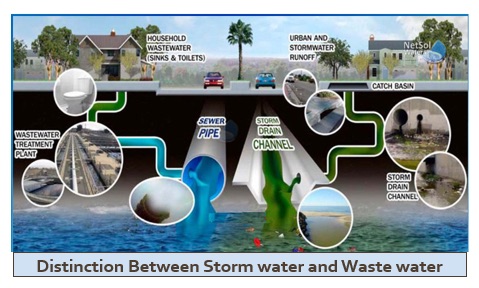
Grossly inadequate wastewater management has led to stagnant water in our localities, leading to their contamination. In turn, such water has degraded a large number of our water bodies.

 A related problem is stormwater management, which manages the vast amount of water brought by rainfall during the monsoon months across the country. It is becoming increasingly clear that the current system of trying to collect and carry the stormwater over large distances is dysfunctional. Isn’t it ironical that, in most places, due to stagnation on ground for many hours or days, as well frequent mixing with sewage water, we manage to convert the pure rainwater given by nature into contaminated and polluted water and then we add it to our water bodies? We are all aware of the diseases this brings on every monsoon. The solution is actually available in the Rainwater Harvesting technology. RWH systems have been traditionally used over centuries, and modern adaptations can easily enable us to use such systems to collect a major part of rainwater from roof as well as surface and recharge groundwater. In addition to the well known increase in water availability, RWH is a better way of managing “stormwater”, before it becomes dirty. RWH systems can vastly reduce the water overflow on ground, and thus reduce the substantial stormwater drain capital and operational expenses of our local government bodies.


Some major negative effects of inadequate wastewater and stormwater management are:


  1. Stagnant water in our localities, which further flows into our water bodies, has led to waterborne epidemics due to the resultant water contamination and pollution, often impacting the poor more due to their physical proximity to such stagnant water. For children it can mean poor mental and physical growth
  2. Degraded water bodies reduce the water available for humans and other living systems. In most such water bodies, aquatic life is severely impacted.
  3. Women, particularly in rural areas, may need to travel farther to fetch potable water, or pay a high price for purified water.
  4. Government has to deploy much higher resources to treat water and transport the same to households over longer distances.


The government’s excellent scheme to bring water on tap for all households in progressive manner will remove some of the last mile problems. However, in turn, it will make the need for wastewater management at local levels, including in rural areas, even more acute.

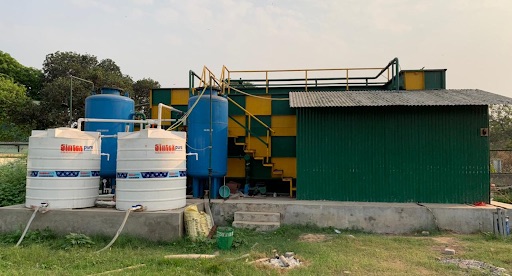
Several technologies have been developed by institutions and industry, including in India. WIN Foundation, for example has supported the School of Environmental Science and Engineering, IIT Kharagpur, to develop a multi-stage modular plant for wastewater treatment to bring it to near potable level at very reasonable cost. This plant is already functioning on IIT Kharagpur campus. Methods of natural root zone treatment of wastewater have also been implemented showing potential of natural methods to treat wastewater.


In an article in this issue, Dr. Seema Sukhani, founder of Tellus Habitat, a startup with packaged modular products, talks about wastewater treatment at decentralised levels of varying sizes, features and cost.


Similarly, there are several techniques for RWH. in the following picture-poster, Mr. Lokendra Balasaria, describes one such technique, called “Khambhati Kuva” in Gujarat, which can carry down vast amounts of rainwater to the aquifers, vastly reducing the on surface stagnation, and stormwater volume to be carried horizontally.


An important challenge in wastewater management systems is competency to install, operate and maintain such systems. This requires large-scale skilling in each of these areas, in urban and rural areas, to manage the vast variety of systems which may be deployed. This can, in turn, provide better quality livelihood opportunities to lakhs of our youth, in urban as well as rural areas.


Conclusion:


An integrated approach to wastewater and stormwater management will provide multiple benefits of better water availability and quality, reduced contamination, cleaner water bodies, reduction in water borne diseases, with lower capex and opex.


It can also vastly increase good quality water available for humans and all living systems. It further reduces the energy and cost of treating polluted or contaminated water.


As the Slovakian proverb says: “Pure Water is the World’s First and Foremost Medicine.”

Wednesday, 2 August 2023

Rainwater Harvesting and Groundwater Management in Urban Areas

 Authors: Nikita Harikishan, researcher and project lead at Biome Environmental Trust and Shubha Ramachandran team lead of Water Team at Biome Environmental Trust


Rainwater harvesting – Science in action

Rainwater harvesting has been in existence for thousands of years. It is a very intuitive and actionable idea. Still, there is complex science behind rainwater harvesting and groundwater management, including rainfall patterns, climate variability, hydrogeology and the impact of human activities on hydrogeology. However, at the same time, we can look at this knowledge with a lens that can be applied at a small and decentralized scale for practical application. It is with this thought that this article has been written.

Introduction

The water supply situation today is very different from 100, 50, or even 25 years ago. India faces challenges of water stress, constituting 16% of the world population but only 4% of the freshwater resources.

With rapid urbanization, cities/towns rely heavily on the cost-intensive long-distance water supplies to meet the widening water demand-supply gap including overexploitation of in-situ groundwater resources while dealing with declining infrastructures. Furthermore, urbanization disrupts the natural hydrological cycle as there is a reduction in infiltration and groundwater recharge due to the existence of large impervious areas, removal of shallow aquifer to build multiple basements, thus urban areas face the twin problems of floods during monsoon and shortage of freshwater during non-monsoon months.

India has had a rich tradition of community-based water harvesting. Each region has a different structure for harvesting rain, from Eris in the southern plains of Andhra Pradesh, Karnataka, and Tamilnadu to Jhalaras, kunds and step wells in Thar regions of Gujarat and Rajasthan, Kuls in western Himalaya, Ahar Pynes and Baolis of the Indo-Gangetic Plains, Zabo, and Virdas in Northeast regions.  This long history of water structures has long been forgotten and has been dumped with garbage or closed off. However, there is a need to reimagine rainwater harvesting, groundwater, open wells, and their relevance in contemporary times.

The solution, therefore, lies in decentralized rainwater harvesting, which is increasingly being turned to as it offers an alternative, affordable, reliable, and sustainable water source in the face of increasing water shortages. Rainwater harvesting can be done using two methods: storing water for direct use or recharging groundwater.

Know your rainfall

Rainfall statistics for the areas is of paramount importance to understanding rainwater harvesting norms. Information on average annual rainfall quantity, distribution across months and rainfall intensity is crucial. Rainfall quantity will decide the potential for rainwater harvesting from any surface i.e., a product of total rainfall and the surface area of collection

Weather Monitoring Stations & Telemetric Rain Gauges

With the concept of “Measure to Manage”, Karnataka State Natural Disaster Monitoring Centre (KSNDMC) has installed 930 weather monitoring stations at Hobli level which captures the 4 major parameters – Temperature, Relative Humidity, Wind Direction, and Wind Speed, and 6500 telemetric rain gauges for monitoring rainfall data. The weather forecasts are made by ISRO and with the Ground level data provided by KSNDMC to ISRO every day, it is possible to get more accurate and reliable predictions.

The near-real-time data collection, report generation, and dissemination have been helping the State Government in planning and executing disaster management and mitigation plans at the micro-level.

Know your geology

Geology plays an important role in the occurrence of water within a watershed. Water availability is governed by the rock types occurring both at the surface and within the subsurface and the extent of weathering and fracturing of the rocks. India has highly diversified hydrogeologic characteristics. There are six extensively documented groundwater typologies across India i.e. mountain systems, alluvial (unconsolidated) systems, sedimentary (soft) systems, sedimentary (hard) systems, volcanic systems, and crystalline (basement) systems (CGWB ). Based on local geology, one can understand the best recharge strategy and the most appropriate recharge tool/structure for the context.

Storing rooftop rainwater for domestic use 
When rainwater is a supplemental or primary source of water for domestic use, then designing for storage is essential. Rainwater harvesting systems will have the following 5 basic components: Catchment area including building roofs and paved areas, Gutters, Downtake pipes, Filters, First flush devices, Storage tanks/ponds and Delivery systems till the point of end-use.

Calculating storage size depends on rainfall pattern, rainfall intensity, catchment area, the total volume of daily usage, budget, and space availability. Ideally, in areas where there is severe water scarcity, there may be a need to harvest and store all the rainwater, but this may be inefficient and therefore can be decided based on the consumption needs. For instance, if 1000mm of rain is falling on a 100sqm catchment, for which you would need 10 lakh litre storage, but this is inefficient. Therefore, an optimal size of a storage tank can be arrived at based on the calculation of daily water consumption, which can be correlated with the total harvestable rainfall. If rainwater is immediately used after collection, more water can be harvested annually for a relatively smaller storage size. 

The stored water should have a point-of-use treatment before end-use. For example, appropriate measures should be taken to ensure it meets the drinking water quality standards if it is to be used for drinking purposes. 

Integrating rainwater into groundwater management 
Groundwater is far more significant in the water-supply of cities and towns but is widely not appreciated, as it is an ‘invisible resource’ connecting various urban infrastructures. Unaccounted groundwater in urban areas exceeds 50% in 28 Indian cities (CGWB, 2011). While some legislation exists that directly or indirectly seeks to help manage groundwater, the enforcement has been weak and a very big barrier. Given the nature of groundwater development and use, for it to reach a scale that can have an impact for the city as a whole, all users and stakeholders need to become part of the solution and make groundwater a community resource. 

Outlined below are a series of things to know about the same:

Groundwater recharge

The percolation of excess rainwater through an infiltration system to the subsurface is called ‘Artificial Groundwater Recharge’. The runoff water collected from rooftops and surface water can artificially recharge and augment the depleting groundwater resources, especially in the urban areas, where the natural recharge has diminished considerably. As a thumb rule, it is important to understand the water resources within the city and at what depths these are found, which can then be taken as a baseline to understand the best recharge strategies.

There are different types of recharge structures – a) Recharge pits; b) Recharge trenches; c) Recharge through dry or operational dug wells; d) Recharge through abandoned/existing tube wells; and e) Recharge wells, etc.


Recharge rate tests
A recharge rate test is conducted to assess the recharge rate of an aquifer i.e. to see how quickly water percolates into the ground. In this test, a known quantity of water is pumped into the well/s being tested, and the time taken for it to percolate into the ground is recorded. Measurements are taken of the depth of the water every minute for the first 10 minutes, then after 15 minutes, 30 minutes, one hour, two hours, and so on. From these measurements, the recharge rate of the well/s can be calculated, which helps us understand the recharge rate of the shallow aquifer in that particular area. The more wells that are tested in an area, the better our understanding of that aquifer.

Million recharge wells for Bengaluru
Biome is campaigning “A million recharge wells”: Reviving our responsibility for groundwater. The initiative aims at striking a balance between groundwater extracted and recharged, by digging 10 lakh (1 million) recharge wells across Bengaluru City. The explicit objective of the intervention is to increase the groundwater table in the city while providing livelihoods to the local community of traditional well-diggers (called Mannu Vaddars) in Karnataka. The implicit objective is to build a water culture in the city, where people value water availability, water structures, and also take responsibility for managing groundwater collectively.
A recharge well is basically a hole in the ground into which the rainwater runoff can be directed, such that it percolates into the ground, augmenting the water table. The recharge well can be a powerful tool and symbol for reviving our relationship with groundwater as it reconnects us to our open well heritage; it reminds us that unless we fill our aquifers up, we will not be able to extract; and that we cannot extract limitlessly. It also teaches us that groundwater is not anyone’s private property, but a common pool resource.


Mapping the aquifers underneath our city through participatory approaches

A city or town should be aligned to all sources of knowledge – often this information does not only come from formal institutions such as hydrogeologists, civil engineering departments, water managing authorities, etc but also from the residents, traditional well-diggers, borewell diggers, etc, who also have an understanding of the local aquifer and geology. Therefore, evolving a participatory approach towards groundwater mapping, with participation from institutions, schools, etc who can help with mapping is useful.

As a result of this, the recharge of aquifers is managed bottom-up, with each citizen also taking responsibility for managing groundwater, either by documenting it or by digging a recharge well. People also begin to understand that they might not directly benefit from recharge wells, but if everyone recharges, the entire community benefits. 

Outreach and communication 
To promote RWH in the city, creating awareness regarding the importance of rainwater harvesting, both for immediate uses and also for sustaining the water table in the long run, is essential. There is a need to shift the initiative from institutional endeavors and make it into a mass movement. There has to be an investment in communicating the city’s problems, the existence of laws and legislations and how the law attempts to address this problem, and therefore the role of citizens to implement the law and be part of the solution.

As awareness of the issue increases, more people begin to understand the ecological flows that surround us, and what they can do to protect these systems. It also inculcates a feeling of giving back and emphasizes the importance of doing so.

[1] http://www.ide-india.org/content/water-india-facts
12] http://www.rainwaterharvesting.org/rural/Traditional3.htm#apat
[3] http://cgwb.gov.in/documents/papers/incidpapers/Paper%201-B.M.Jha.pdf

www.urbanwaters.in
Community platforms that demonstrate RWH are useful for understanding the overall scenario. www.Urbanwaters.in web space seeks to inform, guide and provide any and all resources to all of us to make us water literate, solve our individual or community water problems and act responsibly by taking care of our common urban water resources. It seeks to help make us a part of the solution rather than being a part of the problem. 

Sunday, 20 November 2022

aatmaNEERbharta – A Journey towards Water Sustainability


Authors: Mr Setu Shah, Founder, Sujalaam, www.sujalaam.com


INTRODUCTION TO THE CONCEPT OF SUSTAINABILITY

What is considered “sustainable” in one location may be a challenge to sustainability elsewhere. Sustainability is a concept that describes the dynamic condition of complex systems, particularly the biosphere of Earth and the human socioeconomic systems within it. It reflects both our fundamental values and our knowledge of nature and life on Earth.

Sustainable water supply is a component of integrated water resource management, the practice of bringing together multiple viewpoints to determine how water should best be managed. Sustainable water systems should provide adequate water quantity and appropriate water quality for a given need, without compromising the future ability to provide this capacity and quality.

It is clear that because water is essential to all life, water resources management, using the principles of sustainable development, will be essential for achieving sustainability

RAIN RICH INDIA

India is extremely fortunate to receive 120 cm rainfall annually against the world average of 80 cm which is the maximum rain per sq. mt. in the world. It’s even said that our country will get submerged in 3 feet of water. Yet ironically, we are the 13th Most water-stressed country in the world. India’s water crisis is often attributed to a lack of holistic planning, increased privatization, industrial and human waste, and corruption. In addition, water scarcity in India is expected to worsen as NITI Aayog predicts that by 2030 – 40% of the population will have no access to drinking water and 6% of our GDP will be lost.

HISTORY OF WATER IN INDIA

Bharat was known as Golden Sparrow

Ancient India (from 3000 BCE to around 10th century AD) is the period when India was known as the “Sone Ki Chidiya” (a Golden Sparrow). This era witnessed cultural confluence and economic boom at many junctures, yet the fabric of traditions never got destroyed. Even today people say ‘Jaha Daal Daal par sone ki chidiya karti hai basera’ (where the golden sparrow dwells on every branch of a tree).

Traditionally Indians worshipped both water and rain as “Jala” and “Varuna”. Even rivers were worshipped. Till 3000 B.C., Rainwater Harvesting & Recharge happened without human effort as the rain got collected in rivers and natural depressions. Civilizations flourished on riverbanks all over the world. Indus Valley civilization in India. From 3000 B.C. to 1800 A.D., Rainwater Harvesting & Recharge happened with human effort. Indians harvested rainwater using different methods. These methods depended on local conditions. Different parts of India used different structures for harvesting rainwater. Some examples are:

  1. North: Zing in Leh Ladakh
  2. East: Bamboo Irrigation and Zabo in NorthEast
  3. South: Jack Wells in Andaman & Nicobar, Eri in Tamil Nadu
  4. Central: Pat in Madhya Pradesh, Ramtek in Vidharbha
  5. West: Tankas and Step Wells in Gujarat, Bawri & Jodhads in Rajasthan.


Figure 1: Tankas
Source: http://www.inaplanetofourown.net/assets/papers/Spruha%20P.%20Chokshi%20-%20Cumulus%20Mumbai%202015.pdf

Drawing upon centuries of experience, Indians continued to build structures to catch, hold and store monsoon rainwater for the dry seasons to come. Skilled people managed these structures over generations. These sustainable traditional techniques, though less popular today, are still in sustainable and efficient.

Talab
Talabs are either natural or man-made reservoirs that store water for household consumption and drinking purposes. They were also built to regulate the flow of water and prevent flooding. Talabs were at the core to recharge rainwater via aquifers and used as surface water. Several ponds were built across Gujarat during the 15th Century for both irrigation and drinking water.

Taanka
Taanka is a traditional rainwater harvesting technique indigenous to the Thar desert region of Rajasthan. A Taanka is a cylindrical paved underground pit into which rainwater from rooftops, courtyards, or artificially prepared catchments flows. Once filled, the water stored in a taanka can stay in the same condition for years together. An important element of water security in arid regions, taankas can save families from the everyday drudgery of fetching water from distant sources. Tanka is mainly used for storing roof rainwater to be then used for household purposes.

This history reflects the ingenuity and wisdom of our forefathers who made harvesting of water and its management an integral part of the native culture and community life. These practices were perceived by the common man as his sacred duty and by the communities as part of good local self-governance and social responsibility. This Water-Wisdom at all levels of society ensured adequate availability of water for all, which in turn, formed the basis for all-around development and prosperity. Water, Forest, and Community interdependence worked hand in hand and allowed multiple civilisations to flourish in India.

If one were to draw the essence of the past, one would say that it was the openness to investments, openness to ideas, and a scientific temper which had propelled India to that position in the global economy at that time. India was once upon a time, big economic power in the global economy.

TODAY DEPENDENT; INDEPENDENT INDIA

We all know water is essential, but too many of us think it’s unlimited. Fresh water is a finite resource that is rapidly becoming scarce. In India, a warming climate is drying up lakes and rivers, while rapid urbanisation and water pollution are putting enormous pressure on the quantity and quality of surface and groundwater. The country’s fragile agricultural system still is now depending primarily on groundwater creating havoc on the national economy.

Figure 2: The water crisis
Source: https://www.ecowatch.com/8-major-cities-running-out-of-water-1882061458.html

Our path towards this water crisis started in 1960 when we started to draw water through tube wells instead of surface water sources like ponds and rivers. This scalding journey has seen water bodies vanish, an unplanned centralised water supply come up, subsidised rates and the devaluation of water, immense wastage of water, the pain of water becoming a commodity and various levels of mismanagement of water especially as the generations have come to take water supply for granted.

Nearly 40% of water demand in India is met by groundwater. As a result, groundwater tables are falling at an alarming rate of 2-3 meters per year. Water scarcity has many negative impacts on the environment, including lakes, rivers, wetlands, and other freshwater resources.

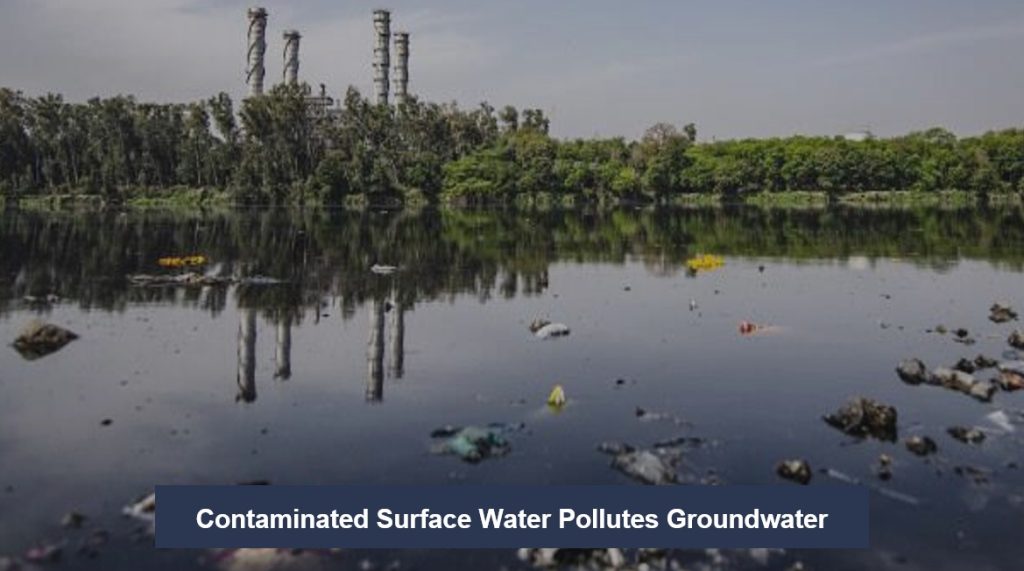
India is the second largest urban system in the world with almost 11% of the total global urban population living in Indian cities. The country has reached a turning point in the journey of its economic transformation wherein half of the country would be ‘urban’ in a few decades. (MoHFW, 2019). Indian cities produce nearly 40,000 million litres of sewage every day and barely 20% of it is treated. 80% of sewage in India is untreated and flows directly into the nation’s ponds, lakes, and rivers, polluting the main sources of drinking water and further seeping into groundwater, thereby creating a ticking health bomb in India. Weak or non-existent enforcement of environmental laws, rapid urban development, and a Lack of awareness about the dangers of sewage are all blamed for water pollution. Untreated sewage is killing Indian rivers. A 2011 survey by the Central Pollution Control Board revealed only 160 out of nearly 8,000 towns had both sewerage systems and a sewage treatment plant.

Regardless of improvements to drinking water, many other water sources are contaminated with both bio and chemical pollutants, and over 21% of the country’s diseases are water related. The concern is that India may lack overall long-term availability of replenishable water resources. While India’s aquifers are currently associated with replenishing sources, the country is also a major grain producer with a great need for water to support the commodity. As with all countries with large agricultural output, excess water consumption for food production depletes the overall water table. Many rural communities in India that are situated on the outskirts of urban sprawl also have little choice but to drill wells to access groundwater sources.

THE WAY FORWARD TOWARDS AATMANEERBHARTA

Sustainable development was explicitly popularized and contextualized by the Brundtland Commission in the document “Our Common Future” where it was defined as “development that meets the needs of the present without compromising the ability of future generations to meet their own needs.” (UN, 1987). Sustainable water means a nation that can be water self-sufficient: ensuring there is enough water to meet multiple needs, from agriculture to municipal and industrial. It also means water supply will remain consistent, despite climate change impacts, such as a lack of rainfall and drought, or too much rain and being flood resilient. Sustainable water also means that the economics stack up in matching supply and demand and the water delivery process is as efficient as possible. Water sustainability can also mean energy neutrality by coupling traditional water treatment technologies with renewable energies.

जीवेषु à¤•रुणा à¤šापि
विधीयताम्। à¤¤ेषु à¤®ैत्री 

Compassionate and Friendly to all Living Beings


Figure 3: Achieving Water Sustainability
Source:https://www.wateronline.com/doc/sustainability-report-creating-a-water-secure-world-0001


The very concept of ‘aatmaNEERbharta’ is based on the philosophy of being self-reliant in water for our daily needs. Reviving existing water bodies, smart farming, responsible industrialization, re-using wastewater, harvesting, and recharging rainwater are the most suited saving grace of survival. Water is a finite and irreplaceable resource that is fundamental to human well-being, but it is only renewable if well-managed.

aatmaNEERbharta THROUGH CHANGE IN OUR ATTITUDE

The fundamental issue facing everyone is how to reconcile our desires for all of us on this globe to have a good life with the constraints imposed by the availability of a renewable, but limited, water resource. It can be done. Let our optimism be a torch to light the way forward!!!

Figure 4: Attitude Change Process
Source: DK Series – Managing Change

Water distinguishes our planet compared to all the others we know about. Our notion that water is an infinite source available at our beck and call is almost illusionary for now we are realising just how very finite this elixir of life is.

There is an immense need to heighten the awareness to bring about a change in our attitude towards water management, the significance of comprehensive water management, its socio-economic benefits and its ability to mobilise finances for the development of our nation.

A FEW ECO AND POCKET-FRIENDLY SOLUTIONS

A few solutions which can be adopted by communities for water conservation include:

  • Roof Rainwater Harvesting Systems, for residential, office, government, school, and college buildings
  • Surface Runoff Water recharge for farms, gardens, large campuses
  • Excess water recharge for water bodies including lakes, ponds, rivers
  • Wastewater management using efficient techniques, e.g. Root zone treatment

SUJALAAM

Sujalaam is an organizational setup which aims at nurturing communities and the nation towards achieving sustainability in water. With increasing awareness of saving water, we realized the need for having water harvesting solutions on our premises which can also educate our future generation on the need and options to conserve water. Our approach to aatmaNEERbharta is a geographic approach that helps in systematic understanding and optimizing the quest for Water Sustenance.


CONCLUSION

There is no escape from the fact that the need and demand for finite and vulnerable water will continue to expand and so will competition for it.

More uncertainty in water availability, higher frequency of extreme weather events, and more rapid return flow of water to the atmosphere are expected in the future.

We Indians are fortunate to receive maximum rain per sq. mt. in World. Let us change our attitude towards water management by adopting Decentralised Nature-Based Water Management Systems and make India the Golden Sparrow again.

To become aatmaNEERbhar in your water needs reach out to us on namaste@sujalaam.com

If you are keen to implement water conservation techniques in your area or village and want to know more about our work, feel free to reach out to us at info@winfoundations.org
Tuesday, 9 August 2022

Water recycling: a case study and roadmap ahead

 Authors: Prof. Makarand M. Ghangrekar, Prof. Brajesh K. Dubey, Mr. Indrajit Chakraborty, Mr. Shreeniwas M. Sathe

Department of Civil Engineering, P. K. Sinha Centre for Bioenergy and Renewable. School of Environmental Science and Engineering. Indian Institute of Technology Kharagpur


Need for water recycling: In the current millennium, rising population and depleting natural resources have compelled governments and other non-government organisations to rethink their national, business and international strategies. This reshaping of the present technologies, business models and government policies have been guided by the sustainable development goals (SDGs) as set by the United Nations. Among the seventeen SDGs framed by United nation as a roadmap, the SDG 6 speaks about clean water and sanitation for all. In addition, the SDGs 3, 9, 11 and 12 are also influenced by the water cycle. For instance, the SDG 3 targets health and well being, which is directly connected to providing clean and potable water to all. Similarly, SDG 9, which talks about industrial innovation and infrastructure development, connects the water recycling industry both in terms of technological innovation for affordable treatment and infrastructural development to support such recycling.

Thus, defining the SDGs and their impact on the water usage and vice-versa, it can be understood that the wastewater treatment and recycling can contribute to the SDGs. Put in simple words, the treated water from the sewage and effluent treatment plants can be treated to such an extent that would enable its recycling for different non potable industrial, institutional, and domestic usage. Such usage would reduce the stress on the fresh water reserves and also the cost of water treatment infrastructure. This would also create more hygienic water practices as presently; large portions of developing nations discharge wastewater in natural water bodies due to lack of proper sewage treatment facilities. Discharge of such untreated water impacts the life on aqua as well as terra. Hence, treatment and recycle would again contribute to the SDG 14 and 15, which talks about reducing pollution load in marine and terrestrial environments.

Hence, building on the SDGs, government agencies as well as private players are adopting to this paradigm change and investing research, resources and framing recycling models for future setups. The Indian scenario is no different and the Government of India has also devised several strategies and projects for conservation of water resources. Pollution control boards, municipal bodies and different local regulatory and civic authorities across the country are focusing on wastewater treatment and reclamation projects as compared to the previous treatment and discharge policies. At this juncture, although such projects can achieve treatment of wastewater, however several factors intimidate the end user towards the reuse of this treated water. The risk of bacteriological and pathogenic contamination, the quality of treated water not meeting the discharge standards and the fear of infringement of personal hygiene reduces the acceptability of such practices. For ensuring reliability and transparency, the designed systems must be well tested prior to implementation in public domain. Additionally, to lure the corporate players the treatment cost offered by such systems should be reasonably low to out-compete other water sources in the water scarce regions of the country.

Glimpses of technologies involved: Different technologies are involved in wastewater treatment for facilitating reuse. The treatment technologies can be broadly classified into primary physical operations, secondary biological and biochemical processes and tertiary adsorption, advanced oxidation, coagulation ion exchange and membrane filtration processes. The list is indicative and with continuous research and development newer technologies are being introduced. In principle, the primary physical operations, such as screens, grit chamber and sedimentation tank, are installed to remove floating objects, gritty materials, and settleable particles, respectively. A certain fraction of organic matter is also removed during sedimentation.

The secondary processes are majorly biological in nature, the mode of operation being either aerobic or anaerobic. In case of aerobic processes, the activated sludge process and its variations, aerated lagoons, oxidation ponds are popular. Within the domain of anaerobic digestion, expanded bed granular reactor, upflow anaerobic sludge blanket reactor, anaerobic baffled reactor, anaerobic sequencing batch reactor etc. can be named. The tertiary treatment processes are often in the form of multigrade filters, membrane filtration for high effluent quality, dialysis for removal of excess dissolved solids, coagulation and flocculation, advanced oxidation processes (AOPs), such as ozonation, chlorination and UV radiation for disinfection. For treating wastewater to reuse quality, the AOPs are popular choice for removal of refractory compounds, that are not removed in secondary biological process.

IIT Kharagpur team and activities: The IIT Kharagpur team consists of Professor Makarand M. Ghangrekar as the Principal Investigator and Prof. Brajesh Kumar Dubey as the co-principal investigator. At IIT Kharagpur, the main theme of research for the WIN Foundation project was the implementation of an effective treatment plant with multistage tertiary treatment to produce treated water of non-potable contact reuse quality without the usage of membrane processes. Hence, the treatment plant designed and commissioned at the sewerage pumping station three inside the IIT Kharagpur campus comprises of two stage biological treatment followed by an optional chemical dosing assisted state-of-the art settler-clarifier unit, dual media filter and three stage disinfection units followed by an pressurized activated carbon filter. The final treated effluent can be either circulated to meeting horiticulture need and an in-house aquaculture pond or can be diverted towards the in-campus agricultural fields  and toilet flushing water, which is proposed as future plan. The block diagram given below describes the process flow diagram. The piping arrangement is designed to enable bypass of any of the operational stage for the tertiary processes. This bypassing arrangement is advantageous to test combination of the installed disinfection/ advanced oxidation processes (AOPs). The three stage AOP consists of ozonation, chlorination and UV radiation.

WIN Foundation modular treatment plant 300 m3 d-1 (a) Layout and (b) Real setup

Operation and monitoring of treatment plant

The 300 KLD treatment plant is under operation since January 2021 and has been continuously monitored for the removal of the organic matter, nutrients, surfactants, pathogens solids and dissolved ions. The results of the operated ETP indicate that the installation is capable of providing adequate treatment to domestic sewage and the water generated can be used for non-potable contact usage. The plant is capable of rendering satisfactory performance for wastewater reuse. The overall performance of the STP is as presented below:

S. No.ParameterUnitsRaw sewageOutlet
1Total CODmg/L22323
2Soluble CODmg/L16516
3Soluble BODmg/L890-3
4TKNmg/L243
5Total suspended solidsmg/L1026
6Volatile suspended solidsmg/L603.4
7Phosphatemg/L125
8PathogensMPN# /100 mL1.2 x 105< 3
9Anionic surfactant, SDSmg/L3.8BDL
10Total organic carbonmg/L359

# Most probable number of viable bacteria

The results of the operated STP indicate that the installation is capable of providing adequate treatment to domestic sewage and the water generated can be used for non-potable limited contact usage. The plant is capable of rendering satisfactory performance for wastewater reuse. The capitalised operating expenditure for this plant was estimated as Rs 15.87 per kL of wastewater treated with all three AOP combination. Further identification and monitoring of different trace refractory compounds has to be undertaken in next phase of research.

Broader vision and roadmap: The case studies at IIT Kharagpur provides a roadmap that can be adopted in other parts of the country for providing not only a safe sanitation practice, but also an opportunity for curbing the demand on fresh water reserves. In cities like Bangalore, the current water tariff from tanker supplies soar as high as Rs. 50 per kL of water. Modifying the larger urban apartment complexes with such modular plants capable of producing pathogen free and clean treated water can reduce the cost of water consumption. With the difference in electricity tariffs and accounting for the difference in manpower cost, the cost of such treatment can be kept as low as Rs. 17-18 per kL of water with the present model. Thus replacing the non-potable fraction of water supply with this treated water would lead to considerable savings.

In addition to the work done by IIT Kharagpur, other IITs, state research laboratories and CSIR labs are actively contributing to research on water reuse. A more concerted effort in this direction can be achieved by connecting the stakeholders and experts. The collaborative efforts and knowledge dissemination is a pre-requisite prior to India mobilizing towards such reuse practices. However, the advantageous position of India is that majority of smaller cities and a fraction of the megacities lack proper sewerage network and STPs. Hence designing such STPs and corresponding reuse utlities from scratch would be an easier job than retrofitting older establishments. Moreover, building on the outcome of such case studies of the modular STPs, the city planning and municipal regulations can be reframed to include mandatory and/or incentivised land and building taxes for such buildings that could practice such inhouse treatment of sewage and reuse of treated water. At this stage of planning city planners and urban civic bodies have to be brought onboard. Among other roadmaps towards achieving such paradigm shift of treated water reuse includes convincing the end user towards reuse of such water. This can be achieved by seminars and awareness programs for which, government, corporations and non-government organisations have to be brought in picture.

The advantage of such decentralised modular STPs is that it can be further adopted for peri-urban area and rural communities. However, in such cases, training of local populace to operate the plant and recover fertilizer and manure from the sludge produced and panchayat support towards financial management have to be micro-planned for each specific community. Easier said than done, such efforts of water recycling would require nationwide skilling of environmental engineers and plant operators, educating the general populace about the importance and advantage of such reuse and more importantly convincing the bureaucrats for adopting such policies at district and village panchayat levels.

About Authors:

  1. Prof. Makarand M. Ghangrekar, Professor, Department of Civil Engineering Indian Institute of Technology Kharagpur; Head Centre, P. K. Sinha Centre for Bioenergy and Renewables; Head of School, School of Environmental Science and Engineering.https://www.linkedin.com/in/makarand-ghangrekar-3018a024/
    2. Prof. Brajesh K. Dubey,Associate Professor, Department of Civil Engineering Indian Institute of Technology Kharagpur; Faculty, P. K. Sinha Centre for Bioenergy and Renewables; Faculty, School of Environmental Science and Engineering. 
    https://www.linkedin.com/in/brajesh-dubey-716883/
    3. Mr. Indrajit Chakraborty,  PhD Research Scholar, Department of Civil Engineering Indian Institute of Technology Kharagpur https://www.linkedin.com/in/indrajit-chakraborty-7b4a96b6/  
    4. Mr.Shreeniwas M. Sathe,,Research Scholar, Department of Civil Engineering Indian Institute of Technology Kharagpur, https://www.linkedin.com/in/shreeniwas-sathe-851b3b197/


__________________________________________________________________________________

If interested: 

Whether you are an NGO or Foundation working in water, or Gram Panchayat or a Government official working to improve water conservation practices, WIN Foundation and its partners are happy to share its knowledge. If interested in above, feel free to contact us at info@winfoundations.org

Food Safety for Nutrition Entrepreneurs

  Food Safety for Nutrition Entrepreneurs   Dr. Bhaskar Datta,Associate Professor, Chemistry  (Jointly with Biological Sciences and Engineer...