Showing posts with label Water Conservation. Show all posts

Wednesday, 24 July 2024

ACT and Innovations in Village communities – Challenges and Strategies


An interview with Dr.Yogesh Jadeja and Dr.Sezina Bhimani, Arid and Communities Technologies

  1. Please give introduction of ACTs role in bringing innovations in the village communities
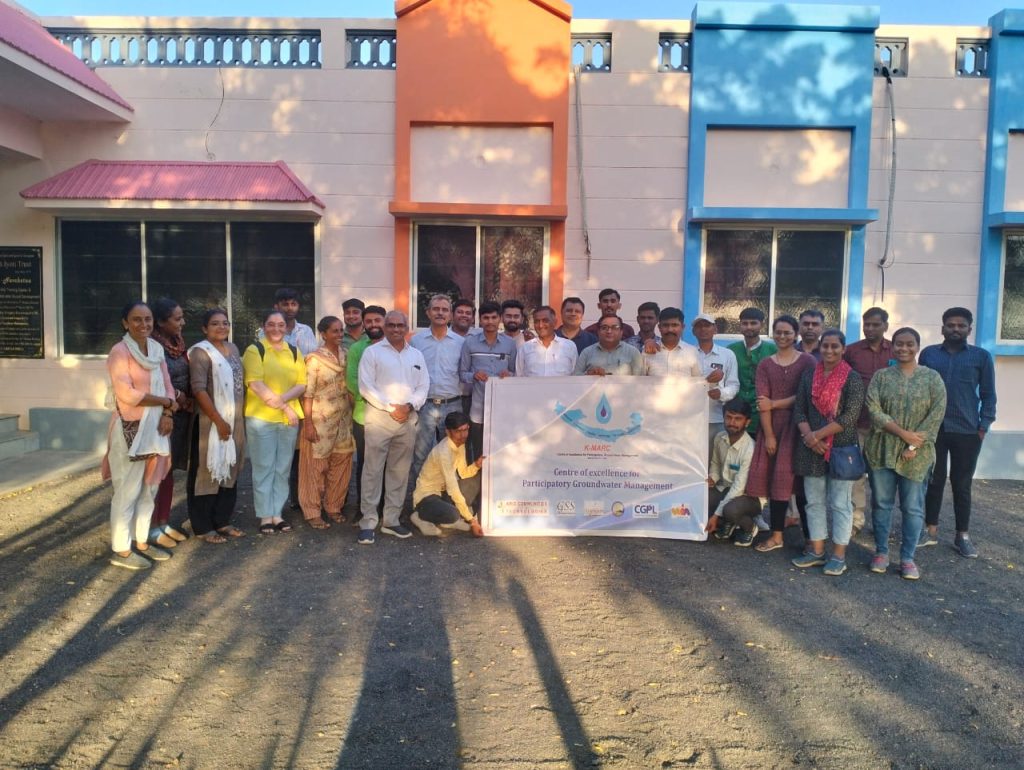
 

Natural resource management at village and community level will be a key determinant of the standard of living and overall village development and well being of the communities.


ACT has evolved the concept of Participatory Groundwater Management (PGWM) for water security and sustainability. ACT’s long term experiments and success through PGWM program have shown a more sustainable path towards this, by skilling and active participation in the water security planning, monitoring and management. Alongwith water supply augmentation, water demand management is a crucial component of PGWM. The demand side of water management has logically led to the need to introduce smart or precision farming among the small and marginal farmers. This has potential for not just better water security, but also increased farm incomes with better soil health.  Women-led initiatives have led to nutri-garden projects, bringing more nutrition to their families and also creating opportunities for barter and microentrepreneurship.


  1. Objectives of bringing Innovations to Grassroot rural communities
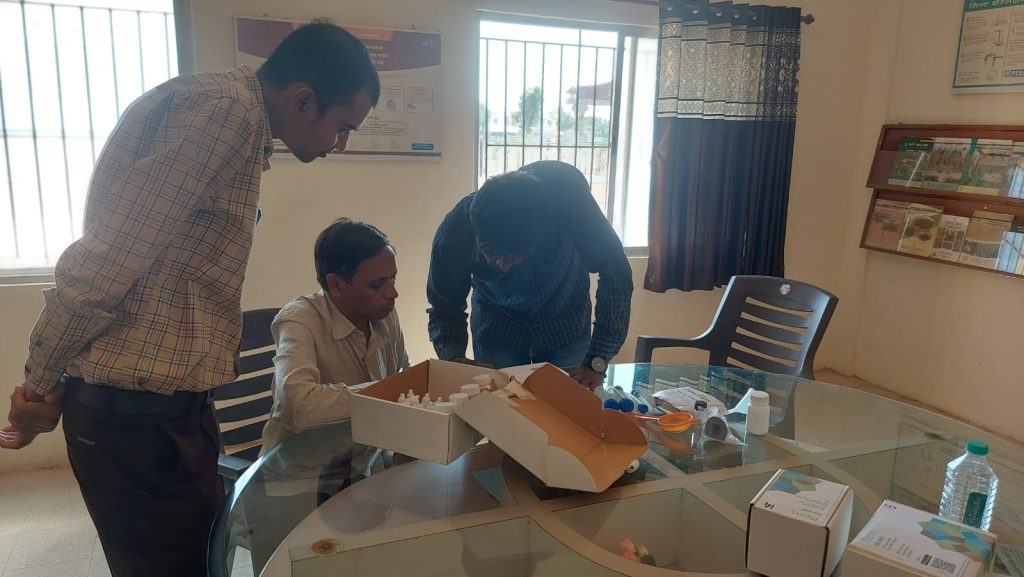
Water balance is a key to water management that includes many dynamic parameters such as rainfall, runoff, water storage as surface and groundwater, groundwater dynamics. As every component is a part of water cycle and is dynamic, it is essential to maintain the balance of water input vs output through integrated hydrogeological monitoring that has been framed using innovative technologies.  Rural communities are adopting innovations and technologies in form of mobile phones, household durables, electric motors, etc. Our village society had evolved practices in water use suitable for different locations. However, in view of vastly higher population and their rising aspirations, there is great need for new innovations to be adopted in management of rural Commons – particularly water sources. Innovations for optimised usage of water for farming arises as a key need due to agriculture being the biggest user of water, roughly 80 to 90% of total usage.

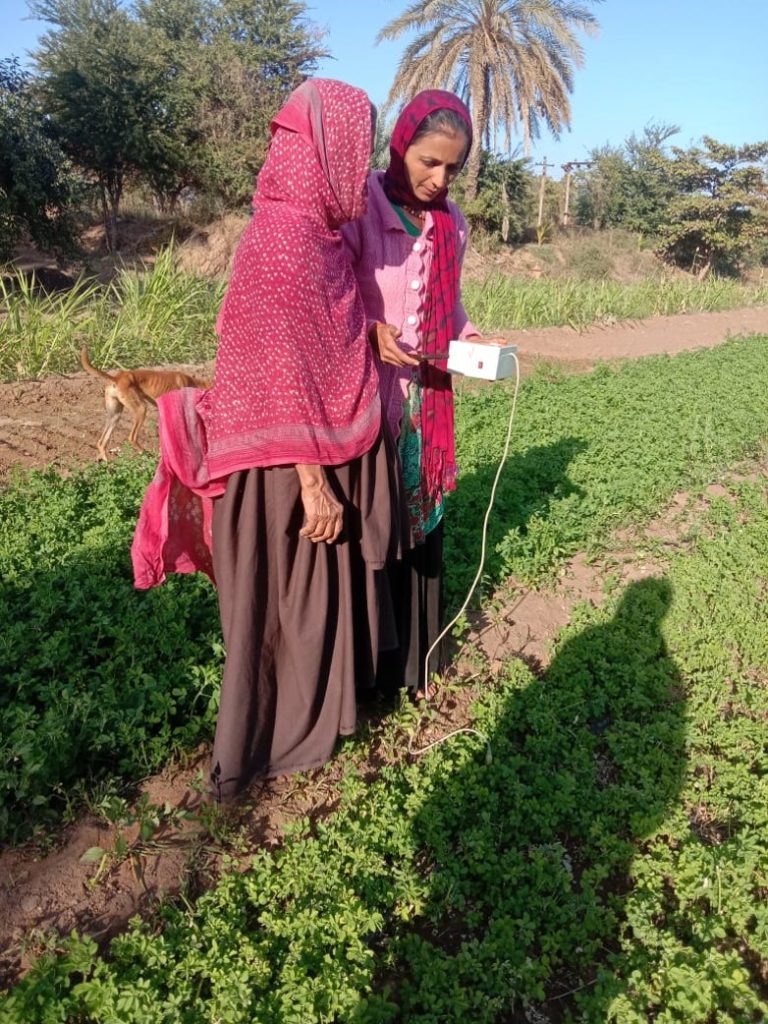
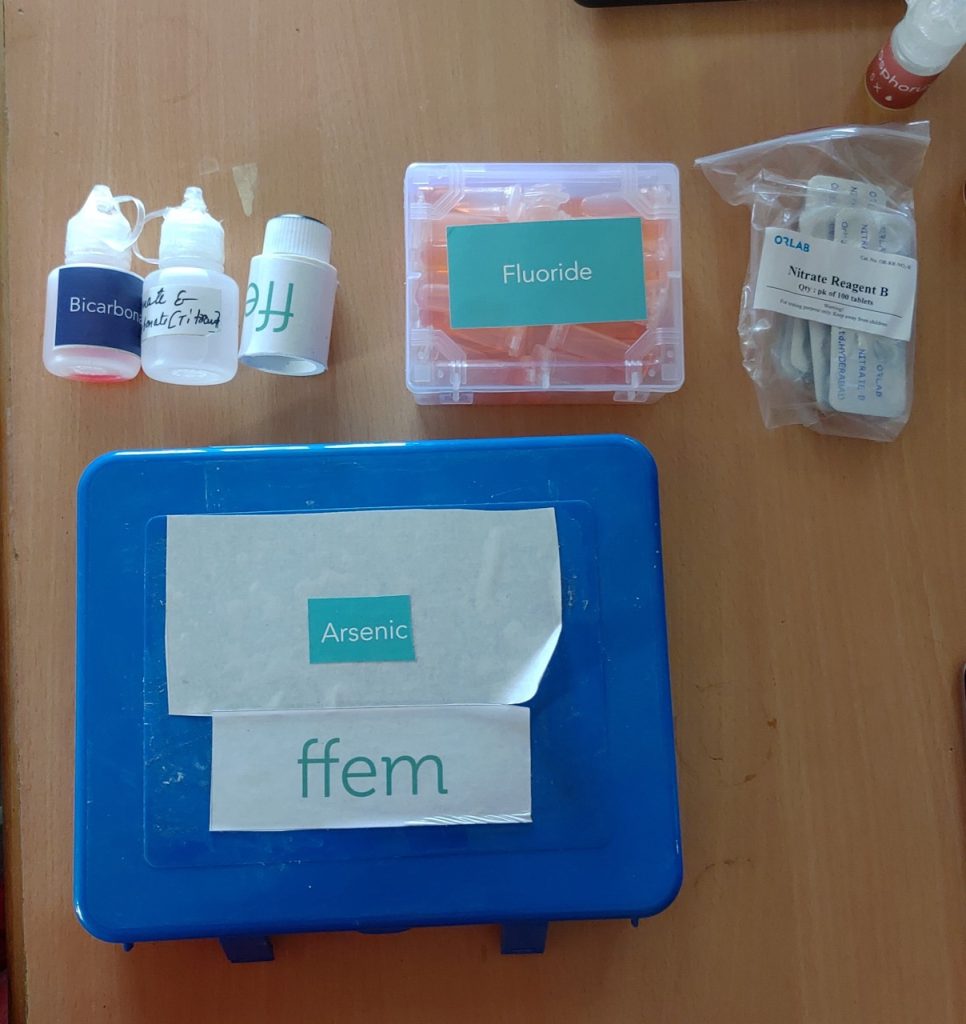
As an example, we have introduced soil testing kits at field level. These are very useful for quick analysis of soil, enabling farmers to determine adding soil nutrients. These are particularly useful for organic farming, since organic inputs, by their very nature, have varying strengths of nutrients, requiring farmers to measure and then fine tune nutrient inputs to achieve optimum level.

Our family nutrition practices have also suffered due to reduced agriculture diversity and lack of knowledge in evolving sustainable nutrition practices suitable for modern lifestyles, affecting even villages.

  1. Please tell us about the challenges faced in above objectives
Fortunately, several Indian startups and corporates are introducing new products in the above domains, at affordable prices.

ACT and WIN Foundation have worked together to bring several innovative solutions to the grassroot communities. In this process, we have observed several challenges in (i) initiation and execution, (ii) achieving desired impact and (iii) scaling and replicating the practices.

The major challenges are explained below:

  1. i) Product and services level:

Startups have limited resources and their founders find it very difficult to reach rural areas, for sales and service.

Also innovative products, by their very nature, require extensive trials and refinements, to reach maturity stage.

As the users themselves are not familiar with such products, continuous training, and guidance are required for these trials and feedback needs to be obtained.

Demonstrating the benefits of innovations to users is essential for the continued adoption. This is challenging as impact is often dependent on a series of steps including multiple products, and requiring measurements over a few seasons and explaining the same to users in simple terms. Farmers used to follow the practices and tools available locally and being in used in the respective region widely. Therefore, the tools need to be mainstream in local market and need wide adaptation among the farmer communities.

ACT’s participative approach has helped here by training rural young men and women for these tasks. As the variety of products and their technical complexity increases, there is a need to train at least some rural youth with greater technical skills to install, train users and do basic maintenance. Getting technical assistance from cities is neither affordable nor scalable in the long run.

While we have shown impact of many of the innovations, the challenge to show significant impact to create demand for the products is still not tackled.

We have now launched an integrated project providing a series of innovations and practices towards precision farming, to show major improvements. For this, we are collaborating with multiple partners, including WIN Foundation, Krishi Vigyan Kendra, several startups, to bring increased expertise to rural areas including local capacity building.

We hope to show significant results in terms of better soil health, higher yield and incomes and greater health for local communities. Alongwith this, we aim to create a local village level cadre with skills in leading the villages to adopt these practices at scale.

The next challenge is market linkages. Here again, we have brought innovations like low cost cooling systems, for storage and transport of perishables. In coming years, we aim to train our women nutri-gardeners, to use their surplus to produce nutritious food supplements and products.

For scaling up across a vast number of villages, we are also working on developing local leadership at village level, to enable village level initiatives to take of the vast diversities in our country.

  1. Please mention some areas where good innovations are required

We see great need for affordable and mature innovations for  soil and water quality and and water quantity with higher efficiency of results. Soil moisture meter needs to be upgraded with guideline for decision making to schedule irrigation for various crop types.


There is a need of integrated guideline considering different soil types, its quality and suitable crop types. Water irrigation control for high HP pumpset at a reasonable price with robustness to work in tough rural environment is another unmet need.


Small powered farm implements, for de-weeding, harvesting, removing crop residue after harvesting, etc., in small farms. Seed bank for local varieties and indigenous seeds.


  1. Please mention about ACTs partnership with WIN Foundation to support in bringing innovations


WIN Foundation, through its experience and linkages in startup ecosystem have regularly brought new innovative products and also arranged for training of ACT members in installation and usage.


ACT and WIN Foundation have also conceptualised the program for integration of data  services to bring greater value to farmers. Together with other partners, we aim to move towards our goal of taking society to science and enable villages to adopt technologies and products to improve their quality of life and quality and productivity of their work.


Somewhere we need to bring this entire region specific concept in a service mode available locally and easily accessible to farmers.


Dr.Yogesh Jadeja, Founder Director and Geohydrologist at Arid Communities and Technologies (https://www.linkedin.com/in/yogesh-jadeja-a703611a6/?originalSubdomain=in)


Dr.Sezina Bhimani, Founder director and Geohydrologist at Geo science services

(https://www.linkedin.com/in/sazina-bhimani-96b17718/?originalSubdomain=in)

Monday, 18 March 2024

Technology transfer: Possibilities in resource management

 An overview by WIN Foundation

(Author: Ms. Aishani Goswami)


‘What gets measured, gets managed’ is a quote often used in sustainable resource management discussions. Regular monitoring of land cover change, conducting tree and animal census forms the basis for forest management. Traditional agricultural practices were based in indigenous knowledge, organic inputs, and involved practice / experience based on people’s science. With advancements in science and increase in the scale of agriculture, use of technology in the farms becomes imperative. And in this context measuring parameters like soil moisture, water availability, soil and water quality, weather prediction will help farmers make educated decisions at her farm.


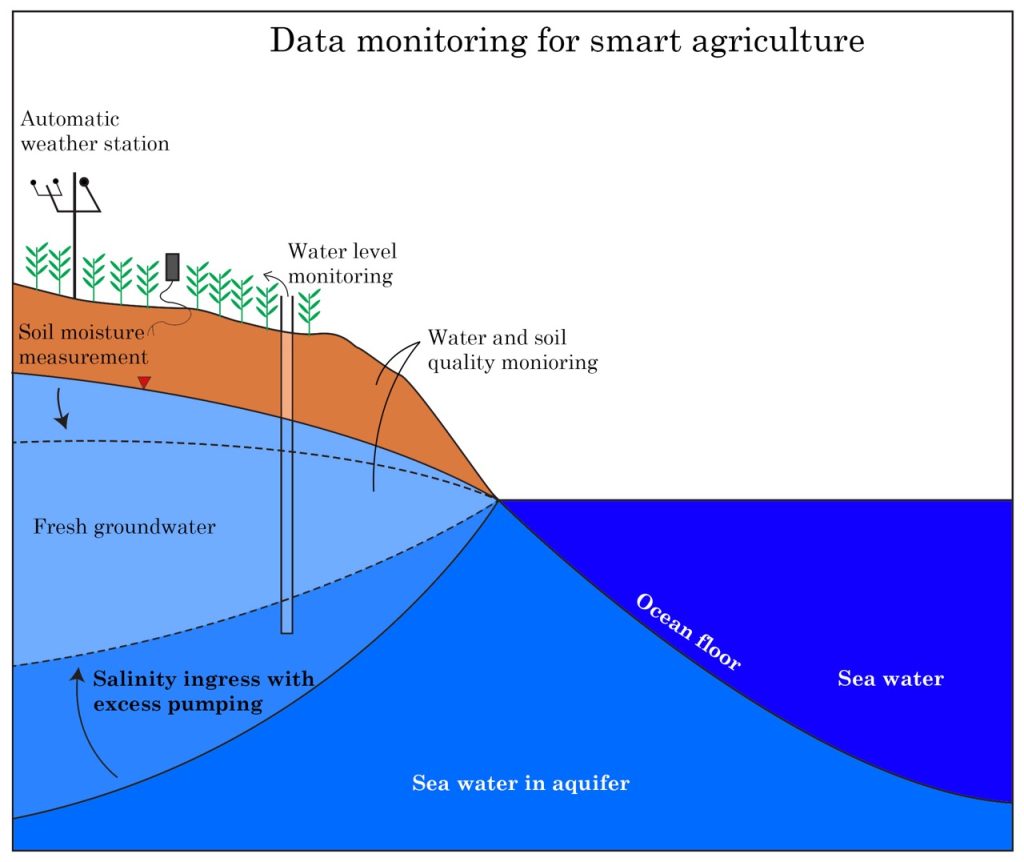
With our implementing partner, Arid Communities and Technologies, we envisioned an integrated agriculture-water-soil data monitoring system with an objective to give advisory to farmers to make farm level decisions, such as cropping patterns, water saving techniques, soil health improvement. It incorporates a multi-layered study of local geographic, climatic, hydro-geological, water and soil studies, by creating an integrated system of data collection, storage and analysis.

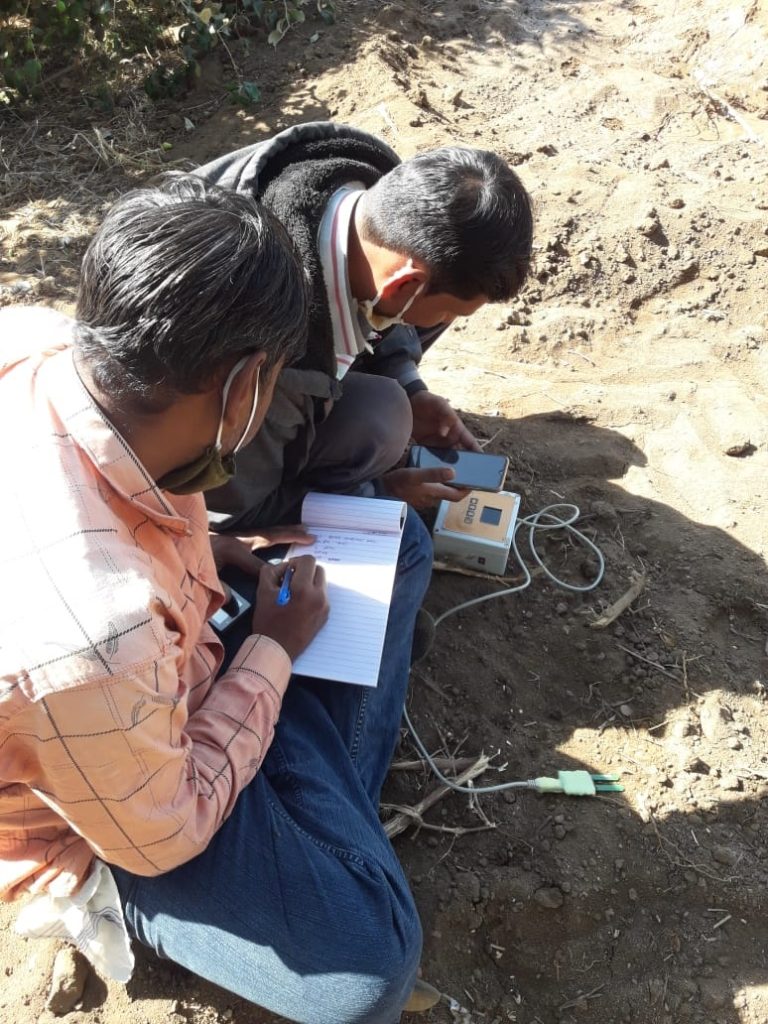
‘Bhujal Jankars’, who are community resource persons trained by us in practical applications of hydro-geology, play a key role in this process. They have a good rapport with the community, are scientifically informed and collect data for various parameters using respective instruments. We train them to understand
  1. The importance of data
  2. Science based farming practices
  3. Theory of data parameters such as soil moisture, groundwater level, TDS, soil quality parameters
  4. Interpreting data of above mentioned parameters
  5. Understanding trends and changes in data parameters
  6. Communicating and explaining to farmers about collected data

We have evolved data collection and storing techniques. What began as field diary entries, have become structured formats, to google forms and now a farmer App that we have developed in partnership with SoilSens. This app is connected with SoilSens soil moisture collection equipment, and also stores groundwater level and quality data, soil quality parameters, and weather parameters.


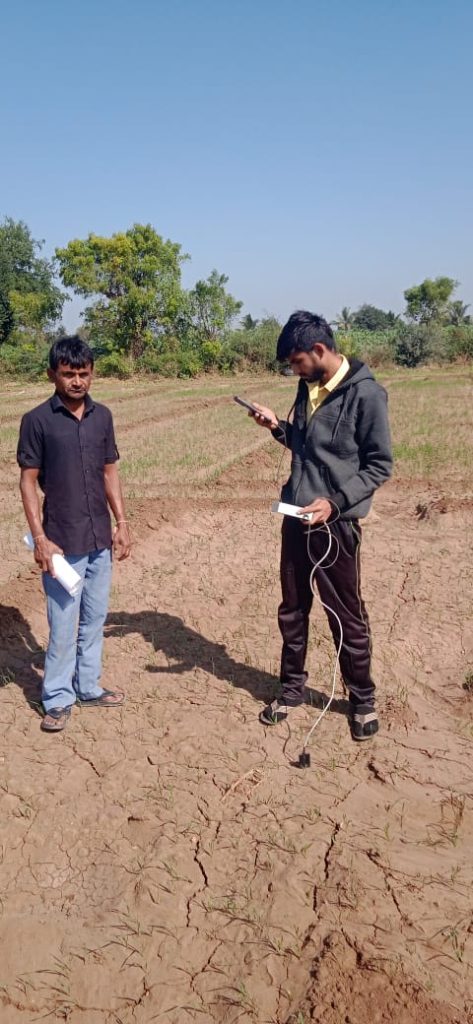
(Field soil testing kit and BJs measuring soil moisture on field)

(Integrated data system to measure different parameters)


Challenges and way forward:

Smart farming is an evolving field, and in our attempts of creating pilot farms implementing smart farming, we have learnt a lot.

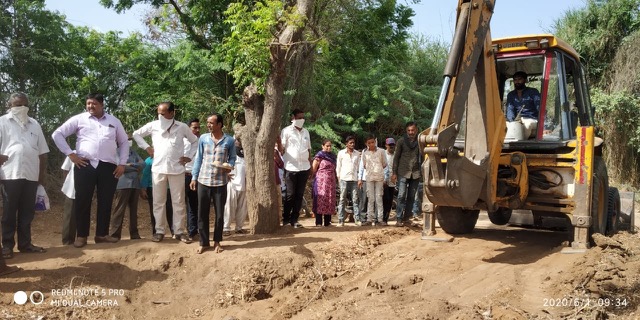
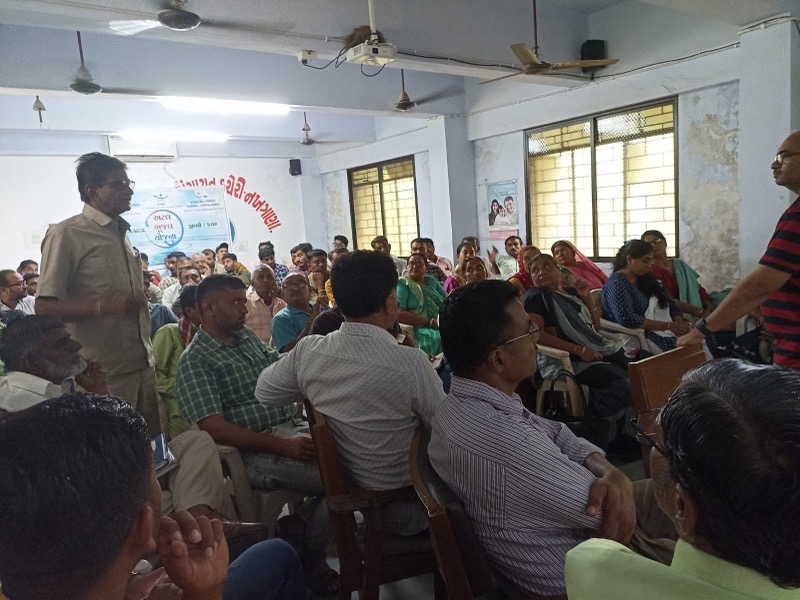
  • It is important to understand the importance of data and regular data collection, and gradually build a vision around smart farming. In absence of such an understanding, regular data collection can seem to become monotonous and burdensome. So, at regular intervals we organise workshops with experts, farmers, Bhujal Jankars and our staff to build this vision.
  • Data can sometimes feel abstract, especially when it is stored on servers. So it is important for farmers and field teams to access data easily and make sense of it through visualisations, discussions with peers and guidance from subject experts.
  • It is also important to develop a language to communicate scientific concepts, data parameters and its application in farming to farmers. This language needs to be regional, clear and simple to understand.
  • Sometimes smart farming technology can seem daunting, especially to farmers who may not be exposed to it. So, it is important to train farmers in the practical applications of technology and handhold them till they feel confident enough to use and explore on their own.
  • As a process smart farming could involve multiple stakeholders including farmers, scientists, domain experts, startups and technology providers, NGOs, government. It is crucial to develop inclusive partnerships and ensure that the technology reaches the farmers in farmer-friendly ways.


If this is a topic that interests you, get in touch with us at info@winfoundations.org, we are happy to learn from you and share our experiences.

Saturday, 6 January 2024

Water- A Relation with society- Perspective, Problems and Solutions and Approach


Water- A Relation with society- Perspective, Problems and Solutions and Approach

Author – Dr. Sazina Bhimani, Geohydrologist, Founder and Director of  Geo Science Services, Bhuj-Kutch

Water is an integral part of human life linked with basic needs for drinking and livelihood. Water is chemically formed as H2O but it has many social forms when it linked with different communities and different purposes. Earlier, water demand was met only in terms of its availability through local sources. Community used to  set up social norms and adopt water utilization as per the quantity and quality of local sources.  In the current times, the terms have been changed. Water demand is evaluated as bias and fashion- like public source, private source, source type, quantity, quality and availability. While  people are aware about the importance of water, particularly their needs in terms of quantity and quality,  but are  not sensitized to manage the resource. The mindset is to get adequate and safe drinking water that should be assured and supplied by the relevant authority. On other hand, when water connects with their livelihoods such as agriculture and animal husbandry, people value it more.  Richness of water resource directly affect the economic return from their livelihood. However, quantum of drinking and domestic water is less compared to current demand and we are not able to manage it across the regions.

Looking at social aspects, people have various community division based on religion and livelihood. In rural areas, water distribution and ownership varies from rich/higher caste to poor/lower caste categories. The social norms still exist in some parts but the term has been changed as one more layer has been added that is owning rich and potential water resources. Water in association with economy creates a different social division within and among the community. Water also become a political agenda, from local to national level.

Right from beginning, water always been a political and administrative agenda. Water is considered as a competitive atmosphere without looking at potential and need for any specific region.  All these factors have degraded the water resources of the region. Kachhchh region is the example that shows water history from the rich Dholavira heritage to the current and advances water sources. Even the water demand norms based water requirement couldn’t be matched with local source that has changed the user’s mindset. This has led a trend from sustainability to dependency, from decentralized to centralized system and from local to external source. Urbanization and industrialization add more pressure on overall water budget.

All these factors show that there is a big gap between requirement and potential of the source. The natural cycle of water has been totally missed out by users and suppliers. Human beings are  one of the users of water cycle along with other systems. Water cycle of the region defines its potential and availability, that should be the base for water management. Sound water management can be achieved with scientific and participatory approach.

The participatory approach integrates social, scientific and management aspects that leads towards the water sustainability. Considering participatory approach, a project model can be designed for different types of area and users with following common set of parameters:

  • Geo-hydrological study to understand the natural potential and scope of development
  • Water demand and water budgeting
  • Supply management through integration of surface and groundwater development
  • Demand management from individual unit to collective unit
  • Resource monitoring and evaluation
  • Development of decision making tools
  • Demonstration and scale up

Further to achieve following efforts need to be done at different level such as social aspects, scientific aspects and management aspects.

  • Social aspects:
    • Community/users sensitization that help to change mindset
    • Sensitization of the development and management authorities at all the level
    • Utilization of traditional knowledge in resource development plan
    • Decision makers knowledge strengthening for monitoring and groundwater recharge techniques
    • Community involvement throughout all the social and economic division with equity
  • Scientific aspects:
    • Accounts of surface and groundwater resource
    • Problem and potential mapping
    • Water budgeting
    • Demand and supply management plan
    • Creation of evidences of participatory management using technological tools
  • Management aspects:
    • Decision making system set up
    • Set up usage norms and guideline
    • Resource monitoring
    • Mainstreaming and scale up
    • Learning, review and upgradation

Rainfall is the main source of water that being received every year. When rainwater touches the earth surface, it gets related with administrative boundaries  like village, district, state. From this point, water division starts naturally, socially and administratively. Each region receives different amount of rainfall and have different set of technique to harvest it. In every situation, water budget specific management can lead towards the sustainability excluding all the social, administrative and political division. Water should be evaluated and developed as per the demand and potential supply only.

Saturday, 30 December 2023

Water and Society – Changing perceptions in a changing climate: A socio-economic perspective

 Authors : Dr. Soumi Roy Chowdhury, Prof. Deepak Singhania, Ms. Shradhda Jain

The growing population and the global shifts in economic activities have led to nearly six-fold increase in the water demand since 1900. Various estimates show that currently, the global water demand for all uses, is about 4,600 km3 per year, which is likely to increase by 20% to 30% in 2050([1]). Especially for agricultural purposes, the increase will be of 60% by 2025([2]). At the wake of this surge in water demand, the sources of water are continuously shrinking leading to an imbalance in the spatial and temporal distribution of water globally, nationally, as well as regionally.

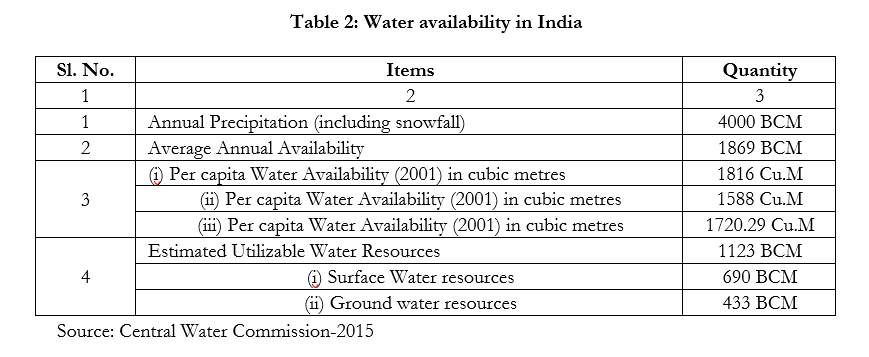
Especially, countries with higher share of population, like India, that is a home to 17% of the world population with only 4% of the world’s fresh water, the average per capita water availability, is low enough to be categorized as water stressed country. NITI Aayog reports that the per-capita water availability will further reduce to 1341m3 by 2025 and 1140m3 by 2050 close to the water scarcity threshold of 1000 m3([3]).

Moreover, the water use patterns of India is startling. In 2014, India had the largest freshwater withdrawals, at over 760 billion m3 per year, of all the countries. This was followed by China at 600 billion m3 and USA at 480 billion m3. At this rate, if conservation measures are not put in place, an investment of Rs INR 20,00,000 crores might be needed to bridge the expected water supply gap by 2030([4]).

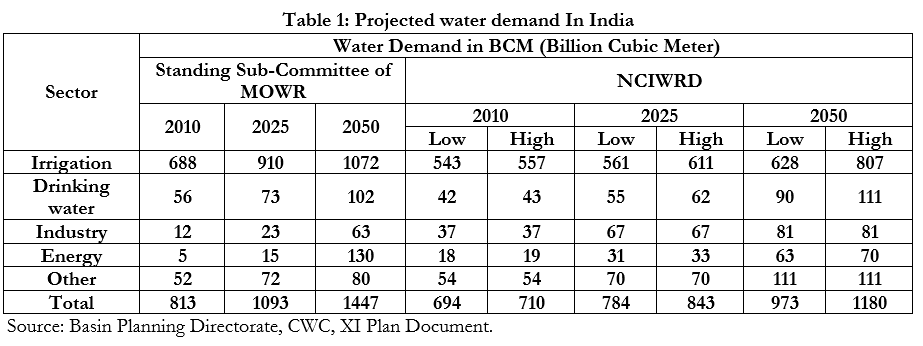
The following tables provide a glimpse of the sector-wise projected water demand in India against the water availability as per government estimates: Here we show two tables with projected water demand and supply in India.


[1] Burek, P. et al. Water Futures and Solution: Fast Track Initiative (Final Report). IIASA Working Paper (International Institute for Applied Systems Analysis (IIASA), Laxenburg, Austria, 2016)

[2] Alexandratos, N. & Bruinsma, J. World Agriculture Towards 2030/2050: The 2012 Revision. ESA Working paper No. 12-03. Rome, Food and Agriculture Organization of the United Nations (FAO).

[3] Aayog, N. I. T. I. (2018). Composite water management index: A tool for water management.

[4] “Investments worth $291 bn needed to plug water demand-supply gap in India: Study”, ASSOCHAM India, accessed May 6, 2019, http://assocham.org/newsdetail.php?id=6357.

Integration of local communities in water management dialogues

Given the above-mentioned imbalance between water supply and demand, management of water resources such that it caters to the present and future generations become important. In that aspect, the Government of India has acknowledged the need for water management in a scientific way.

Missions like Jal Shakti Abhiyaan across 256 districts and 1592 water stressed blocks in India campaigned for water conservation interventions – such as rainwater harvesting, renovation of traditional and other water bodies/tanks, reuse, bore well recharge structures, watershed development and intensive afforestation.

The success of these efforts lie in their relevance and uptake at the local and individual levels of communities. Also, the sustainability of these effects not only rests with their adoption among the end users but in their conviction about the looming water scarcity and the need to uptake water management practices. In this context, it has become even more important to integrate local communities in dialogues pertaining to water scarcity.

With the diverse geographical spread of India, ideally water management must be case specific. One umbrella-solution might not fit the requirements of the heterogeneous terrains.  Therefore, the importance of focusing into the specific water needs and available resources of a community cannot be ignored.  Bottom-up approach through participatory planning needs collaborations with the communities living in these areas. This will in turn instil a sense of ownership among them and will make them accountable for the use and management of these practices.

Ensuring accountability such that users understand the importance of these conservation efforts needs behavioural changes. This is the most fundamental requirement that is likely to hold together all the planning and policy decisions. Mindfulness in groundwater extraction as per the needs, adhering to policy guidelines, ensuring timely maintenance of the conservation structures will ensure sustainability of these initiatives. Therefore, capacity building and spreading of awareness are fundamental to bring about behavioural changes.

Sustainable solutions to water management

Different innovation practices and technologies aiming for sustainable water management solutions have gained prominence as a response to the water scarcity. For instance, technologies like faucet, aerators, flush diverters have been introduced to address the water usage patterns in domestic and industrial purposes. Micro irrigation, crop rotations, plantation of seasonal crops, and bio manures help in the preservation of the soil moisture which ultimately leads to curbs in the water demand.

On the other hand, hard constructions, extinction of water bodies, soil erosions have made it difficult for the infiltration of rainwater into the aquifers. Especially in cases of low rainfall areas, arid and semi-arid climatic conditions, the groundwater is even more depleted. Sustainable solutions like rainwater harvesting in these cases can be helpful in addressing the supply side challenges – they help in diverting the runoff of water towards the aquifer.

Some such supply side interventions can be seen through the flagship programs of the State governments like Sujalam Sufalam Yojana in Gujarat, Jalyukt Shivar Abhiyan in Maharashtra, and Pani Bachao Pani Kamao in Punjab among others.  Similarly, NGOs, academic research institutions and some foreign institutions are pulling together resources and like-minded people to drive participatory irrigation management programmes and decentralized water management initiatives. To give some examples, from the Kutch area in Gujarat, one can follow the works being undertaken by the NGOs like ACT, WOTR, SRIJAN, SANKALPA with support from funding agencies such as WIN, Aziz Premji Foundation and Arghyam.

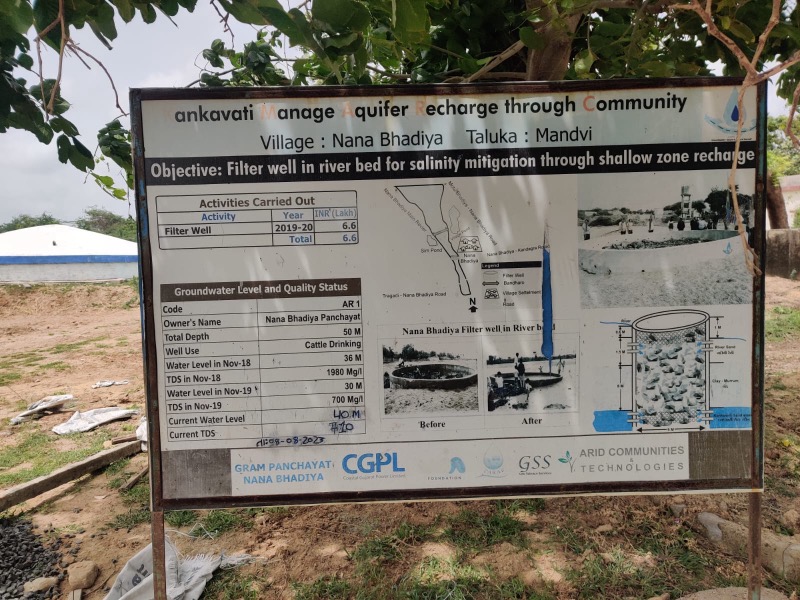
The farmers of Kutch region are affected by low rainfall and salinity of water due to coastal and low-lying areas. Both factors affect the quality of water due to high salt concentration which makes it difficult for both agricultural use and impacts livelihood. To address this challenge, farmers have created a recharge pit – which is used to recharge the dry borewell. Areas near the dry borewell has been evaluated to divert the flow of rainwater towards it. A pit is constructed and filled with rocks and sand which also helps in the purification of water. This pit is connected to a borewell through a PVC pipe. A recharge well serving the same purpose is also dug into these areas to the depth of the aquifer.

These interventions not only increase the water level but also improve the quality of the water by decreasing the TDS level. Most importantly, rainwater collected in these pits and wells gets stored in the aquifer which in overall keeps recharging the aquifer below. So not just the individual farmer, but farmers within the perimeter of 500 metres gets benefited from such interventions due to increase in water availability in the aquifers. The future of these interventions lies in sustainability where both private needs of the farmers and the societal needs are met.

As one farmer from Khambhaliya, Kutch says that:

“We are benefited by these interventions . Farmers were not interested in agriculture due to drought and quality of water and were looking for labor work. But now with increased water availability, I earn more from my field. The produce has increased. Can you see this bright green color of leaves, it was yellow 15 years ago. This is possible due to artificial recharge well”.

As the looming challenge of water scarcity is already upon us, a holistic sustainable and innovative approach to water management cannot leave behind the involvement of the local communities.

______

Deepak Singhania and Shradhda Jain are associated with IIT Gandhinagar, while Soumi Roy Chowdhury is associated with Janaagraha Centre for Citizenship and Democracy. Views expressed are the author’s own

https://www.linkedin.com/in/deepak-singhania-a055a512/?originalSubdomain=in

https://www.linkedin.com/in/shradhda-jain-433b86129/?originalSubdomain=in

https://www.linkedin.com/in/soumi-roy-chowdhury-869275b3/?originalSubdomain=in

Monday, 20 November 2023

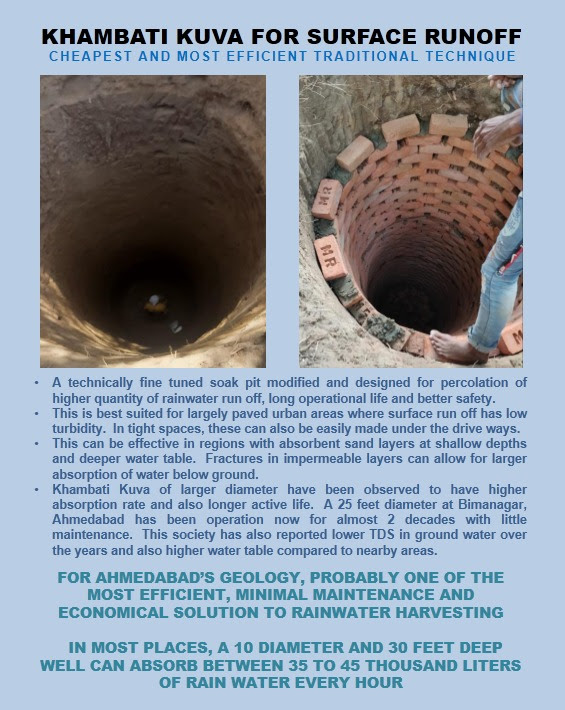
Khambhati Kuva for surface runoff: Cheapest and most effective traditional technique

 Author – Mr. Lokendra Balasaria, an architect, is actively promoting water conservation and natural farming, in urban and rural areas in Gujarat (urbantreewalks@gmail.com)

  • A technically fine tuned soak pit modified and designed for percolation of higher quantity of rainwater run off, long operational life and better safety
  • This is best suited for largely paved urban areas where surface runoff has low turbidity. In tight spaces, these can also be easily made under the driveways.
  • This can be effective in regions with absorbent sand layers at shallow depths and deeper water table. Fractures in operable layers can allow for larger absorption of water below ground.
  • Khabhmati Kuva of larger diameter have been observed to have higher absorption rate and also longer active life. A 25 feet diameter at Bimanagar, Ahmedabad has been in operation now for almost 2 decades with little maintenance. This society has also reported lower TDS in groundwater over the years and also higher water table compared to nearby areas.

For Ahmedabad’s geology, probably one of the most efficient, minimal maintenance and economical solution to rainwater harvesting

In most places, a 10 feet diameter and 30 feet deep well can absorb between 35 to 45 thousand litres of rainwater every hour.

Sunday, 12 November 2023

Wastewater treatment and management in India


Author- Mrs (Dr.) Seema Sukhani  DirectorTellus Habitat Pvt Ltd.

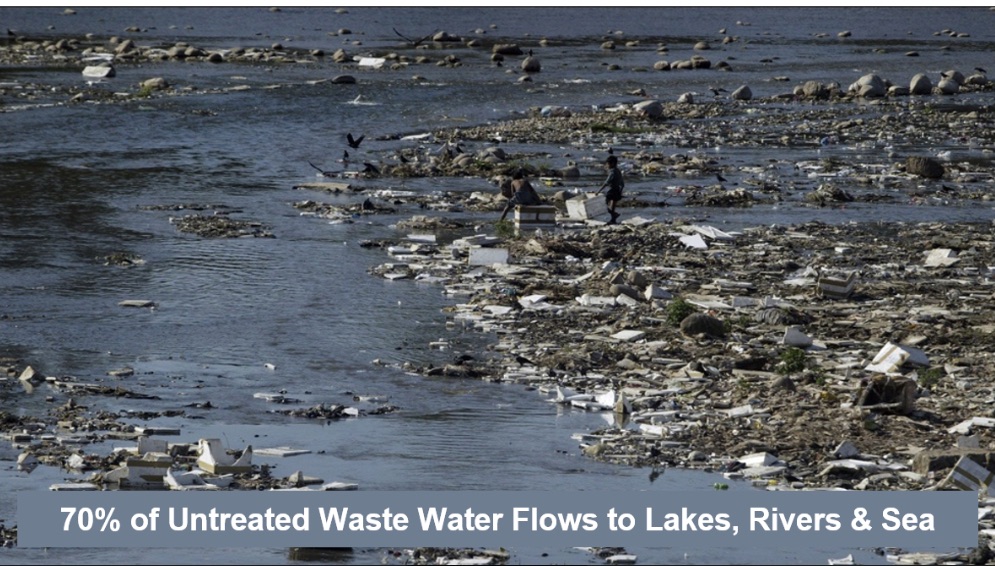
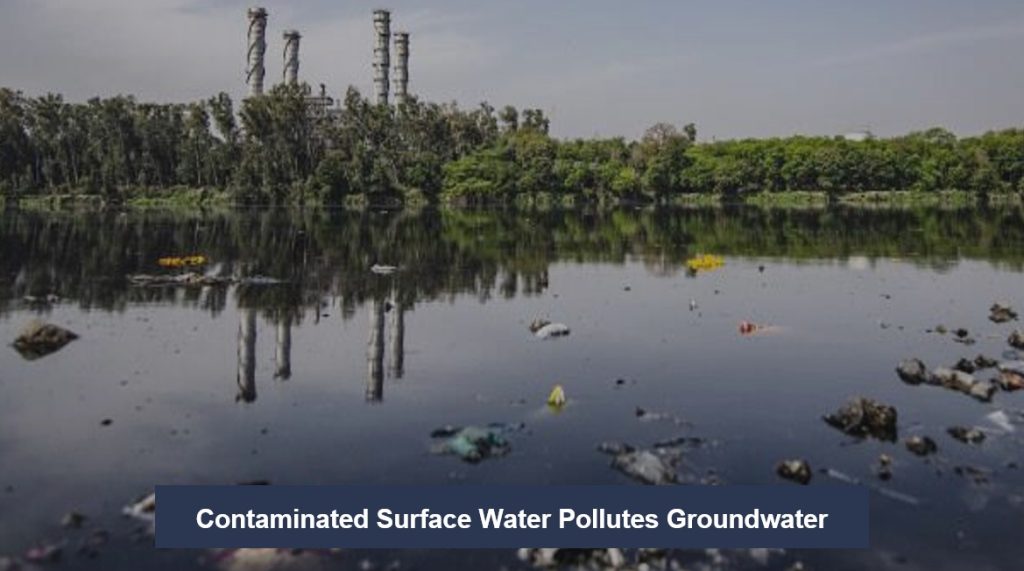
Wastewater management is a critical issue in India, where rapid urbanization, population growth, and industrialization have resulted in the generation of large quantities of wastewater. In this context, discharge of untreated wastewater into water bodies or groundwater contamination poses a significant threat to public health. Wastewater contains harmful pathogens, which can lead to waterborne diseases such as cholera, typhoid, and dysentery. Current estimates show about 70 percent of India’s water supply is already contaminated and nearly 1 million people die each year from water, sanitation and hygiene-related diseases which could also be reduced with access to safe water and sanitation. Some of the key challenges and needs for wastewater management in India include:

  1. Lack of infrastructure: to treat and dispose wastewater. Many cities and towns lack proper sewerage systems, and wastewater is often discharged directly into water bodies.
  2. Industrial pollution: Industrialization has led to the discharge of toxic chemicals and heavy metals into water bodies, posing a significant threat to human health and the environment.
  3. Agricultural runoff: Agricultural practices such as the use of pesticides and fertilizers result in significant runoff into water bodies, leading to water pollution and soil degradation.


But the most significant challenge is the mental stigma around wastewater. The lack of ownership and accountability from us as a community for handling our own waste is the fundamental issue. Wastewater management is a global issue, but can only be treated locally. Instead of transferring responsibility to the government and larger conglomerates, treatment at the point of discharge should be adopted and encouraged.

There are other factors associated with managing our wastewater properly apart from public safety and equitable water distribution. Our planet is drying out. Every day, more and more people are experiencing water stress. Humanity is facing a water crisis like never before and in a few years’ time, there simply won’t be enough water available for all of us. According to the estimates, around 40% of the world’s population will be living in seriously water-stressed areas by 2035. In the Indian context, our country is home to 18 percent of the world’s population, but only 4 percent of its water resources, making it one of the most water-stressed countries in the world. Nearly 600 million Indians face high to extreme water stress, with about 2 million people dying each year as a result of inadequate access to safe water. If we continue doing what we are doing today, there will simply not be enough water to quench the thirst of the world population.


RECYCLE WATER TODAY, HAVE DRINKABLE WATER TOMORROW


We must act quickly, swiftly and locally. Every drop of used water needs to be recycled.

Water is considered to be a cheap resource around the globe and wastewater is often thought disposable. One key differentiator is associated “waste” with water which automatically bring a different response in the society. Instead, we can refer it as “used” water which can be “re-used”. This change in terminology and mind-set is necessary to ensure long term sustenance and water security.

Efficient and compatible technology and water practises should be implemented across habitable spaces to ensure that “used” water is treated before it is discharged into water bodies or re-used for domestic or commercial applications. There are several technologies available for wastewater treatment, each with its unique benefits and drawbacks. The most common wastewater treatment technologies are biological in nature, few of the most popular ones are Activated Sludge Process, Moving Bed Biofilm Reactors, Sequencing Batch Reactors, Oxidation Ponds etc.

There are two major outputs from a wastewater treatment system – the treated water and sludge. Both of these can be used in a variety of ways in both rural and urban areas. Treated water can be used for non-potable applications like flushing, gardening, irrigation, industrial processes and recharging ground water. In rural areas treated water can be completely used in agriculture and recharging water bodies. This can help to conserve freshwater resources and reduce the demand for water. Treated water can also be used for aquaculture or fish farming. The nutrients in the treated water can provide a food source for fish, while the fish can help to remove nutrients from the water.

The sludge produced during the wastewater treatment process can also be used in a variety of ways. In rural areas, sludge can be used as fertilizer for agriculture, while in urban areas, it can be used as a soil amendment for landscaping or as a source of energy. Some wastewater treatment plants even use sludge as a source of biogas, which can be used to generate electricity or heat.

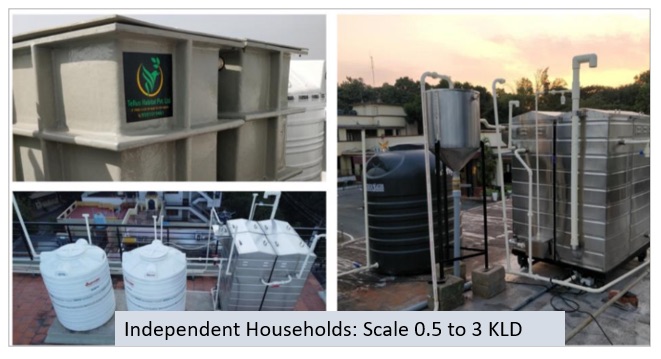
The selection of appropriate “used” water treatment technology depends on several factors such as the nature and concentration of contaminants, the volume of wastewater to be treated, the desired quality of the treated water and the re-use application of treated water. Most of these technologies requires extensive energy, trained manpower and are not economical. They are also not suitable at lower scales (<75 KLD), which essentially means one family (0.5KLD) to group of 150 families (75KLD) do not have an economical, feasible “used” water treatment technology. A large contributor of “used” water has been ignored by the technology giants of this space.


IT TAKES A LOT OF BLUE TO STAY GREEN

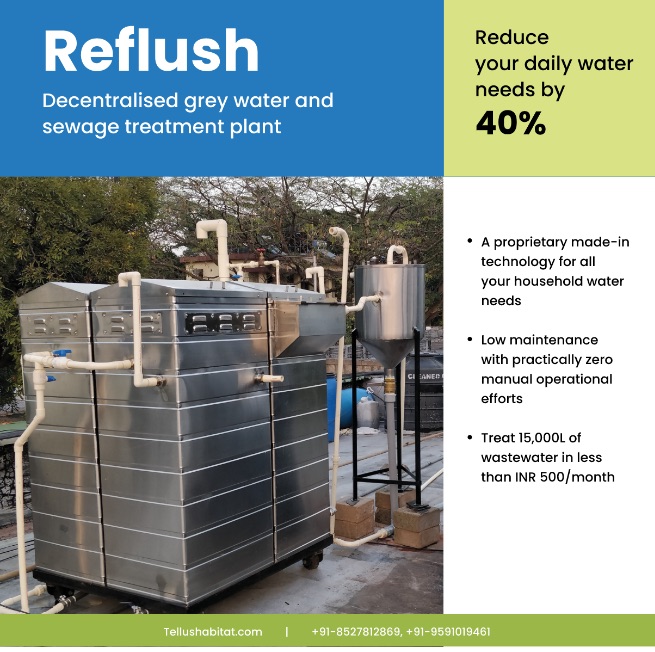
Tellus Habitat was founded with the vision to bridge the gap of the under-served market and be a one stop water solution for the world’s increasing water needs and depleting resources. We offer technologically advanced, compact, portable affordable and automated systems of scales ranging from a nuclear family to a community of 1000 families for urban areas. We also offer passive nature based systems (NBS) for rural areas that treat water with the help of algae and consume negligible electricity. By recycling at the source, we can solve the worldwide water crisis.


Friday, 3 November 2023

Waste-water management, and overview of challenges and opportunities


Author – WIN Foundation


Waste-water management, and overview of challenges and opportunities:


Every human should have the idea of taking care of the environment, of nature, of water. So using too much or wasting water should have some kind of feeling or sense of concern. Some sort of responsibility and with that, a sense of discipline.” -Dalai Lama

Wastewater Management is an integral part of managing the water cycle effectively.

 Traditionally, the water cycle took care of the supply of fresh water to the living world on land, including its purification by natural means. However, increase in population and industries have led to huge increase in water demand and also created massive water pollution. Nature’s water cycle is grossly insufficient to meet these needs. This puts pressure on our water sources, while at the same time degrades them. Waste water management is a critical need, alongwith water conservation, to meet these challenges.
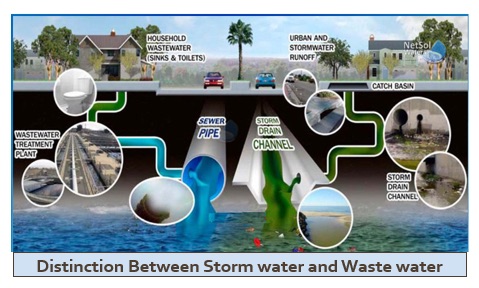
 

Grossly inadequate wastewater management has led to stagnant water in our localities, leading to their contamination. In turn, such water has degraded a large number of our water bodies.

 A related problem is stormwater management, which manages the vast amount of water brought by rainfall during the monsoon months across the country. It is becoming increasingly clear that the current system of trying to collect and carry the stormwater over large distances is dysfunctional. Isn’t it ironical that, in most places, due to stagnation on ground for many hours or days, as well frequent mixing with sewage water, we manage to convert the pure rainwater given by nature into contaminated and polluted water and then we add it to our water bodies? We are all aware of the diseases this brings on every monsoon. The solution is actually available in the Rainwater Harvesting technology. RWH systems have been traditionally used over centuries, and modern adaptations can easily enable us to use such systems to collect a major part of rainwater from roof as well as surface and recharge groundwater. In addition to the well known increase in water availability, RWH is a better way of managing “stormwater”, before it becomes dirty. RWH systems can vastly reduce the water overflow on ground, and thus reduce the substantial stormwater drain capital and operational expenses of our local government bodies.
 

Some major negative effects of inadequate wastewater and stormwater management are:


  1. Stagnant water in our localities, which further flows into our water bodies, has led to waterborne epidemics due to the resultant water contamination and pollution, often impacting the poor more due to their physical proximity to such stagnant water. For children it can mean poor mental and physical growth
  2. Degraded water bodies reduce the water available for humans and other living systems. In most such water bodies, aquatic life is severely impacted.
  3. Women, particularly in rural areas, may need to travel farther to fetch potable water, or pay a high price for purified water.
  4. Government has to deploy much higher resources to treat water and transport the same to households over longer distances.


The government’s excellent scheme to bring water on tap for all households in progressive manner will remove some of the last mile problems. However, in turn, it will make the need for wastewater management at local levels, including in rural areas, even more acute.

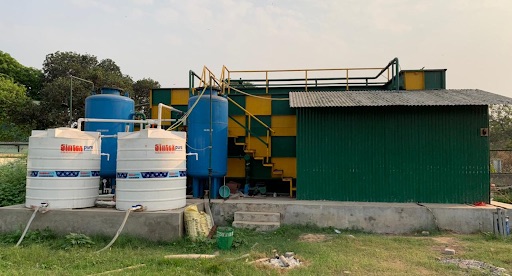
Several technologies have been developed by institutions and industry, including in India. WIN Foundation, for example has supported the School of Environmental Science and Engineering, IIT Kharagpur, to develop a multi-stage modular plant for wastewater treatment to bring it to near potable level at very reasonable cost. This plant is already functioning on IIT Kharagpur campus. Methods of natural root zone treatment of wastewater have also been implemented showing potential of natural methods to treat wastewater.


In an article in this issue, Dr. Seema Sukhani, founder of Tellus Habitat, a startup with packaged modular products, talks about wastewater treatment at decentralised levels of varying sizes, features and cost.


Similarly, there are several techniques for RWH. in the following picture-poster, Mr. Lokendra Balasaria, describes one such technique, called “Khambhati Kuva” in Gujarat, which can carry down vast amounts of rainwater to the aquifers, vastly reducing the on surface stagnation, and stormwater volume to be carried horizontally.


An important challenge in wastewater management systems is competency to install, operate and maintain such systems. This requires large-scale skilling in each of these areas, in urban and rural areas, to manage the vast variety of systems which may be deployed. This can, in turn, provide better quality livelihood opportunities to lakhs of our youth, in urban as well as rural areas.


Conclusion:


An integrated approach to wastewater and stormwater management will provide multiple benefits of better water availability and quality, reduced contamination, cleaner water bodies, reduction in water borne diseases, with lower capex and opex.


It can also vastly increase good quality water available for humans and all living systems. It further reduces the energy and cost of treating polluted or contaminated water.


As the Slovakian proverb says: “Pure Water is the World’s First and Foremost Medicine.”

Wednesday, 2 August 2023

Rainwater Harvesting and Groundwater Management in Urban Areas

 Authors: Nikita Harikishan, researcher and project lead at Biome Environmental Trust and Shubha Ramachandran team lead of Water Team at Biome Environmental Trust


Rainwater harvesting – Science in action

Rainwater harvesting has been in existence for thousands of years. It is a very intuitive and actionable idea. Still, there is complex science behind rainwater harvesting and groundwater management, including rainfall patterns, climate variability, hydrogeology and the impact of human activities on hydrogeology. However, at the same time, we can look at this knowledge with a lens that can be applied at a small and decentralized scale for practical application. It is with this thought that this article has been written.

Introduction

The water supply situation today is very different from 100, 50, or even 25 years ago. India faces challenges of water stress, constituting 16% of the world population but only 4% of the freshwater resources.

With rapid urbanization, cities/towns rely heavily on the cost-intensive long-distance water supplies to meet the widening water demand-supply gap including overexploitation of in-situ groundwater resources while dealing with declining infrastructures. Furthermore, urbanization disrupts the natural hydrological cycle as there is a reduction in infiltration and groundwater recharge due to the existence of large impervious areas, removal of shallow aquifer to build multiple basements, thus urban areas face the twin problems of floods during monsoon and shortage of freshwater during non-monsoon months.

India has had a rich tradition of community-based water harvesting. Each region has a different structure for harvesting rain, from Eris in the southern plains of Andhra Pradesh, Karnataka, and Tamilnadu to Jhalaras, kunds and step wells in Thar regions of Gujarat and Rajasthan, Kuls in western Himalaya, Ahar Pynes and Baolis of the Indo-Gangetic Plains, Zabo, and Virdas in Northeast regions.  This long history of water structures has long been forgotten and has been dumped with garbage or closed off. However, there is a need to reimagine rainwater harvesting, groundwater, open wells, and their relevance in contemporary times.

The solution, therefore, lies in decentralized rainwater harvesting, which is increasingly being turned to as it offers an alternative, affordable, reliable, and sustainable water source in the face of increasing water shortages. Rainwater harvesting can be done using two methods: storing water for direct use or recharging groundwater.

Know your rainfall

Rainfall statistics for the areas is of paramount importance to understanding rainwater harvesting norms. Information on average annual rainfall quantity, distribution across months and rainfall intensity is crucial. Rainfall quantity will decide the potential for rainwater harvesting from any surface i.e., a product of total rainfall and the surface area of collection

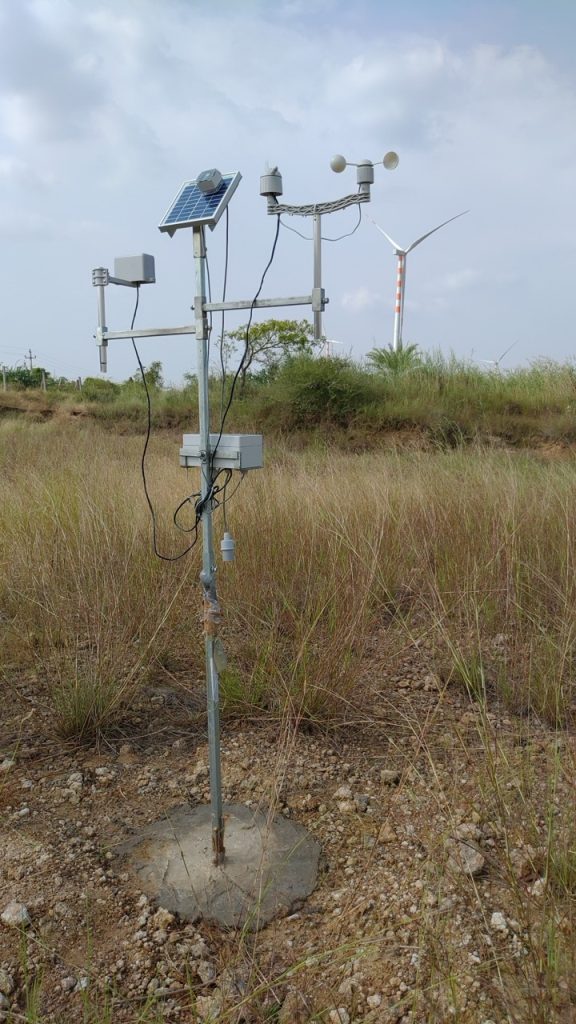
Weather Monitoring Stations & Telemetric Rain Gauges

With the concept of “Measure to Manage”, Karnataka State Natural Disaster Monitoring Centre (KSNDMC) has installed 930 weather monitoring stations at Hobli level which captures the 4 major parameters – Temperature, Relative Humidity, Wind Direction, and Wind Speed, and 6500 telemetric rain gauges for monitoring rainfall data. The weather forecasts are made by ISRO and with the Ground level data provided by KSNDMC to ISRO every day, it is possible to get more accurate and reliable predictions.

The near-real-time data collection, report generation, and dissemination have been helping the State Government in planning and executing disaster management and mitigation plans at the micro-level.

Know your geology

Geology plays an important role in the occurrence of water within a watershed. Water availability is governed by the rock types occurring both at the surface and within the subsurface and the extent of weathering and fracturing of the rocks. India has highly diversified hydrogeologic characteristics. There are six extensively documented groundwater typologies across India i.e. mountain systems, alluvial (unconsolidated) systems, sedimentary (soft) systems, sedimentary (hard) systems, volcanic systems, and crystalline (basement) systems (CGWB ). Based on local geology, one can understand the best recharge strategy and the most appropriate recharge tool/structure for the context.

Storing rooftop rainwater for domestic use 
When rainwater is a supplemental or primary source of water for domestic use, then designing for storage is essential. Rainwater harvesting systems will have the following 5 basic components: Catchment area including building roofs and paved areas, Gutters, Downtake pipes, Filters, First flush devices, Storage tanks/ponds and Delivery systems till the point of end-use.

Calculating storage size depends on rainfall pattern, rainfall intensity, catchment area, the total volume of daily usage, budget, and space availability. Ideally, in areas where there is severe water scarcity, there may be a need to harvest and store all the rainwater, but this may be inefficient and therefore can be decided based on the consumption needs. For instance, if 1000mm of rain is falling on a 100sqm catchment, for which you would need 10 lakh litre storage, but this is inefficient. Therefore, an optimal size of a storage tank can be arrived at based on the calculation of daily water consumption, which can be correlated with the total harvestable rainfall. If rainwater is immediately used after collection, more water can be harvested annually for a relatively smaller storage size. 

The stored water should have a point-of-use treatment before end-use. For example, appropriate measures should be taken to ensure it meets the drinking water quality standards if it is to be used for drinking purposes. 

Integrating rainwater into groundwater management 
Groundwater is far more significant in the water-supply of cities and towns but is widely not appreciated, as it is an ‘invisible resource’ connecting various urban infrastructures. Unaccounted groundwater in urban areas exceeds 50% in 28 Indian cities (CGWB, 2011). While some legislation exists that directly or indirectly seeks to help manage groundwater, the enforcement has been weak and a very big barrier. Given the nature of groundwater development and use, for it to reach a scale that can have an impact for the city as a whole, all users and stakeholders need to become part of the solution and make groundwater a community resource. 

Outlined below are a series of things to know about the same:

Groundwater recharge

The percolation of excess rainwater through an infiltration system to the subsurface is called ‘Artificial Groundwater Recharge’. The runoff water collected from rooftops and surface water can artificially recharge and augment the depleting groundwater resources, especially in the urban areas, where the natural recharge has diminished considerably. As a thumb rule, it is important to understand the water resources within the city and at what depths these are found, which can then be taken as a baseline to understand the best recharge strategies.

There are different types of recharge structures – a) Recharge pits; b) Recharge trenches; c) Recharge through dry or operational dug wells; d) Recharge through abandoned/existing tube wells; and e) Recharge wells, etc.


Recharge rate tests
A recharge rate test is conducted to assess the recharge rate of an aquifer i.e. to see how quickly water percolates into the ground. In this test, a known quantity of water is pumped into the well/s being tested, and the time taken for it to percolate into the ground is recorded. Measurements are taken of the depth of the water every minute for the first 10 minutes, then after 15 minutes, 30 minutes, one hour, two hours, and so on. From these measurements, the recharge rate of the well/s can be calculated, which helps us understand the recharge rate of the shallow aquifer in that particular area. The more wells that are tested in an area, the better our understanding of that aquifer.

Million recharge wells for Bengaluru
Biome is campaigning “A million recharge wells”: Reviving our responsibility for groundwater. The initiative aims at striking a balance between groundwater extracted and recharged, by digging 10 lakh (1 million) recharge wells across Bengaluru City. The explicit objective of the intervention is to increase the groundwater table in the city while providing livelihoods to the local community of traditional well-diggers (called Mannu Vaddars) in Karnataka. The implicit objective is to build a water culture in the city, where people value water availability, water structures, and also take responsibility for managing groundwater collectively.
A recharge well is basically a hole in the ground into which the rainwater runoff can be directed, such that it percolates into the ground, augmenting the water table. The recharge well can be a powerful tool and symbol for reviving our relationship with groundwater as it reconnects us to our open well heritage; it reminds us that unless we fill our aquifers up, we will not be able to extract; and that we cannot extract limitlessly. It also teaches us that groundwater is not anyone’s private property, but a common pool resource.


Mapping the aquifers underneath our city through participatory approaches

A city or town should be aligned to all sources of knowledge – often this information does not only come from formal institutions such as hydrogeologists, civil engineering departments, water managing authorities, etc but also from the residents, traditional well-diggers, borewell diggers, etc, who also have an understanding of the local aquifer and geology. Therefore, evolving a participatory approach towards groundwater mapping, with participation from institutions, schools, etc who can help with mapping is useful.

As a result of this, the recharge of aquifers is managed bottom-up, with each citizen also taking responsibility for managing groundwater, either by documenting it or by digging a recharge well. People also begin to understand that they might not directly benefit from recharge wells, but if everyone recharges, the entire community benefits. 

Outreach and communication 
To promote RWH in the city, creating awareness regarding the importance of rainwater harvesting, both for immediate uses and also for sustaining the water table in the long run, is essential. There is a need to shift the initiative from institutional endeavors and make it into a mass movement. There has to be an investment in communicating the city’s problems, the existence of laws and legislations and how the law attempts to address this problem, and therefore the role of citizens to implement the law and be part of the solution.

As awareness of the issue increases, more people begin to understand the ecological flows that surround us, and what they can do to protect these systems. It also inculcates a feeling of giving back and emphasizes the importance of doing so.

[1] http://www.ide-india.org/content/water-india-facts
12] http://www.rainwaterharvesting.org/rural/Traditional3.htm#apat
[3] http://cgwb.gov.in/documents/papers/incidpapers/Paper%201-B.M.Jha.pdf

www.urbanwaters.in
Community platforms that demonstrate RWH are useful for understanding the overall scenario. www.Urbanwaters.in web space seeks to inform, guide and provide any and all resources to all of us to make us water literate, solve our individual or community water problems and act responsibly by taking care of our common urban water resources. It seeks to help make us a part of the solution rather than being a part of the problem. 

Food Safety for Nutrition Entrepreneurs

  Food Safety for Nutrition Entrepreneurs   Dr. Bhaskar Datta,Associate Professor, Chemistry  (Jointly with Biological Sciences and Engineer...