Showing posts with label women Microentrepreneurship. Show all posts

Saturday, 23 December 2023

WIN Nutri-preneur Communications suite development project


 Dec 24, 2023  0 Comment  Water Conservation

Author – Students of Institute of Design, Nirma University, with guidance from Prof. Mona Gosai.

Branding and Brand communication is a course taught at the Institute of Design, Nirma University in Semester VI of Communication Design. The course explores Brand Building and teaches communication theories for strategic communication in the form of campaigns, case studies and advertisements.

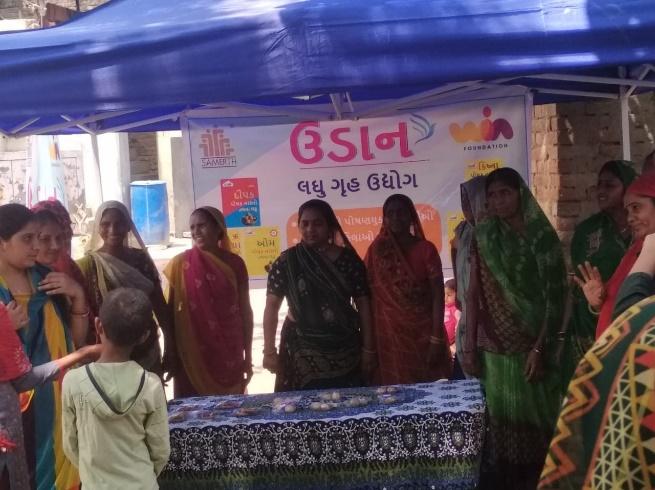
Under this course, our group of 13 students of Batch 2020-24, got an opportunity to work on a project with WIN Foundation and social organization SAATH and the women ‘nutri-preneurs’ to design the branding and communication material for their home-made nutritious snacks. To understand the clients and their requirements better, we visited one of the project locations at Vasna, Ahmedabad, where we interacted with project coordinators and a few women ‘nutri-preneurs’. From the initial interaction we got an idea that their main aim is to provide community children with homemade nutritious snacks instead of junk snacks like wafers, biscuits, Kurkure etc. by which are harmful for their health, but children get easily influenced  to eat them.

According to the requirements indicated and discussions , the deliverables of the project were narrowed down as below:

  1. Design of Packaging and Posters  of the nutritive products – keeping children as the primary target audience
  2. Social Media posts – to create awareness in society
  3. Short animated video advertisement, highlighting the importance of consuming nutritious food which is engaging for children

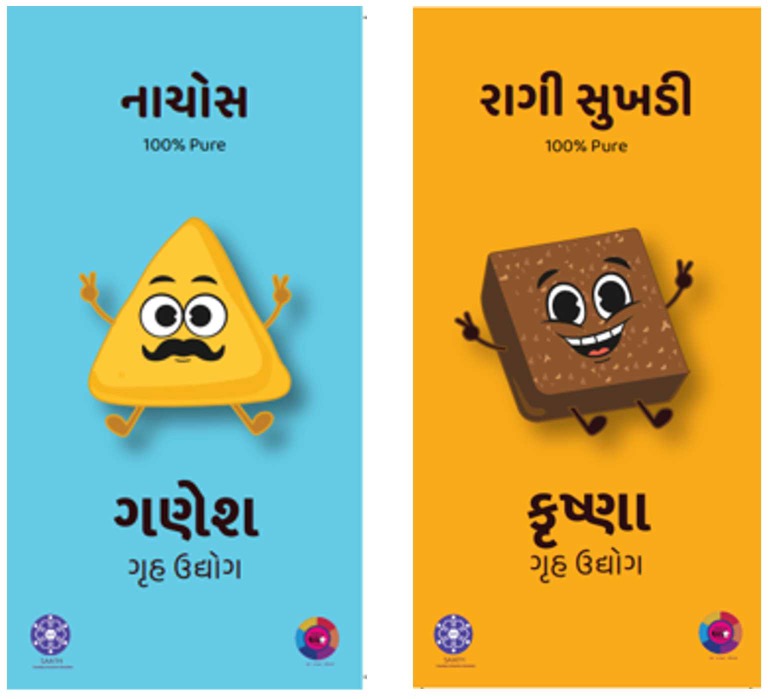
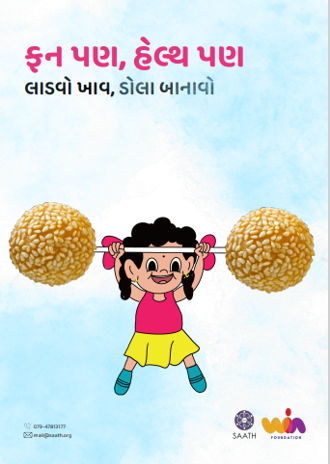
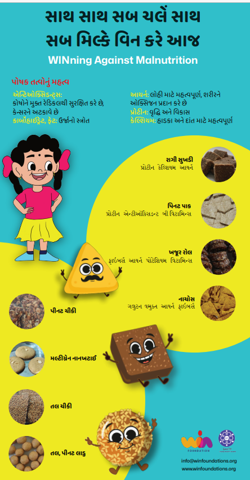
To achieve the deliverables, 3 groups were made for focused work and better outcomes. To understand the eating habits, behaviour and what attracts the children, we visited the ‘Balghar’-creche, located in Narol Gam, Ahmedabad where we interacted with preschool children, their mothers, and teachers. From the visit we got some idea on how we should start with the campaign and promotional materials. After discussions, we came up with a Mascot named Tesu, which was going to be the face of the visuals and for the labels – a cartoon character representing the product, e.g. If nachos is a product then on a label nachos is showed with a happy face which may attract children to buy the products. The community women were very clear with their vision and what they wanted the children to see. This helped us to achieve the relevant results.

Saath and WIN Foundation were very helpful with the whole process and wanted the students to design the collaterals, the way the community women envisioned. This synergy boosted the students’ spirit and helped them stay on the same page as the women. Brainstorming and discussing different ideas with each other helped us a lot with the design outcomes. Everyone supported and helped each other. Working in a team was the greatest strength in completing this project.

Before our final submission we had to present our work to our Professors, WIN and SAATH team and the ‘nutri-preneurs’. We got genuine feedback from everyone. The feedback of the Nutri-preneurs was important for us as they were the ones to use the final material. They were so clear with what they required and what would be appealing and attractive for the children. We had a ‘good-feel’ working for the community women and got many new ideas from them.

The final collaterals designed were packaging label designs, standees, Tesu female and male mascots, social media posts, an animated video in Gujarati and Hindi and a radio jingle. All of this was done over a span of 3 weeks. At the end of the project our learning and understanding of various aspects of branding, strategies and brand campaigns were clear and we also understood the value of teamwork and co-design to enhance a ‘real-life’ brief.

Animated Video link

Audio Jingle Link


Wednesday, 12 April 2023

Experiences of Samerth Trust – a grassroot organisation in promoting Micro Entrepreneurs

Author: Ms. Gazala Paul, Managing Trustee, Samerth Charitable Trust


Imagination is the beginning of creation

Background
It is estimated that well over 260 million people, out of India’s population of over 1 billion, are living below the national poverty line. It is also projected that out of these poor households, approximately 20 per cent have access to credit through formal channels and even fewer have undertaken formal or informal financial or business training.

Women comprise half of India’s human resources and are key agents of sustainable development. The contribution of women and their role in the family as well as in the economic development and social transformation of the country is pivotal. Women are also representing an ever-increasing percentage of the total marginal or informal workers in the country. There are multiple ways in which the socialized skills of women can be turned into entrepreneurial initiatives.

It is especially true in rural and semi-urban areas with scarce industries or industries which inherently are hostile towards women due to the nature of work – like mining, where micro-enterprise rooted in the needs of the local area present as one of the most viable options to become financially independent.

Samerth Trust – an introduction

Samerth Trust initiated its operations in the drought-prone region of Rapar, Kutch (Gujarat) in early 2000 based on the poor human development index of the area. Our interventions began by providing potable water through participatory groundwater management and later as villages became self-sufficient in water, livelihood became their biggest focus in order to avoid distress migration. With no industries in the area, the only livelihood options are rooted in the local economy including agriculture and Animal Husbandry.  In Rapar with a population of over 2 lakh people, even today one cannot find ATMs or banks for 100 km at a stretch. Samerth started supporting men and women from marginalized communities on their entrepreneurial aspirations and today has a broad base of more than 300 individuals who have been able to successfully start and sustain local businesses.

Samerth later expanded to Ahmedabad (Gujarat) and then Chhattisgarh working with communities who are marginalized and come from low-income backgrounds. In Chhattisgarh, the focus has been tribal communities and in the urban and semi-urban areas of the Ahmedabad district, it was migrant and vulnerable groups. We started working in Ahmedabad & Chhattisgarh on education and livelihood issues. Currently, we reach out to more than 70,000 families directly through various interventions. In both these areas, we have supported communities’ initiate enterprises – especially women through special training and support and today we reach out to more than 1000 entrepreneurs in both these regions.

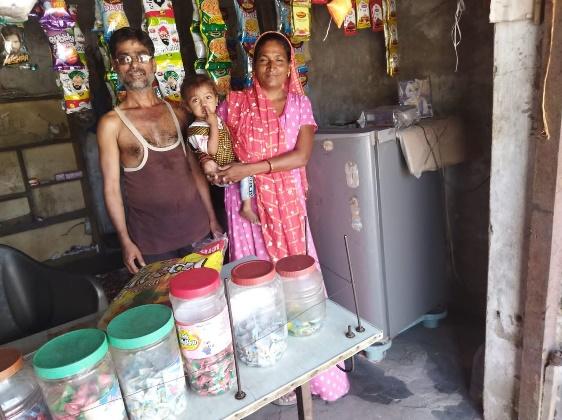
In all three regions, in Rapar due to sheer distance and lack of administrative support, in Chhattisgarh as the focus are the PVTGs – Particularly Vulnerable Tribal Groups living in hilly forest regions with poor accessibility, and in Ahmedabad marginalised communities of western Ahmedabad as well as women in Sanand face a great barrier in accessing formal sources of loan like banks, and still fall prey to private players who provide loan at exorbitant rates. Samerth works with more than 48 micro-entrepreneurs in Ahmedabad, in an urban and rural areas, supporting small shops or helping establish their street businesses on carts, women entrepreneurs to set up food businesses etc.  In areas like Kutch and Chhattisgarh, Samerth has been battling against some of the most challenging living conditions- extreme climate, deforestation, and soil depletion that often gets exacerbated by unpredictable natural calamities.  In Kutch, in the desert area surrounded by big and small rann where frequent droughts, water scarcity and salinity in the groundwater overpowers everything the support for setting up small enterprises creates significant impacts and becomes key to alleviating poverty. Samerth has worked with 283 families for dairy/animal husbandry, setting up small businesses, auto services, higher education, and agriculture activities in the Rapar block of Kutch. We also provide technical and training assistance for setting up vermicomposting, biogas installation of solar pumps, livestock promotion and dairy business.


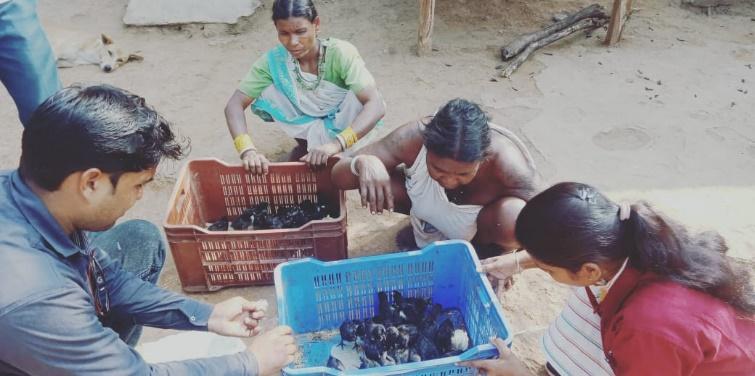
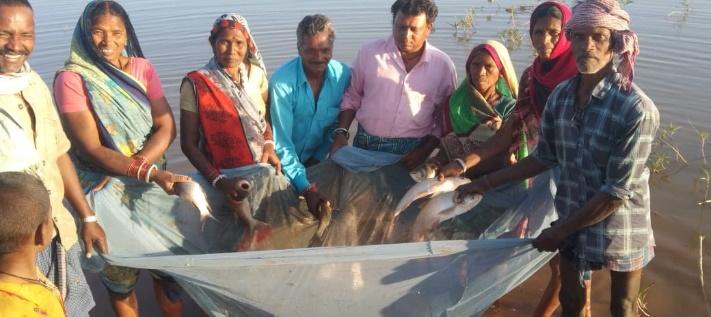
In Kwardha district of CG – Samerth has promoted 665 enterprises on pisciculture, poultry farming, NTFP collection and marketing as well as farm-based livelihoods by linking them with available forest and government schemes on technical training, accessing loans etc.


Thus, more than 1000 micro-entrepreneurs are handheld and supported on a regular basis with financial support, business strategy as well as market linkage. Samerth overall vision is to help people get out of poverty and to pursue this goal we have been encouraging social business. The idea is to create products or services that provide social benefits.

In Samerth’s experience, rural and semi-urban micro-entrepreneurs do not readily receive the training and support systems that facilitate the upgrading of skills as well as the general understanding of organising and managing successful businesses. The transition from homemaker to sophisticated entrepreneur is no small challenge, however, women across India are increasingly showing an interest in economic independence.


Samerth’s support the microentrepreneurs stresses encompassing the skills in a way that extends beyond financial support to those of creating market linkages.

Each cluster of activities provided a learning experience that has helped to shape the concept of social business/micro-enterprises.
 
Our learnings of the last decade of promoting micro-entrepreneurs

  1. Only providing microfinance support is not enough. Samerth’s experience of working in some of the poorest areas has highlighted that in many instances, providing finance to low-income communities does not effectively reduce poverty levels. More comprehensive services are required to enable them to benefit from financial inclusion. Constant hand-holding in the initial years and support in market linkages is the key for any micro-enterprise to not only survive but thrive. The enterprise must be prepared to compete with the market. It must provide high-quality goods and services, and provide excellent value for the prices it charges.
  2. Building a multi-partnership model benefits all. Partnering with multi-sector organizations to offer training and business counselling on enterprise feasibility, Samerth worked towards strengthening collectives and creating market linkages and financial linkages via banks.
  3. Capacitating the entrepreneur is the key. Wherever possible, formal capacity-building micro-enterprise development training is undertaken. These training are delivered in local, vernacular languages and through contextually relevant methods, with content derived from the region. This training is crucial as the world is changing faster, particularly in the realms of economic development and technology.
  4. 4. Women-led enterprises lead to many other changes in society. Finally, micro-enterprises headed by women are important indicators in demonstrating overall and holistic economic development, which also incorporates social elements such as the promotion of gender grievance and redressal forums, and an awareness of health and physical wellbeing as an essential aspect of both maintaining productive livelihood activities and reducing the financial burden on individuals and families alike.
  5. Role of Banks for Financial Inclusion: We must not overlook the fact, however, that strong support for credit through formal banks is crucial.  The vibrant micro-enterprise will further blossom with the pro-active involvement of nationalised and private sector Banks and credit institutions.  It is only with the strengthening of these institutions, that the promotion of micro-entrepreneurs can happen and spur economic growth.

Highlighting here is a case study of our women entrepreneurs from Sanand in Gujarat. This programme is supported by WIN Foundation.

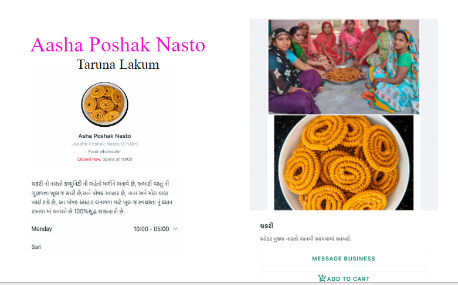
Inspiring Micro Enterprise Innovation: Asha Poshak Nashto (Asha Nutritive Snacks)


Samerth has been working in five villages of Sanand since 2019. Sanand was a small sleepy town in the Ahmedabad district, that shot to prominence after the Tata Nano factory relocated from West Bengal to Sanand. After Nano, many other ancillary companies came to Sanand and from an agricultural zone, it became an industrial zone. Overnight the land prices shot up and big farmers became rich. The poor farmers with small land holdings became factory workers. Though there were industries, the social dynamics did not change, women were still expected to cover their faces, were not allowed to carry smartphones, girls were not allowed to study and most menial jobs were delegated to women.

Samerth had been working in the government schools of the area on enhancing the quality of education and nutrition had been one of the focus areas. Our team was also working with women to form Self Help Groups, save regularly, come together on a platform etc. It was in this situation that the pandemic struck and many factory workers lost their jobs. With no income and poor skills, it became difficult for families to sustain themselves. It is in these circumstances that the WIN Foundation training on nutri entrepreneurs was initiated with our self-help groups. The model was simple – women to be trained in microenterprise development, from product development to costing to packaging to the market linkage, handheld through the process. The women were also trained in nutrition, understanding the needs of their bodies, especially during times of change (adolescent – onset of the menstrual cycle) Pregnancy, and menopause combined with the nutritive content of our day-to-day food and how to match the needs to the content. This gave them an overall perspective on the foods -especially traditional ones that they have been traditionally consuming across generations. The training also helped them gain insight into the nutritional needs of a growing child and based on this understanding their product for enterprise took shape.


The idea was to make traditional sweet and savoury products with nutritive content which children and adults can eat instead of ready-to-eat packaged food with zero nutritional value in addition to the harm it causes to the environment with the packaging.  It was a win–win for both, women getting an entrepreneurial product, which primarily caters to their own communities. Due to its proximity to the city and industrial belt, there were many other avenues for the products too.  The micro-enterprise development training conducted by Mr Nikesh Ingle was a robust program of theoretical concepts that were delivered with practical exercises. It required every trainee to visit a local marketplace during the training. This provided an important initial exposure to the environments in which they will be conducting business and a valuable insight into aspects of operation such as local competition, typical footfalls, demand and market opportunities, customer buying capacities etc. Such experience also contributes to building a greater preparedness for executing effective enterprise plans. Furthermore, constant handholding gave them further encouragement to continue with their venture. This also includes bringing the technical aspect in current times – a WhatsApp business training that was held online for about 16 hours throughout the month. This training helped entrepreneurs gain confidence that their products and services can reach a larger audience without spending on marketing.

The product was of high-quality nutritious food and also served low-income groups, especially children. We are providing food to daycare centres with intellectually challenged children and young adults.  The products were competitive price-wise as they didn’t require costly packaging or advertisement.

It has been early days since the women started actively producing and selling their products and they have great responses within and outside the community. There is certainly hope that with the right support, these women will only march stronger ahead. 


I certainly believe that there is huge scope to support the vulnerable and marginalised with business development training along with micro-credit to encourage them to become micro-entrepreneurs in their own right.  We need to think strategically and analyse the potential role of communities for growth.  The whole idea is to put our minds to it and create what we want by providing a fair chance to unleased the community’s energy and creativity.   I believe that combined with technology, creating local solutions with global markets is the future.

Moreover, establishing financial institutions for rural areas is the beginning. Banking penetration, access to banking services, and use of banking services significantly influence financial Stability for women entrepreneurs living in difficult areas.

Friday, 14 October 2022

Nutritious Food and Women Microenterprises – The Saath Experience

 Authors: Mr. Rajendra Joshi, Managing Trustee, Ms. Chinmayi Desai, Director-urban Programs and Mr. Manish Kumar Mishra-R&D Manager- Saath Charitable Trust


Food is the most important basic need for human existence and has a powerful influence on world history. Food preferences emerge in early childhood. Children in low-income urban geographies cannot resist the temptation of tasty, cheap and easily accessible packaged food/ junk food. Junk food contributes more calories than nutrients and is high in fat, sugar and salt. Continuous consumption of ready-to-eat packaged food can negatively impact growth, decay teeth, promote obesity and ultimately lead to malnutrition. Food containing low nutritional value reduces the intelligence of children, thus constraining their future learning capacity and ultimately impacting the economy negatively. At present, in India, the health and nutrition indicators of children in urban areas are as bad as those of their rural counterparts much of which can be attributed to the consumption of packaged ready-to-eat food. The urban population in India is projected to double from 410 million in 2014 to 814 million by 2050, making it imperative to address the issue urgently. Opportunities exist in the promotion of market-based interventions on nutritious food and women-led microenterprises have a great role to play in nutritious ready-to-eat food/ snack foods. The size of the snacks market in India is estimated to be worth Rs. 44,000 crores with an annual growth of 25%. As Saath has realized, the barriers to scale for nutritious food, women-led microenterprises remain – (i) Poor recognition of business opportunities; (ii) Domains like hygiene, preservation, operational efficiency and unit cost optimization require more attention; (iii) Support system of mentors and advisors need strengthening; (iv) Averseness on debt and scepticism to start out on their own; (v) Lack of ecosystem approach – NGO, MFI/ Banks and Entrepreneurs


Thus, Saath in collaboration with WIN Foundation started working towards nurturing women microenterprises on nutritious snacks. The interventions are designed on the twin strategies of (i) pull or demand creation and (ii) push or supply generation. Through this project, twenty-five women micro-entrepreneurs have been trained by Saath on product development, market research, production, marketing, customer feedback, repeat orders, team development and financial management. Trained entrepreneurs have come out with two to three nutritive products each, have clearly identified customer segments and are generating significant physical volumes, sales value, repeat orders, and profit and seeing it as a viable employment opportunity. They have started to build partnerships with sales channels and raw material supply chains. The subsequent discussions elaborate on our experiences during the entire process.

Vasna a low-income neighbourhood was chosen for the project. It is located between the old city and new Ahmedabad and is home to various communities including Marwadi, Harijan, Vanjara, Rabbari, Vankar and Darbar. These communities are largely patriarchal and women prefer home-based livelihoods. However to make both ends meet, some women have started venturing out for work as housemaids. Women are often sole breadwinners and support a family of four to five dependents often struggling to make ends meet. Hence monetary shortage is persistent and the need for women-centred income-generating activities is a priority. Therefore, Vasna was a natural choice for this project.

The concept seeding was done in group meetings with 10-15 women, where the project concept was introduced. Selection of women was also done in this group by asking questions like: “Who are interested in Cooking? What do you know about cooking? Have you worked previously in cooking at others’ homes? Can you cook something different? What can you cook which is liked by everyone? Are they interested in enterprise or in Job?” Fifteen such concept seeding meetings were conducted with around 250 women. The Saath team listed names of women who expressed interest and had commensurate skills. The shortlisted women were later called to the Vasna Saath Centre to register themselves.

Although everyone listened attentively during the concept seeding meetings, showed interest and explicitly agreed to come to the centre for registration, however, only twenty-five turned up and among them, six women quit even before the training began. The Saath team learnt that out of every four women contacted initially only one would become an active participant. Out of twenty-five women who had agreed to join the training, six women joined a similar program organized by the government in the lure of utensils and travel reimbursement. However, a majority of women decided to attend the Saath program as it had handholding services.

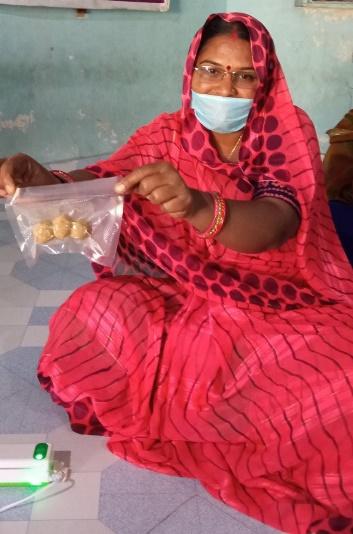
The technical training of dry snacks was a weeklong program with one session on life skills and motivation. Information about ingredients was shared after which the trainer demonstrated the cooking process. Thereafter participants were asked to repeat the process, to ensure effective learning. Participants are also allowed to showcase their skills in traditional food preparation in which they were confident to facilitate co-learning between group members. The training focused on nutritious food only and included limited products like Ragi ni Sukdi, Tal ni Sukdi, Khajoor roll and Nachos. Saath Team is also working on identifying new products which can be taken to scale and has a high shelf life.

Advanced business training focused on establishing the microenterprise, finalizing the product, costing, packaging, marketing, and margins along with clear product uniqueness. The process of the training included lectures followed by practical demonstrations, packing products, going to shops and making sales pitch. Also, participants were asked to prepare and try selling their own products to add to the experience.

Preparation of snacks in the advanced business training is a central group-based activity. The group consisted of three women. Raw materials were supplied by Saath and snacks were produced, packed and marketed by this group. Saath has learnt that the business must compete with regular ready-to-eat packaged food. Thus, Saath is working to improve the retailer margins, increase shelf life, decrease product price, and increase taste and visual appeal. As the products are reaching the market Saath is connecting to the market for regular feedback on competition practices, cost structure, price spread, customer segments and preferences.

Training on Whatsapp Business Catalogue

This training discussed the benefits of the Whatsapp business App and trained participants on the process of creating a profile and catalogue. It included perfecting the art of clicking a food picture, typing messages, replies and sending links. This training spanned over nine days and is conducted twice weekly. The initial training was given by a third-party expert who understands the context of women-led food microenterprises. This training was conducted online with the objective to train the Saath team also. The Saath team thereafter closely worked with women entrepreneurs to develop the catalogues. These sessions were organized at the centre. It was essential that participants have smartphones and dual-sim activated. Saath also played a significant role in mobilizing smartphones for entrepreneurs.

Present Impact of the Programme:

Eight women have started business since May 2022 generating gross revenue of Rs. 1.11 Lakh and profit of Rs. 0.35 Lakh. Twenty participants are in the process to start a business, six participants have been linked to a job and two women have left the program. Women entrepreneurs require assistance in getting orders and a subsidized loan of around Rs. 50,000 to strengthen their enterprise. To create a physical presence in the mind of customers, Saath is also planning to participate in food festivals which will also go a long way to establishing the business.

Thoughts for the Future:

As discussed, the idea of nutritious snacks is timely. However, it requires patience, hard work and regular investment in market research, technology and standardizing operational processes. Post-COVID-19 the upper middle class is sensitized towards such products and is an easy market. However, reaching these nutritious products to low-income households will require addressing issues of affordability and ease of access for the population who is under the constant squeeze of time and money.

Source: https://fmtmagazine.in/overview-of-snacks-market-in-india/

____________________________________________________________________________________________

If you are keen to introduce micro-entrepreneurship training in your area or village for local communities and want to know more about our work, feel free to reach out to us at info@winfoundations.org
Food Safety for Nutrition Entrepreneurs

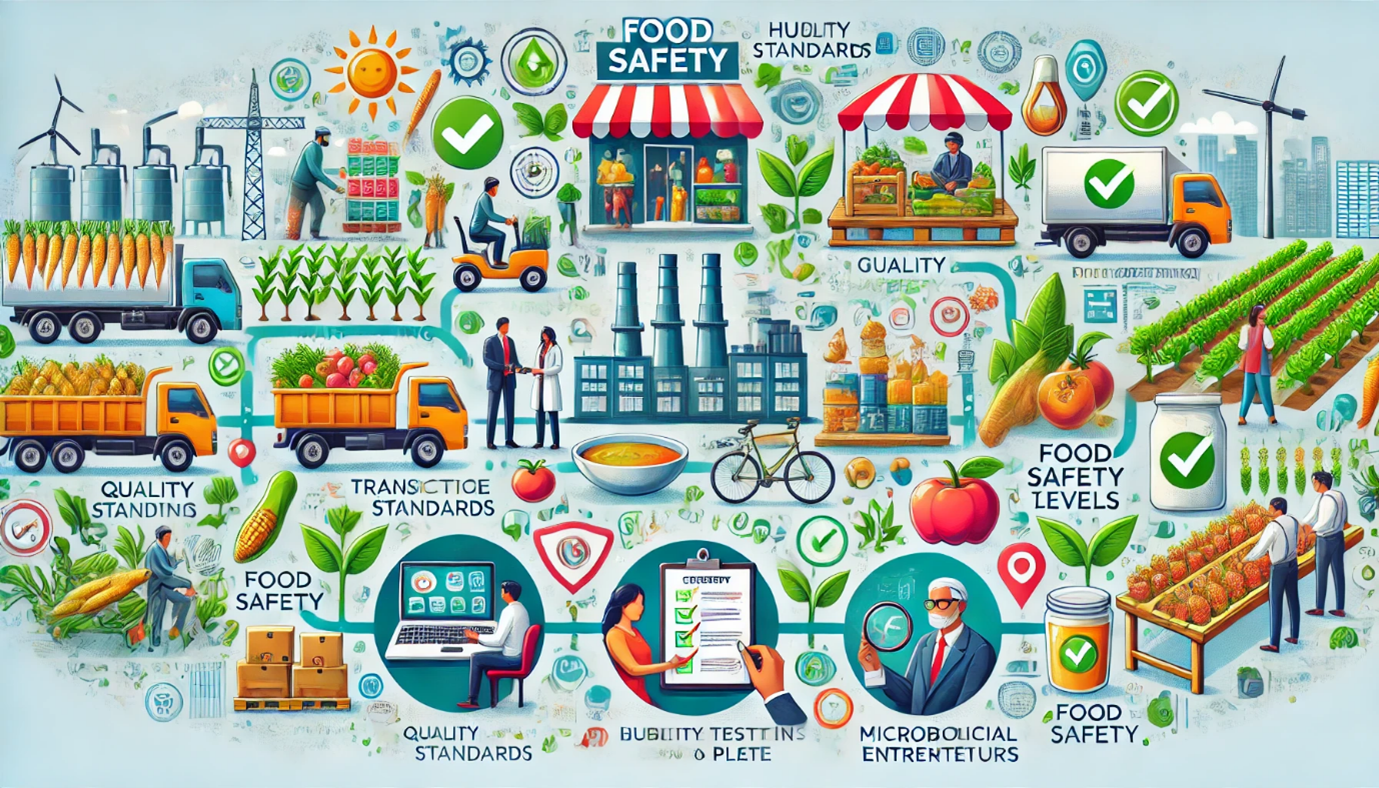
  Food Safety for Nutrition Entrepreneurs   Dr. Bhaskar Datta,Associate Professor, Chemistry  (Jointly with Biological Sciences and Engineer...