Friday, 14 October 2022

Nutritious Food and Women Microenterprises – The Saath Experience

 Authors: Mr. Rajendra Joshi, Managing Trustee, Ms. Chinmayi Desai, Director-urban Programs and Mr. Manish Kumar Mishra-R&D Manager- Saath Charitable Trust


Food is the most important basic need for human existence and has a powerful influence on world history. Food preferences emerge in early childhood. Children in low-income urban geographies cannot resist the temptation of tasty, cheap and easily accessible packaged food/ junk food. Junk food contributes more calories than nutrients and is high in fat, sugar and salt. Continuous consumption of ready-to-eat packaged food can negatively impact growth, decay teeth, promote obesity and ultimately lead to malnutrition. Food containing low nutritional value reduces the intelligence of children, thus constraining their future learning capacity and ultimately impacting the economy negatively. At present, in India, the health and nutrition indicators of children in urban areas are as bad as those of their rural counterparts much of which can be attributed to the consumption of packaged ready-to-eat food. The urban population in India is projected to double from 410 million in 2014 to 814 million by 2050, making it imperative to address the issue urgently. Opportunities exist in the promotion of market-based interventions on nutritious food and women-led microenterprises have a great role to play in nutritious ready-to-eat food/ snack foods. The size of the snacks market in India is estimated to be worth Rs. 44,000 crores with an annual growth of 25%. As Saath has realized, the barriers to scale for nutritious food, women-led microenterprises remain – (i) Poor recognition of business opportunities; (ii) Domains like hygiene, preservation, operational efficiency and unit cost optimization require more attention; (iii) Support system of mentors and advisors need strengthening; (iv) Averseness on debt and scepticism to start out on their own; (v) Lack of ecosystem approach – NGO, MFI/ Banks and Entrepreneurs


Thus, Saath in collaboration with WIN Foundation started working towards nurturing women microenterprises on nutritious snacks. The interventions are designed on the twin strategies of (i) pull or demand creation and (ii) push or supply generation. Through this project, twenty-five women micro-entrepreneurs have been trained by Saath on product development, market research, production, marketing, customer feedback, repeat orders, team development and financial management. Trained entrepreneurs have come out with two to three nutritive products each, have clearly identified customer segments and are generating significant physical volumes, sales value, repeat orders, and profit and seeing it as a viable employment opportunity. They have started to build partnerships with sales channels and raw material supply chains. The subsequent discussions elaborate on our experiences during the entire process.

Vasna a low-income neighbourhood was chosen for the project. It is located between the old city and new Ahmedabad and is home to various communities including Marwadi, Harijan, Vanjara, Rabbari, Vankar and Darbar. These communities are largely patriarchal and women prefer home-based livelihoods. However to make both ends meet, some women have started venturing out for work as housemaids. Women are often sole breadwinners and support a family of four to five dependents often struggling to make ends meet. Hence monetary shortage is persistent and the need for women-centred income-generating activities is a priority. Therefore, Vasna was a natural choice for this project.

The concept seeding was done in group meetings with 10-15 women, where the project concept was introduced. Selection of women was also done in this group by asking questions like: “Who are interested in Cooking? What do you know about cooking? Have you worked previously in cooking at others’ homes? Can you cook something different? What can you cook which is liked by everyone? Are they interested in enterprise or in Job?” Fifteen such concept seeding meetings were conducted with around 250 women. The Saath team listed names of women who expressed interest and had commensurate skills. The shortlisted women were later called to the Vasna Saath Centre to register themselves.

Although everyone listened attentively during the concept seeding meetings, showed interest and explicitly agreed to come to the centre for registration, however, only twenty-five turned up and among them, six women quit even before the training began. The Saath team learnt that out of every four women contacted initially only one would become an active participant. Out of twenty-five women who had agreed to join the training, six women joined a similar program organized by the government in the lure of utensils and travel reimbursement. However, a majority of women decided to attend the Saath program as it had handholding services.

The technical training of dry snacks was a weeklong program with one session on life skills and motivation. Information about ingredients was shared after which the trainer demonstrated the cooking process. Thereafter participants were asked to repeat the process, to ensure effective learning. Participants are also allowed to showcase their skills in traditional food preparation in which they were confident to facilitate co-learning between group members. The training focused on nutritious food only and included limited products like Ragi ni Sukdi, Tal ni Sukdi, Khajoor roll and Nachos. Saath Team is also working on identifying new products which can be taken to scale and has a high shelf life.

Advanced business training focused on establishing the microenterprise, finalizing the product, costing, packaging, marketing, and margins along with clear product uniqueness. The process of the training included lectures followed by practical demonstrations, packing products, going to shops and making sales pitch. Also, participants were asked to prepare and try selling their own products to add to the experience.

Preparation of snacks in the advanced business training is a central group-based activity. The group consisted of three women. Raw materials were supplied by Saath and snacks were produced, packed and marketed by this group. Saath has learnt that the business must compete with regular ready-to-eat packaged food. Thus, Saath is working to improve the retailer margins, increase shelf life, decrease product price, and increase taste and visual appeal. As the products are reaching the market Saath is connecting to the market for regular feedback on competition practices, cost structure, price spread, customer segments and preferences.

Training on Whatsapp Business Catalogue

This training discussed the benefits of the Whatsapp business App and trained participants on the process of creating a profile and catalogue. It included perfecting the art of clicking a food picture, typing messages, replies and sending links. This training spanned over nine days and is conducted twice weekly. The initial training was given by a third-party expert who understands the context of women-led food microenterprises. This training was conducted online with the objective to train the Saath team also. The Saath team thereafter closely worked with women entrepreneurs to develop the catalogues. These sessions were organized at the centre. It was essential that participants have smartphones and dual-sim activated. Saath also played a significant role in mobilizing smartphones for entrepreneurs.

Present Impact of the Programme:

Eight women have started business since May 2022 generating gross revenue of Rs. 1.11 Lakh and profit of Rs. 0.35 Lakh. Twenty participants are in the process to start a business, six participants have been linked to a job and two women have left the program. Women entrepreneurs require assistance in getting orders and a subsidized loan of around Rs. 50,000 to strengthen their enterprise. To create a physical presence in the mind of customers, Saath is also planning to participate in food festivals which will also go a long way to establishing the business.

Thoughts for the Future:

As discussed, the idea of nutritious snacks is timely. However, it requires patience, hard work and regular investment in market research, technology and standardizing operational processes. Post-COVID-19 the upper middle class is sensitized towards such products and is an easy market. However, reaching these nutritious products to low-income households will require addressing issues of affordability and ease of access for the population who is under the constant squeeze of time and money.

Source: https://fmtmagazine.in/overview-of-snacks-market-in-india/

____________________________________________________________________________________________

If you are keen to introduce micro-entrepreneurship training in your area or village for local communities and want to know more about our work, feel free to reach out to us at info@winfoundations.org

Monday, 19 September 2022

Combating malnutrition through nutrient delivery techniques

 Authors: Prof. Amit Arora, Associate Professor, CTARA, Indian Institute of Technology, Bombay and

Ms. Nisha Pujari, Research Scholar, CTARA, Indian Institute of Technology, Bombay


“The doctors of the future will no longer treat the human frame with drugs, but rather will cure and prevent disease with nutrition.” – Thomas Edison

Good nutrition is an essential driver of sustainable development because it plays a critical role in brain development, generates broad-based economic growth, and signals the fulfilment of people’s rights to food and good health.  Malnutrition refers to deficiencies, excesses, or imbalances in a person’s intake of energy and/or nutrients (WHO, 2019).

Micronutrients are essential elements required in small quantities throughout our life to orchestrate a range of physical and mental functions to maintain health. The consequences of their absence are severe and lead to micronutrient malnourishment (CDC, 2019). According to the national data for India (NFHS-5), the condition of wasting and micronutrient malnutrition has worsened in the last few years. The most widespread and recognized micronutrient deficiencies are of iron, zinc, vitamin A, iodine, vitamin D, and folate, often occurring concurrently in the sample population (Suchdev, 2017). As per NFHS 5, the percentage of total children aged 6-23 months receiving an adequate diet is very low (~11.3%). Anaemic children aged between 6 and 59 months have also gone up significantly from 58.6% to 67.1%. Likewise, 59 out of 100  women aged 15-19 years are anaemic.

Many strategies have been suggested to combat micronutrient deficiencies, such as exclusive breastfeeding for the first 6 months, controlling parasitic infections, food fortification, food diversification and nutritional supplementation. Food fortification is considered as a relevant and potent intervention by the authorities to reduce the burden of micronutrient deficiencies among children and mothers. It involves adding micronutrients to processed foods, which increases their concentration and thus fulfilling dietary requirements.

The selection of nutrients is based on evidence of low intakes in a population and/or widespread nutrient deficiencies which vary between countries and populations. Fortification programs, therefore, need to be carefully designed to meet the nutrient needs of a given population. Food processing has enormous potential to both increase dietary-diversity and enhance concentrations of micronutrients in commonly consumed foods. Technologists and scientists are making efforts in employing food‐to‐food fortification, by adding micronutrient‐dense foods to food recipes at household as well as commercial level to increase their micronutrient quality. 

Food-based strategies to combat micronutrient malnutrition

Evidence-based interventions for malnutrition have been well studied and can be categorized as nutrition-specific (address immediate causes, often at the individual level) or nutrition-sensitive (address underlying causes, often at the community level). Policy and programme makers incorporate food-based strategies such as dietary diversification, food fortification and supplementation, along with other additional measures on food safety, nutrition education and public health. These approaches should be regarded as complementary, with their relative importance depending on local conditions and local needs. Food-based strategies are discussed as follows:

  1. Dietary Diversity
    Increasing dietary diversity is a preferred way of improving the nutrition of a population because it has the potential to improve the simultaneous intake of many food constituents including micronutrients. Diverse diets have been reported to provide vitamins and minerals that prevent ‘hidden hunger’ and micronutrient deficiency diseases (Dulal et al., 2017; Jones et al., 2014; Nithya & Bhavani, 2018; Rosenberg et al., 2018). Increasing dietary diversity means increasing the consumption quantity and range of micronutrient-rich foods. In practice, this requires implementation programmes to improve the availability and consumption of different micronutrient-rich foods (such as animal products, fruits and vegetables) in adequate quantities, especially among those who are at risk or vulnerable to micronutrient malnutrition (Nithya & Bhavani, 2018). However, increasing dietary diversity on a sustained basis has its challenges. One is the introduction of behavioural change through counselling about different foods and their nutritional benefits. Lack of resources for producing and purchasing higher quality foods can sometimes present a barrier to achieving greater dietary diversity, especially in the case of poorer populations (L. Allen et al., 2006)
  2. Supplementation
    Supplementation is the term used to describe the provision of relatively large doses of micronutrients, usually in the form of pills, capsules or syrups. Micronutrient supplements during pregnancy can act as a precautionary measure for reducing morbidity and mortality in infants and also in treating maternal complications during pregnancy (Lawn et al., 2014). In our country, supplementation programmes are run to provide iron and folic acid to pregnant women, and vitamin A to infants, children under 5 years of age and postpartum women. Recently, the Ministry of Health and Family Welfare (MoHFW) has launched the Weekly Iron and Folic Acid Supplementation Programme to meet the challenge of the high prevalence and incidence of anaemia amongst adolescent girls and boys.
    Supplementation usually requires the procurement of micronutrients in a relatively expensive pre-packaged form, an effective distribution system and a high degree of consumer compliance (L. Allen et al., 2006). Some adverse effects observed with high-dose supplements and logistical and human-resource constraints may result in non-compliance and the long-term sustainability of such programmes. In such cases, mass fortification of staple foods becomes an important option to combat vitamin and mineral deficiencies. There are fewer concerns related to mass food fortification and it can be a complementary intervention to supplementation for efforts to decrease vitamin and mineral deficiencies (Peña-Rosas et al., 2019).
  3. Food fortification
    Food fortification involves adding micronutrients to processed foods. It describes the improvement of essential micronutrient content in foods to enhance the nutritional and health benefits with minimal risk to health. In many situations, this strategy can lead to relatively rapid improvements in the micronutrient status of a population, and at a reasonable cost, especially if an advantage can be taken of existing technology and local distribution networks (L. Allen et al., 2006).  There have been studies with single (Dean et al., 2020), dual (Jannasch et al., 2020), and multiple micronutrient fortification, including zinc, iron, copper, selenium, vitamin A, vitamin B complexes, vitamin C and vitamin E (Das et al., 2019). Minerals are fortified in their salt forms such as ferrous sulphate, ferrous gluconate, ferrous lactate, zinc oxide, zinc sulphate, zinc acetate, zinc chloride, calcium carbonate, calcium phosphate, tri-calcium citrate, calcium lactate, calcium lactate gluconate, calcium gluconate, etc. (Gharibzahedi & Jafari, 2017). Considering the regional diversity in terms of food availability, fortification should be done in a customized manner to ensure compliance. In addition, fortificants should be low in cost with good absorption, and well accepted by the target population in terms of taste and organoleptic properties. In most cases, it is preferable to use food vehicles that are centrally processed and to have the support of the food industry (Chadare et al., 2019).  However, of these three methods (dietary diversity, food fortification and supplementation), programmes that deliver micronutrient supplements often see a quick improvement in the micronutrient status of the targeted population. Food fortification tends to have a less immediate but nevertheless a much wider and more sustained impact. Although increasing dietary diversity is generally regarded as the most desirable and sustainable option, it takes the longest to implement (L. Allen et al., 2006; Gharibzahedi & Jafari, 2017).

Food-to-Food fortification

Food-to-food fortification is a technique of fortifying food products with one or more food ingredient(s), thus making nutrient-dense food. The incorporation of nutritious ingredients calls for modification in the original food recipe, creating a new product with higher nutritional benefits. Such fortification techniques offer a variety of tastes and textures that are unique along with enhanced protein, vitamin, fibre and/or mineral contents and beneficial effects on its quality (Platel & Srinivasan, 2016). Cumin, moringa and sesame-fortified bread and soy-butter, moringa and cumin-fortified salty biscuits demonstrated improved total content and bio-accessible minerals. Its inclusion in food products could be a useful alternative or complement conventional fortification. This will help to improve the mineral status of deficient populations. Food‐to‐food fortification often uses locally available foods to enhance the nutrient intake of the population. This approach consists of selecting and associating foods in such a way as to optimize the bioavailability of useful micronutrients to consumers.

IIT Bombay’s intervention

The Nutrition Groups at IIT Bombay emphasises the development of food-based nutrient-rich, safe, affordable and ready-to-use formulations. Achieving optimal nutrition through the intake of healthy foods has the capability to optimise the physiological functions of each human while ensuring maximum well‐being. The key variable of this research is the presence of macro and micronutrients in sufficient quantity without compromising on quality parameters. Our research team at IIT Bombay is working on developing products with the capability to deliver the full range of micronutrients mostly through the natural product route, avoiding the chemical route. Our aim is also to create local capacity among women’s SHGs or social start-ups for decentralized production with appropriate Quality Control and Quality Assurance protocols. Given the priority accorded to health and nutrition projects in CSR funding, support to the food products lab can go a long way in addressing the problem of hidden hunger among malnourished children and women and benefit the programme implementation in aspirational districts

Some of the products which have been developed in CTARA are – 

(i)    Egg equivalent Idli and nutrition bar  
A completely vegetarian formulation was developed in the form of nutritious ‘Idlis’ and bars that can act as nutrition replacements provided by non-vegetarian foods such as eggs. The product’s theoretical nutrient profiling shows that 2 units of Idli or 1 standard Nutri bar are sufficient to give equivalent nutrition to an Egg. 


(ii)    Magic add-on dry powder 
This powder can be added to any given homemade recipe (e.g. Puree, daliya, Khichdi, dal-rice etc.) and as a result, the child will get a majority of the essential nutrients required for optimal growth and development. The major advantage here is gaining nutrient adequacy without changing dietary habits or preferences. Financial calculations for the developed formulation (DF) suggest that affordability is achievable at a mass-product scale to achieve reasonable dissemination and ultimately greater impact on children.

Other examples include Healthy alternatives to commercially available Ready to Use Therapeutic Foods (RUTF)

Challenges of food fortification
 
Theoretically, the fortification techniques aim at the efficient lowering of micronutrient malnutrition. These, however, still do not reflect in the micronutrient status of individuals based on reports. The following are some challenges faced during the choice and implementation of food fortification strategies:

  1. a)     Cost 
    There is a lack of simple and affordable technology that can use stable and bioavailable nutrients while maintaining the commonly preferred taste and appearance of foods. Increased food prices remain an issue affecting the food security and livelihoods of the needy. Despite various international aid, basic foods are still not accessible because they are unaffordable to vulnerable groups who often grow and process their own staple foods. Major challenges to local‐scale fortification programs include the initial cost of the mixing equipment, the price of the premix, achieving and maintaining an adequate standard of quality control, and sustaining monitoring and distribution systems.
  2. b)     Concerns about absorption and bioavailability
    Both the density and bioavailability of micronutrients in the diet are important for achieving optimal micronutrient status. Iron, zinc, and calcium can interact with each other to inhibit their respective absorption. For e.g. The ideal iron fortificant is highly soluble in water, similar to ferrous sulphate for the iron to be accessible for intestinal absorption. At the same time, the iron needs to be in a form that prevents it from interacting with dietary compounds that can induce undesirable organoleptic changes and reduce iron bioavailability by the formation of insoluble complexes. Fat-soluble vitamins such as vitamins A and E are poorly dispersible in water, making it difficult to incorporate them in beverages and foods with high moisture content.

Obtaining higher concentrations of micronutrients from food alone, to meet high RDA for adolescent girls and pregnant women is challenging. Processing techniques may lower anti-nutrients but at the same time, it may increase the risk of losses and degradation of minerals and vitamins, respectively.

c)     Toxicity

Toxicity may occur as a combined effect of more than one micronutrient. Increased instances of anaemia have been found in individuals with high levels of folate and low level of vitamin B12 (Rosenberg et al., 2018). Acute iron toxicity is usually seen in children with accidental ingestion of iron-containing syrups. Similarly, for zinc, folic acid, and selenium there are available documents with either reports on toxicity or regulation on the maximum limit (Food Safety and Standards Authority of India, 2019). Usual intakes below the upper limit have a low risk of adverse effects. Some nutrients do not have an upper limit because they are assumed to be safe at any level of intake (e.g., vitamin B12).

The goal of any national food fortification policy is to prevent nutritional deficiencies by bridging the gap between the requirement and availability of nutrients. In exceptional cases of widespread and severe deficiencies, the fortification can be up to 100% of the RDA. In practice, the level of fortification is about 15 to 30 % of RDA (computed per 600 calories of processed food) as per the regulations in India (ICMR, 2018). When these precautions are followed, food fortification carries a minimal risk of chronic toxicity.

  1. d)    Anti-nutritional factors
    Poor dietary diversity and dependence on cereal-based diets are common in low- and middle-income countries. Cereals, in addition to being poor sources of vitamins and minerals, also contain high quantities of other dietary compounds, such as phytates, which decrease the absorption of certain micronutrients, often called ‘anti-nutrients’ (Graham 2001). One of the most important concerns in the processing of mineral-rich foods is the formation of strong complexes between bivalence elements (e.g., Ca2+, Mg2+, Zn2+, Fe2+, Cu2+), and phytate, oxalates, fibre, and compounds of tannin and lectin (Shubham et al., 2020). For instance, iron and zinc absorption is significantly inhibited by phytic acid, present in cereals and other grains; polyphenols, contained in red wine and chocolate; or calcium, abundant in dairy products (Peña-Rosas et al., 2019). 

    Crop Diversity and Nutrition Security

    To be able to reach the overarching goal of nutrition security through improved dietary diversity scores of children and mothers, access to high-quality and diverse raw materials has to be ensured. Crop diversity at affordable and scalable capacity would be central to the food-to-food fortification strategy. India is one of the largest countries in the world has to ensure self-sufficiency in food. The government’s initiatives to increase the production of rice, wheat, pulses, and other crops have brought India to a very secure condition in terms of calorie sufficiency as a whole. For example, rice alone contributes to 40% of total grain production in India followed by wheat (~34% contribution).

India is blessed with hundreds of highly nutritive indigenous crops which are popular in many regions. However, in the past six decades, India has witnessed a decrease in the area under such crops.

A classic example is the production volume decline in the variety of millets over the last few decades. Since there is no minimum support price for such crops, the generation of demand for such crops based food products to improve regional nutrition security would help farmers in realising better prices. Of course, this would entail partnerships with local grassroots organisations to build a sustained momentum to establish a strong value chain.  Safeguarding food and nutrition security through the promotion of diverse crop production systems should be looked at by policymakers more closely.

Conclusion 

Micronutrient malnutrition is a major impediment to socio-economic development. Vitamins and minerals have very different stability and bioavailability in the food matrix. Therefore, the development of a fortification technology that makes them bioavailable and more compatible with the food vehicle would be crucial.  To quantify the size of the gap between usual intakes and requirements in a population group, the distribution of usual intakes by individuals in the population groups of concern (e.g., young children or women of reproductive age, low socioeconomic status) should be compared to the average requirement. A concerted effort is needed for the development of ready-to-consume food products rich in multiple micronutrients, addressing food accessibility and affordability issues, while enhancing bioavailability and forming efficient food synergies. 

“Those who think they have no time for healthy eating will sooner or later have to find time for illness.” – Edward Stanley

REFERENCES: CLICK HERE

Contact author: Prof. Amit Arora
Email: aarora@iitb.ac.in 
Profile link –  https://sites.google.com/site/personalwebpageamitarora/

Thursday, 8 September 2022

Water and Sanitation – Challenges and Opportunities for enhancing governance in rural / tribal areas


Water and Sanitation – Challenges and Opportunities for enhancing governance in rural/tribal areas

Authors: Paresh Vora, Director, India Operations, WIN Foundation, and Dr. Yogesh Jadeja, Founder and Director, Arid Communities and Technologies


“Water touches every aspect of development and it links with nearly every Sustainable Development Goal (SDG). It drives economic growth, supports healthy ecosystems, and is essential and fundamental for life itself. Some 2.2 billion people around the world do not have safely managed drinking water services, 4.2 billion people do not have safely managed sanitation services, and 3 billion lack basic handwashing facilities.”

– World Bank

The Government of India has recognised the massive challenges in Water and Sanitation domain and launched the Swachh Bharat Abhiyan, Atal Bhujal Yojana and Jal Jeevan Mission. Water shortages and poor quality affect hundreds of districts. Our agriculture suffers from vagaries of water supply, seriously affecting the food and nutrition security of the country as well as livelihood of small farmers.

The annual natural water cycle provides us limited fresh water, mostly during monsoon, stored on surface as well as in the ground and then used over the season, till the next supply arrives. On the other hand, the increased demand for water due to modern lifestyle and industry have led us to over-use surface water and over-extract ground water. This has lowered water levels and increased salinity in ground water. This, coupled with pollution due to human and industrial contaminants, has added to the water problems.

Before looking at solutions, a few key points worth noting: (i) While items like petrol, gets used-up, i.e. converted to another substance, water “usage” converts typically water to impure or polluted water. Proper treatment and recycling can increase the supply of available water. (ii) Nature’s water cleansing processes are inadequate for our levels of pollution. E.g. Human waste will take many months to decompose, while  chemicals and plastics may take tens of years. (iii) Agriculture uses about 90% of water. Optimized water use in agriculture increases yield and also preserves soil health. (iv) Water is basic to all life on earth. So it is also important to use water in a manner which protects the living ecosystems around us.

Hence, governance model for water at various levels of government needs to focus on: (i) conservation, (ii) optimized usage, (iii) recycling and reuse of water.  

Water governance also needs to be decentralized to the lowest administrative levels, due to distributed nature of storage and consumption and agriculture being largest user of water. Villages panchayat and associated groups should form the bedrock of water governance.

The newly launched Atal Bhujal Yojana and the Jal Jivan Mission offer an excellent opportunity to create sound and long term water governance structure, including policies, rules and regulations, protocols among participating administrative bodies, with participation by all stakeholders. This document, primarily talks of water governance in villages

Objectives of Water Governance

Villages desire water security, to ensure that their water demand for all uses are met from the available water supply. Thus both supply and demand side management is required.

The inflow of water in a village is based on rainfall, river, springs or canal inflows brought to village. This water is stored in rivers or springs, lakes, ponds, open wells and ground water aquifers. Water storage optimization is the key need.

The largest usage of water is in agriculture, with other major uses being family, cattle, and any industries located in or around the village. Thus agricultural practices, including crops selected, have the largest impact on demand for water. Optimized water usage, not only conserves water, but also results in better agricultural productivity and retains soil and water quality.

Village level

Hence, at the village level, the water governance system, should be centered on the Village Panchayat. The system should include (i) understanding Water supply and demand, creation and implementation of water security plan and water resource management protocols. (ii) impact measurement and corrective actions. Water Resource Committees, together with Farmers groups, Women groups, and similar bodies need to be involved as stakeholders and contribute to the decision-making. Village bodies need to ensure non-discriminatory decisions, so that water is provided in equitable manner to all.

Village panchayats can adopt suitable water policy legislation, in coordination with neighboring villages as well as nearby industries. This should be respected under the Panchayat act, with suitable methods for dispute resolutions in minimum time through administrative, arbitration or judicial means.

Cluster / Block / Taluka Level

Springs, rivers, canals and aquifers span across many villages and even districts. Hence coordination is required at village-cluster, block and taluka levels. At village cluster levels, the respective Panchayats need to develop mechanism to coordinate and cooperate on demand and supply issues. The taluka panchayats also need to play a role of coordination, when required to resolve differences. This will help village clusters to move from dependence to independence and then to inter-dependence to ensure more long term stability in water security, better ecosystem management, and economic and social progress.

District / State / National Levels

The towns, villages, industries, forests – all of them impact and are impacted by water governance in an interdependent manner. So a higher level coordination at the District, State and national level is required to ensure equitable solution for problems. E.g. The inevitable expansion of urbanization and industrialization cause overdrawing of water by the outlying urban colonies and reduces water for adjoining villages. This document does not aim to define these higher level governance structures.

While top-down approaches are important for initiating major changes as well as maintain the accountability and direction at higher level, a simultaneous decentralized approach at village and cluster / taluka levels is essential to bring a transformational change through participation by stakeholders at ground level. This alone can lead to tackling current challenges in water in more efficient and sustainable manner.

Skilling

Traditional water conservation structures and practices were implemented by village level skilled persons. Today it is imperative to develop a village level cadre (called Bhujal Jankars or Jaldoots) with training on traditional methods, upgraded with current technology and processes. Constant upskilling is required to adopt new methods. They need to understand water supply and demand, hydrogeology of the area, weather and rainfall, water conservation and recharge structures, testing and measurements, and ability to coordinate among various groups in the village.

The person should also have basic knowledge in agricultural practices and be able to coordinate with external agriculture experts.

This also creates livelihood opportunities at village level. With such a cadre, the Village bodies will have the knowledge and implementation expertise support to implement important supply and demand side initiatives.


Virtual Knowledge and Practice Excellence Centre

The skilled cadre of respective villages, will form a team, to study the cluster, block and taluka level issues and provide technical backup to the solutions implemented. This team needs to be linked to level experts from NGO’s, Institutions, Industry, Government, as required, for guidance on more complex issues.

Data and data analytics have emerged as a very powerful tool in all domains in twenty-first century. It has huge potential in agriculture, with its diverse data sets, huge amount of traditional and modern knowledge need to distill learning and make it available to farmers. Extensive data, captured from thousands of farms, on water, soil, weather, agricultural practices, inputs and outputs, prices, over period of years, enables farm level advisories for even marginal farmers cost effectively, and has potential to vastly improve agricultural science. This will go a long way to meet the farmer’s income needs and nation’s need to meet challenges of food and nutrition.

Thus, over a period of time, this body will form multiple virtual centre of excellence, capable of drawing from and contributing to higher level expertise, and support diverse local conditions and needs.

Evidence through Action Research under the Participatory Ground Water Management Program by ACT:

Most of the above steps have been implemented under the Participatory Ground Water Management project, carried out by Arid Communities and Technologies, with support from WIN Foundation and Tata Power Ltd. In  cluster of 19 villages of Mandvi Taluka in Kutch district in Gujarat, local youth were trained as Bhujal Jankars and in turn they prepared village level water security plans in discussion with village communities, under guidance from ACT. Supply side interventions and demand side interventions were carried out followed by introduction of innovations. Knowledge management systems were developed, including protocols, processes and data system. This has enabled replication in other locations: (i) Khambhalia area in Dwarka district and (ii) Abdasa and Nalia talukas in Kutch, with suitable adaptations for different hydrogeological, socio-economic, cultural conditions. 

This has created a virtual centre of excellence with collective knowledge within the community including the Bhujal Jankars, Farmers and Women groups and village panchayat. Higher level expertise and continuous training is provided by ACT, which also brings additional expertise e.g. KVK for  farming – KVK, and WIN Foundation for innovations. For gender equity, Women Bhujal Jankars are being increasingly trained and in turn they are initiating more activities through women groups, e.g. kitchen gardens with marginal farming families or ladies.

The local Panchayat bodies and Taluka development offices have also supported these processes.  Now, ABhY has adopted some of these processes for scaling up at National Level and ACT has been allocated 123 villages in Mandvi Block, 129 villages in Nakhatrana block, 25 villages in Anjar block, 14 villages in Bhachau block under ABhY.

Conclusion

Water is critical basis for life on our planet and essential for all aspect of human progress and quality of life. In our highly integrated and complex society, a knowledge and innovation based decentralized water governance with supportive centralized structure and practices, is essential for proper management of water for long term sustainability of our planet.

To quote the father of our nation, Mahatma Gandhi, “The earth, the air, the land, and the water are not an inheritance from our forefathers but on loan from our children. So we have to handover to them at least as it was handed over to us.” 
We owe it to the future generation to take the right steps.

Note: Views expressed by author are personal.
 
About the authors:

Mr. Paresh Vora, is Director, India Operations, WIN Foundation (www.winfoundations.org). Link to Prolife – click here. Mr. Paresh Vora can be reached for any comments/feedback at: paresh@winfoundations.org
 
Dr. Yogesh Jadeja is the Founder Director, Arid Communities and Technologies (ACT, https://act-india.org/), Bhuj, Gujarat, a dedicated organisation for Participatory Ground Water Management. He has nearly 3 decades of experience in water conservation. Dr. Yogesh Jadeja can be reached at his email id yogeshjadeja2129@gmail.com, for any comments/feedback.

Tuesday, 9 August 2022

Water recycling: a case study and roadmap ahead

 Authors: Prof. Makarand M. Ghangrekar, Prof. Brajesh K. Dubey, Mr. Indrajit Chakraborty, Mr. Shreeniwas M. Sathe

Department of Civil Engineering, P. K. Sinha Centre for Bioenergy and Renewable. School of Environmental Science and Engineering. Indian Institute of Technology Kharagpur


Need for water recycling: In the current millennium, rising population and depleting natural resources have compelled governments and other non-government organisations to rethink their national, business and international strategies. This reshaping of the present technologies, business models and government policies have been guided by the sustainable development goals (SDGs) as set by the United Nations. Among the seventeen SDGs framed by United nation as a roadmap, the SDG 6 speaks about clean water and sanitation for all. In addition, the SDGs 3, 9, 11 and 12 are also influenced by the water cycle. For instance, the SDG 3 targets health and well being, which is directly connected to providing clean and potable water to all. Similarly, SDG 9, which talks about industrial innovation and infrastructure development, connects the water recycling industry both in terms of technological innovation for affordable treatment and infrastructural development to support such recycling.

Thus, defining the SDGs and their impact on the water usage and vice-versa, it can be understood that the wastewater treatment and recycling can contribute to the SDGs. Put in simple words, the treated water from the sewage and effluent treatment plants can be treated to such an extent that would enable its recycling for different non potable industrial, institutional, and domestic usage. Such usage would reduce the stress on the fresh water reserves and also the cost of water treatment infrastructure. This would also create more hygienic water practices as presently; large portions of developing nations discharge wastewater in natural water bodies due to lack of proper sewage treatment facilities. Discharge of such untreated water impacts the life on aqua as well as terra. Hence, treatment and recycle would again contribute to the SDG 14 and 15, which talks about reducing pollution load in marine and terrestrial environments.

Hence, building on the SDGs, government agencies as well as private players are adopting to this paradigm change and investing research, resources and framing recycling models for future setups. The Indian scenario is no different and the Government of India has also devised several strategies and projects for conservation of water resources. Pollution control boards, municipal bodies and different local regulatory and civic authorities across the country are focusing on wastewater treatment and reclamation projects as compared to the previous treatment and discharge policies. At this juncture, although such projects can achieve treatment of wastewater, however several factors intimidate the end user towards the reuse of this treated water. The risk of bacteriological and pathogenic contamination, the quality of treated water not meeting the discharge standards and the fear of infringement of personal hygiene reduces the acceptability of such practices. For ensuring reliability and transparency, the designed systems must be well tested prior to implementation in public domain. Additionally, to lure the corporate players the treatment cost offered by such systems should be reasonably low to out-compete other water sources in the water scarce regions of the country.

Glimpses of technologies involved: Different technologies are involved in wastewater treatment for facilitating reuse. The treatment technologies can be broadly classified into primary physical operations, secondary biological and biochemical processes and tertiary adsorption, advanced oxidation, coagulation ion exchange and membrane filtration processes. The list is indicative and with continuous research and development newer technologies are being introduced. In principle, the primary physical operations, such as screens, grit chamber and sedimentation tank, are installed to remove floating objects, gritty materials, and settleable particles, respectively. A certain fraction of organic matter is also removed during sedimentation.

The secondary processes are majorly biological in nature, the mode of operation being either aerobic or anaerobic. In case of aerobic processes, the activated sludge process and its variations, aerated lagoons, oxidation ponds are popular. Within the domain of anaerobic digestion, expanded bed granular reactor, upflow anaerobic sludge blanket reactor, anaerobic baffled reactor, anaerobic sequencing batch reactor etc. can be named. The tertiary treatment processes are often in the form of multigrade filters, membrane filtration for high effluent quality, dialysis for removal of excess dissolved solids, coagulation and flocculation, advanced oxidation processes (AOPs), such as ozonation, chlorination and UV radiation for disinfection. For treating wastewater to reuse quality, the AOPs are popular choice for removal of refractory compounds, that are not removed in secondary biological process.

IIT Kharagpur team and activities: The IIT Kharagpur team consists of Professor Makarand M. Ghangrekar as the Principal Investigator and Prof. Brajesh Kumar Dubey as the co-principal investigator. At IIT Kharagpur, the main theme of research for the WIN Foundation project was the implementation of an effective treatment plant with multistage tertiary treatment to produce treated water of non-potable contact reuse quality without the usage of membrane processes. Hence, the treatment plant designed and commissioned at the sewerage pumping station three inside the IIT Kharagpur campus comprises of two stage biological treatment followed by an optional chemical dosing assisted state-of-the art settler-clarifier unit, dual media filter and three stage disinfection units followed by an pressurized activated carbon filter. The final treated effluent can be either circulated to meeting horiticulture need and an in-house aquaculture pond or can be diverted towards the in-campus agricultural fields  and toilet flushing water, which is proposed as future plan. The block diagram given below describes the process flow diagram. The piping arrangement is designed to enable bypass of any of the operational stage for the tertiary processes. This bypassing arrangement is advantageous to test combination of the installed disinfection/ advanced oxidation processes (AOPs). The three stage AOP consists of ozonation, chlorination and UV radiation.

WIN Foundation modular treatment plant 300 m3 d-1 (a) Layout and (b) Real setup

Operation and monitoring of treatment plant

The 300 KLD treatment plant is under operation since January 2021 and has been continuously monitored for the removal of the organic matter, nutrients, surfactants, pathogens solids and dissolved ions. The results of the operated ETP indicate that the installation is capable of providing adequate treatment to domestic sewage and the water generated can be used for non-potable contact usage. The plant is capable of rendering satisfactory performance for wastewater reuse. The overall performance of the STP is as presented below:

S. No.ParameterUnitsRaw sewageOutlet
1Total CODmg/L22323
2Soluble CODmg/L16516
3Soluble BODmg/L890-3
4TKNmg/L243
5Total suspended solidsmg/L1026
6Volatile suspended solidsmg/L603.4
7Phosphatemg/L125
8PathogensMPN# /100 mL1.2 x 105< 3
9Anionic surfactant, SDSmg/L3.8BDL
10Total organic carbonmg/L359

# Most probable number of viable bacteria

The results of the operated STP indicate that the installation is capable of providing adequate treatment to domestic sewage and the water generated can be used for non-potable limited contact usage. The plant is capable of rendering satisfactory performance for wastewater reuse. The capitalised operating expenditure for this plant was estimated as Rs 15.87 per kL of wastewater treated with all three AOP combination. Further identification and monitoring of different trace refractory compounds has to be undertaken in next phase of research.

Broader vision and roadmap: The case studies at IIT Kharagpur provides a roadmap that can be adopted in other parts of the country for providing not only a safe sanitation practice, but also an opportunity for curbing the demand on fresh water reserves. In cities like Bangalore, the current water tariff from tanker supplies soar as high as Rs. 50 per kL of water. Modifying the larger urban apartment complexes with such modular plants capable of producing pathogen free and clean treated water can reduce the cost of water consumption. With the difference in electricity tariffs and accounting for the difference in manpower cost, the cost of such treatment can be kept as low as Rs. 17-18 per kL of water with the present model. Thus replacing the non-potable fraction of water supply with this treated water would lead to considerable savings.

In addition to the work done by IIT Kharagpur, other IITs, state research laboratories and CSIR labs are actively contributing to research on water reuse. A more concerted effort in this direction can be achieved by connecting the stakeholders and experts. The collaborative efforts and knowledge dissemination is a pre-requisite prior to India mobilizing towards such reuse practices. However, the advantageous position of India is that majority of smaller cities and a fraction of the megacities lack proper sewerage network and STPs. Hence designing such STPs and corresponding reuse utlities from scratch would be an easier job than retrofitting older establishments. Moreover, building on the outcome of such case studies of the modular STPs, the city planning and municipal regulations can be reframed to include mandatory and/or incentivised land and building taxes for such buildings that could practice such inhouse treatment of sewage and reuse of treated water. At this stage of planning city planners and urban civic bodies have to be brought onboard. Among other roadmaps towards achieving such paradigm shift of treated water reuse includes convincing the end user towards reuse of such water. This can be achieved by seminars and awareness programs for which, government, corporations and non-government organisations have to be brought in picture.

The advantage of such decentralised modular STPs is that it can be further adopted for peri-urban area and rural communities. However, in such cases, training of local populace to operate the plant and recover fertilizer and manure from the sludge produced and panchayat support towards financial management have to be micro-planned for each specific community. Easier said than done, such efforts of water recycling would require nationwide skilling of environmental engineers and plant operators, educating the general populace about the importance and advantage of such reuse and more importantly convincing the bureaucrats for adopting such policies at district and village panchayat levels.

About Authors:

  1. Prof. Makarand M. Ghangrekar, Professor, Department of Civil Engineering Indian Institute of Technology Kharagpur; Head Centre, P. K. Sinha Centre for Bioenergy and Renewables; Head of School, School of Environmental Science and Engineering.https://www.linkedin.com/in/makarand-ghangrekar-3018a024/
    2. Prof. Brajesh K. Dubey,Associate Professor, Department of Civil Engineering Indian Institute of Technology Kharagpur; Faculty, P. K. Sinha Centre for Bioenergy and Renewables; Faculty, School of Environmental Science and Engineering. 
    https://www.linkedin.com/in/brajesh-dubey-716883/
    3. Mr. Indrajit Chakraborty,  PhD Research Scholar, Department of Civil Engineering Indian Institute of Technology Kharagpur https://www.linkedin.com/in/indrajit-chakraborty-7b4a96b6/  
    4. Mr.Shreeniwas M. Sathe,,Research Scholar, Department of Civil Engineering Indian Institute of Technology Kharagpur, https://www.linkedin.com/in/shreeniwas-sathe-851b3b197/


__________________________________________________________________________________

If interested: 

Whether you are an NGO or Foundation working in water, or Gram Panchayat or a Government official working to improve water conservation practices, WIN Foundation and its partners are happy to share its knowledge. If interested in above, feel free to contact us at info@winfoundations.org

Tuesday, 29 March 2022

JAL SE KAL, DIVYABHASKAR, KALASH – WEEKLY ARTICLE SERIES BY Dr.Yogesh Jadeja


Secure Groundwater Secure Life – Part I

JAL SE KAL, DIVYABHASKAR, KALASH – WEEKLY ARTICLE SERIES BY Dr.Yogesh Jadeja

કૉલમ: જલ સે કલ, યોગેશ જાડેજા, ACT સંસ્થા, ભુજ

“કુદરતે કચ્છને ઘણીવાર ‘બારે મેઘ વરસાવતા નહીં, બારે માહ તરસાવતા રાખ્યાં છે.”

 વર્તમાનપત્રો કચ્છના સારા વરસાદના સમાચારોથી ભરચક હોય. સુકાઈ ગયેલી નદીઓમાં બે કાંઠે પાણી વહેવા લાગે. તળાવ-તળાવડીઓ છલકી જાય. સિંચાઈના ડેમો ઓવરફ્લો થયાના સમાચારથી વહીવટી તંત્ર પણ રાજી થઈ જાય. માલધારી, ખેડૂતો, વેપારીઓના ચહેરા ઉપર રોનક આવી જાય. પરીની વાર્તા જેવું સમજવા કરતાં આ બધું આપણે શક્ય બનાવી શકીએ છીએ. છેલ્લા બે વર્ષની કોરોના મહામારીએ સમસ્યામાંથી ઉપાયો શોધતાં શીખવ્યું છે તેવી જ રીતે સ્થાનિક સ્ત્રોતોની જાળવણી અને તેના માટે વૈજ્ઞાનિક તેમજ સહભાગીદારીવાળો અભિગમ થકી પાણીની સમસ્યા પર ધાડ મારી શકાય.

 કચ્છમાં વરસાદ સૌરાષ્ટ્ર અને ગુજરાતના અન્ય વિસ્તારોના વરસાદ પછી આવતો. સામે અધકચરા ચોમાસાં અને ભયંકર દુષ્કાળ પણ નોંધાયેલા છે. એકસામટા ત્રણ કે ચાર ચોમાસાં સાવ કોરાં ગયાં હોય એવા બનાવો આ પ્રદેશે નિભવ્યા છે. પરંતુ આ સૃષ્ટિમાં કોઈ પણ વસ્તુ હમેંશ માટે નથી. બધેબધું અનિશ્ચિતતાથી ઉથલ્યા કરે છે. જે ક્ષણે જીવનો જન્મ થાય છે એ ક્ષણથી જ એનું મૃત્યુ નિશ્ચિત થઇ જાય છે. આ જીવન અને મૃત્યુ વચ્ચેના ગાળામાં ટકી રહેવા જરૂરી એવા પાણી વગર કલ્પના શક્ય જ નથી.

 માનવીય અભિગમની તરેહને ધ્યાને લીધા વિના સાવ સરળ રીતે કોઈને પણ સમજમાં આવે કે કુદરતે કચ્છ માટે ઘણીવાર ‘બારે મેઘ વરસાવતા નહીં પણ બારે માહ તરસાવતા રાખ્યાં છે.’ પાણીની સમસ્યાની ‘એક્સપાયરી ડેટ’ નક્કી કરવી જરૂરી છે. આમ, પાણીના બજેટ – વોટર બેલેન્સ જેવી પ્રક્રિયા દ્વારા કે તેના વપરાશને ડાહપણ ભરી રીતે ઉપયોગ પરીણામો મેળવવા એરિડ કોમ્યુનિટીસ એન્ડ ટેકનોલોજીસ સંસ્થાના વિવિધ મોડેલો અને સક્સેસ કેસ સ્ટડી સાથે લેખો પ્રસિદ્ધ કરવામાં આવશે. 

કચ્છના ભૂર્ગભજળને લોકભાગીદારીથી સાચવવા એજ પરમોધર્મ

કચ્છ હંમેશથી પાણી મુદ્દે કણસતો રહ્યો છે. આ માટે જમીનના તળમાંથી પાણી ઉલેચવાને બદલે જમીન પર પડતાં પાણીનું સંગ્રહ પાણીની સમસ્યા દૂર કરવાનો કચ્છ માટે શ્રેષ્ઠ ઉપાય છે. દુષ્કાળ અને ઓછા તેમજ અનિયમિત વરસાદ ધરાવતા કચ્છ જિલ્લા માટે ભૂગર્ભજળએ આજની તારીખે પણ પીવાના પાણી માટે, સ્થાનિક પરંપરાગત આજિવિકાઓ માટે કે પછી ઔધોગિક વિકાસની પ્રક્રિયાઓમાં કરોડરજજુ સમાન સ્ત્રોત રહ્યો છે. એ વાત અલગ છે કે આ સ્ત્રોતના બેફામ શોષણને કારણે તેના જથ્થા અને ગુણવતામાં ફેરફાર થયો છે.

સંસ્થા દ્વારા સહભાગી ભૂગર્ભજળ વ્યવસ્થાપન પ્રકલ્પો થકી કચ્છના ગ્રામીણ અને  શહેરી બન્ને વિસ્તારમાં સફળતાપૂર્વક અમલીકરણ કરવામાં આવ્યા છે. માંડવી તાલુકાના ૧૯ ગામો કે જ્યાં પાણીની જરૂરીયાતમાં ૩૨૦ લાખ ઘનમીટરની ખોટ હતી અને અમુક ગામોમાં ભૂગર્ભજળની ખારાશનું પ્રમાણ 3500 થી ૬૨00 ટી.ડી.એસ. જેટલું હતું. પરંતુ પાછળથી ભૂગર્ભજળમાં ૭૮ લાખ ઘનમીર જેટલો જથ્થો વધ્યો અને અતિખારાશવાળા વિસ્તારમાં ટી.ડી.એસ.નું પ્રમાણ ૩000 થી 4000 પી.પી.એમ. જેટલું ઘટયુ.

ટાટા સીજીપીએલ, સંસ્થા તથા લોકભાગીદારીથી કલસ્ટર એપ્રોચ અપનાવ્યું અને તમામ ગામોનું વિકેન્દ્રીત જળ સુરક્ષા આયોજન તૈયાર કરવામાં આવ્યું હતું. જેમાં ઉંડા થઇ ગયેલા ભૂતળને ફરી ઉપર લાવવા રીચાર્જ બોરવેલ, બંધ પડી ગયેલ કુવા- બોરને રીચાર્જ સ્ટ્રક્ટરમાં તબદીલ કરવું, પરંપરાગત સપાટીય સ્ત્રોતને આવ સુધારણા અને જળ ચક્રના સંતુલનમાં પાણી મળી રહે તેવી રીતે ખાણેત્રા વગેરે જેવા પુરવઠો વધારવાના કાર્યનું અમલીકરણ કરવામાં આવ્યું. આ કાર્યોને લોકો જવાબદારીપૂર્વક સમજે, સાચવે અને નિભાવે તે માટે તેઓનું ક્ષમતાવર્ધન અને કરવામાં આવ્યું. જેથી આવનારા સમયમાં પીવાના પાણી બાબતે સંપુર્ણ સ્વાયત બની જશે.

કચ્છની ભૂસ્તરીય લાક્ષણિકતાને સમજવી જરૂરી

આપણે માંડવી તાલુકાના ૧૯ ગામો કે જ્યાં પાણીની જરૂરીયાતમાં ૩૨૦ લાખ ઘનમીટરની ખોટ સામે ભૂગર્ભજળમાં વધારો અને અતિખારાશવાળા ગામોમાં ટી.ડી.એસ.નું પ્રમાણ ઘટાડી શક્યા તે ગામોમાં તો ઘટાડી શક્યાની વાત છેલ્લાં અંકમાં કરી હતી પરંતુ આવનારા સમયમાં પીવાના પાણી બાબતે સંપુર્ણ સ્વાયતતા મેળવવા માટેના વિધિગત તબક્કા શું છે એ સમજવું જરૂરી છે. જેનો પ્રાથમિક તબક્કો છે, કચ્છની ભૂસ્તરીય લાક્ષણિકતાને સમજવું.

કચ્છની ભુસ્તર બનવાની શરૂઆત આશરે ૧૮ કરોડ વર્ષ પહેલા થઈ હતી જે સમયે ઉપરની તરફ દરિયો અને તેની નીચે જમીન જેવી પરિસ્થિતિ હતી. કાળક્રમે જમીનની અંદર ભૌગોલીક ફેરફાર જેવા કે, જવાળામુખીની હલચલ, પૃથ્વીના જમીન ભાગોની પ્લેટોનું એકબીજા તરફ સરકવું વગેરે જેવા કારોણોને લીધે ધીરેધીરે જમીનનો ભાગ ઉપર આવવા લાગ્યો અને દરિયો જમીન પરથી સરકવા લાગ્યો.

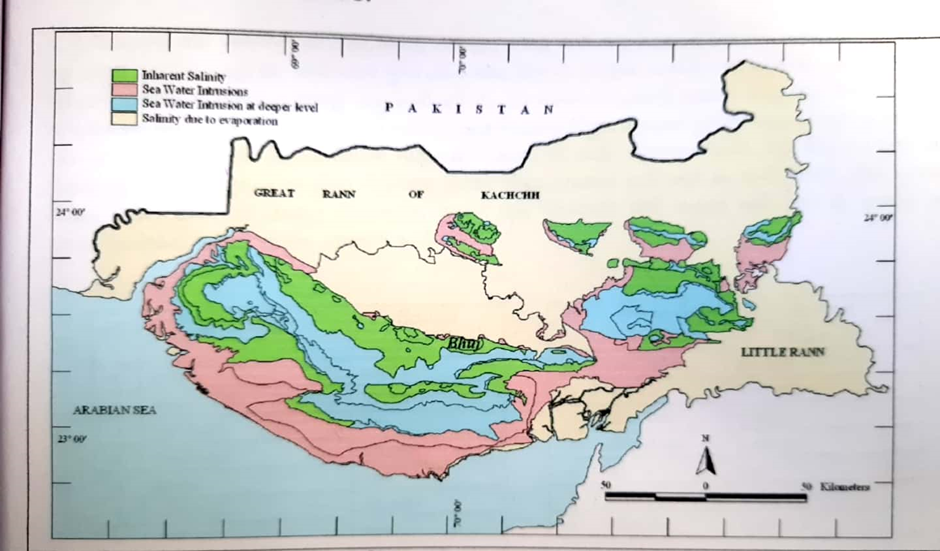
૬.૫ કરોડ વર્ષ પહેલા કચ્છની જમીન પણ દરિયાની બહાર ઉપસી આવવાની શરૂઆત થઈ હતી. જે સમયને પૃથ્વીના ઉત્પતિ કાળનાં મેસોઝોઇક યુગ તરીકે ઓળખાવવામાં આવે છે. અને કચ્છમાં મળી આવતા અગત્યનાં દરિયાઈ જીવાવશેષો જેવા કે, એમોનોઈડ વગેરે તે બાબતની પુર્તતા કરે છે. કચ્છમાં મળી આવતા શેલ (મુલઈ), ઝીણાદાણાવાળો સાગ (ફાઈન ગ્રેઈન સેન્ડ સ્ટોન)ના એકાંતરીકરણ (ઈન્ટરકેલેશન) તથા ચિકણી માટીના ખડકો, ચુનાના પથ્થરનાં ખડકોના એકાંતરીકરણ એ દરિયાઈ બનાવટનાં ખડકો હોવા છતાં પણ કરછનાં મોટો ભાગનાં ડુંગરો પર મળી આવે છે જે સૂચવે છે કે કચ્છની ધરતીની ઉત્પતિ દરિયામાંથી થઈ છે. જેથી આજે પણ આ ખડકોમાં આવતું પાણી ઘણી જ વધારે માત્રામાં ખારાશ ધરાવે છે. આવી ખારાંશને Inherent Salinity કહેવાય છે.

આશરે ૧૦ કરોડ વર્ષથી કચ્છના સાગ પથ્થરમાં સંગ્રહિત છે પાલર પાણી

આ સમય બાદ જમીનનાં પેટાળમાં રહેલો લાવારસ, પ્લેટો સરકવાનાં કારણે ઉભા થયેલ તણાવ તથા દબાણ તેમજ વજનની અસમતુલાને પૃથ્વીના પોપડા પર નીચેથી દબાણ કરવા લાગ્યો જેને લીધે જમીનનો ભાગ દરિયાથી ઉપર આવવા લાગ્યો જેમ જેમ જમીન ઉપર આવવા લાગી તેમ તેમ તેના પર પર્યાવરણીય પરિબળોની અસરોને લીધે તથા વરસાદની અસરને લીધે નદીનાળાઓ વહેવા શરૂ થયા જે જુના ડુંગરોનું ધોવાણ થતાં અને જમીન પર પથરાતાં તે જુરાસિક કાળ બાદના ક્રિટેસીયા કાળનાં સાગ પથ્થર (સેન્ડસ્ટોન) રૂપે જમીન પર પથરાયો અને આ પ્રક્રિયા પુરી થાય તે પહેલા જમીન નીચેના જવાળામુખીનું દબાણ સહન ન થતાં મોટો પાયે જવાળામુખીની પ્રક્રિયા સમગ્ર પૃથ્વી પર થઈ જેથી જમીન પર કાળમીંઢ જેવા પથ્થરો બન્યા. આ પ્રક્રિયા લગભગ ૬.૫ થી ૮ કરોડ વર્ષ વચ્ચેની છે. કચ્છમાં મળી આવતાં ઘીણોધર, કાળો ડુંગર વગેરે આ પ્રકારની જવાળામુખીની પ્રક્રિયાના દૃષ્ટાંત છે. આ સમયકાળને પૃથ્વીની ઉત્પતિની ઈતિહાસના ડેક્કનટ્રેપ (કાળમીંઢ/બેસાલ્ટ) તરીકે ઓળખાય છે. આમ જુરાસીક કાળ પછીના ક્રિટેસીયસ તથા ડેકકનટ્રેપ સમયનાં ખડકો અનુક્રમે નદીના વહેતા પાણીથી તથા જવાળામુખીથી બન્યા હોઈ તેમાં ખારાશનું પ્રમાણ નહિવત્ત છે. આજે કચ્છમાં જે સાગ પથ્થર તરીકે ઓળખાય છે, તેમાં મળી આવતું ભુગર્ભજળ આશરે ૧૦ કરોડ વર્ષથી સંગ્રહિત વરસાદનું મીઠું પાણી છે.

જવાળામુખીથી બનેલ કાળમીંઢ પથ્થર જમીનથી બહાર આવ્યા બાદ પૃથ્વીનાં વાતાવરણની અસરમાં આવતા તેમાં રાસાયણીક ખવાણ થવાને લીધે લેટેરાઈટમાં પરિવર્તન થવાનું શરૂ થયું જે સમયને કચ્છમાં ટર્સરી યુગની શરૂઆત ગણવામાં આવે છે. અને આ યુગમાં કચ્છની જમીનનો પશ્ચિમ ભાગ હજી પણ દરિયામાં હતો જયાંથી કાળક્રમે દરિયો બહાર નિકળી જતાં પશ્ચિમ ભાગમાં ચુનાનાં પથ્થર, ચીકણી માટીનાં ખડકો વિપુલ પ્રમાણમાં મળી આવે છે.

ધરતીકંપને લીધે સિંધુ નદીના વહેણ કચ્છનાં રણમાંથી ફંટાઈ ગયાં.

ગત સપ્તાહે આપણે જે ટર્સરી યુગની શરૂઆતની વાત કરી તે જમીની ઊથલપાથલની પ્રક્રિયા આશરે એક લાખ વર્ષ પહેલા ચાલુ હતી એવું કહેવાયું છે.

૧૮ કરોડ વર્ષ પહેલા ગુજરાતની ઉત્તર-પુર્વનો થોડો ભાગ જ જમીન સ્વરૂપે હતો તેમાંથી ૨૦ લાખ વર્ષની આસપાસ સૌરાષ્ટ્ર તથા કચ્છનો મેઈનલેન્ડ પ્રદેશ દરિયાથી બહાર ઉપસી આવ્યો હતો ત્યાર બાદ છેલ્લા ૨૦૦૦૦ થી ૫૦૦૦ વર્ષ દર્મિયાન સમગ્ર ગુજરાત તથા સૌરાષ્ટ્રનો તમામ ભાગ મોટા ભાગનો કચ્છ મેઈનલેન્ડ તથા કેટલાક ટાપુઓ બહાર આવ્યા અને અંતે ૫૦૦૦ વર્ષ પહેલા લગભગ હાલમાં છે તે ગુજરાત, સૌરાષ્ટ્ર તથા કચ્છનું સ્વરૂપ અસ્તિત્ત્વમાં આવ્યું. દરિયાની આવનજાવન સાથે તથા જવાળામુખીની પ્રક્રિયા સાથે કચ્છની ધરતી પર ધરતીકંપ જેવી ટેકટોનિક પ્રક્રિયાનાં પણ ઉદારણ જોવા મળે છે જે બધી પ્રકિયાનાં ફળ સ્વરૂપે કચ્છની આજની જમીનનું સ્વરૂપ જોવા મળે છે. છેલ્લે ૧૮૧૯ માં થયેલ ધરતીકંપને લીધે કચ્છનાં રણમાં અલ્લાહબંધ બન્યો હતો જેને લીધે સિંધુ નદીના વહેણ જે પહેલા કચ્છનાં રણમાંથી વહેતાં હતાં ફંટાઈ ગયેલ.

પૃથ્વી પર જીવસૃષ્ટીની શરૂઆત આમ તો લગભગ ૩૫૦ કરોડ વર્ષ પહેલા થઈ હતી. સૌથી પહેલો દરિયાઈ જીવ અમીબા (એકકોષી) હતો ત્યાર બાદ તેમાંથી ધીરેધીરે બીજા સજીવો બનવાની શરૂઆત થઈ જેમાં અમીબા પછી માછલીઓ અસ્તિત્ત્વમાં આવી ત્યાર બાદ નાના જીવાણું અસ્તિત્ત્વમાં આવ્યા ત્યાર બાદ પ્રાણીઓ અસ્તિત્ત્વમાં આવ્યા અને પછી ડાયનોસોર અને સસ્તન પ્રણીઓ ઉત્પન થયા અને ત્યાર પછી પક્ષીઓ અસ્તિત્વમાં આવ્યા. આમ, ધીરેધીરે પૃથ્વી પર જીવ સૃષ્ટિની રચના થઈ હતી. કચ્છમાં વનસ્પતી ઉગવાની પ્રક્રિયા આશરે ૭ થી ૮ કરોડો વર્ષ પહેલા થઈ હતી. જેની નોંધ અને પુરાવા આજના સંશોધનમાં શક્ય બન્યા છે.

દરિયાઈ ગમન – આગમનના લીધે કચ્છનાં ભુસ્તરની રચના

કચ્છનાં ભુસ્તરની રચના મુખ્યત્વે દરિયાઈ ગમન – આગમન અને ટેકટોનિક પ્રક્રિયા જવાબદાર છે. આવી પ્રક્રિયાઓ જેવી કે, જવાળામુખી ફાટવાની લીધે કે ધરતીકંપ થવાની લીધે થઈ છે જેના લીધે જુદા જુદા ખડકો બન્યા છે. આ ખડકો પાણી સંગ્રહના સ્ત્રોત પણ છે. ક્યાંક જવાળામુખીનાં કારણે અગ્નિકૃત ખડકો બન્યા તો ક્યાંક દરિયાઈ અને વહેતા પાણી તેમજ હવાનાં લીધે જળકૃત ખડકો બન્યા છે અને ટેકટોનિક પ્રક્રિયાને કારણે કેટલાક વિકૃત ખડકો પણ બન્યા છે.

જેમાંથી કચ્છમાં નીચે પ્રમાણેના મુખ્ય જળકૃત અને અગ્નિકૃત ખડકો જોવા મળે છે.

પ્રકારનામબનવા માટે જવાબદાર પરિબળ
જળકૃતસેન્ડસ્ટોનદરિયાઇ પાણી, નદીના વહેતા પાણી, હવાથી ઉડીને આવેલ રેતી
શેલદરિયાઇ પાણી, નદીના વહેતા પાણી
ચીકણી માટીદરિયાઇ પાણી તથા નદીના પાણીનાં સમાગમના સ્થાને બન્નેની
ચુનાનો પત્થરદરિયાઇ પાણીમાં ચુનાનો નિતાર
અશ્મિયુક્ત ચુનાનો ખડકદરિયાઈ પાણી
માર્લદરિયાઇ પાણીમાં અતિ સુક્ષ્મ ચુનાનો પાવડરનો નિતાર
અગ્નિકૃતકાળમીંઢજવાળામુખી ફાટવાથી લાવારસનું જમીન પર આવીને તરતજ ઠંડા પડવું
વિકૃતક્રીસ્ટલાઇન લાઇમસ્ટોનજવાળામુખી જેવી પક્રિયાના કારણે ચુનાના પત્થરમાં ઘુસી ગયેલ લાવારસના કારણે પેદા થયેલ ગરમી તથા દબાણને કારણે આવેલ બદલાવ
ફોલ્ટ બ્રેસીયાસ્તરભંગના કારણે બનેલ ખડકોના ટુકડાઓનું પાછા નવા પ્રકારના ખડકમાં રૂપાંતરણ


જળસંગ્રહની વર્તણૂકના આધારે અલગ અલગ પ્રકારના ખડકોની ઓળખ

જમીનની સપાટીથી નીચે મળી આવતા પાણીને આપણે ભુગર્ભ જળ તરીકે ઓળખીએ છીએ. આવું પાણી કેટલી ઊંડાઇએ મળી આવે છે તથા તેનું ત્યાં મળી આવવા માટે કયા પરિબળો જવાબદાર છે તેના આધારે તેને વર્ગીકૃત કરવામાં આવે છે. ખડકોની પાણી સાથે અલગ અલગ પ્રકારની વર્તણુંકના આધારે એકવીફર, એકવીલુડ, એકવીફયુઝ અને એકવિતાર્ડ એમ ચાર પ્રકારે ઓળખ અપાઈ છે.

સેન્ડસ્ટોન, વેધર્ડ બેસાલ્ટ, કાંપ, રેતી વગેરે જેવા ખડકો કે જે પાણીનો સંગ્રહ કરે તથા મુકત પણ કરે છે તે કચ્છમાં મળી આવતા એકવીફરનાં ઉદાહરણ છે. કલે/ચીકણી માટી, લાઈમસ્ટોન જેવા મુખ્ય સ્ત્રોતો પાણી સંગ્રહ કરે પણ મુકત નથી કરતાં તેને એકવીલુડ કહે છે. એવા ખડકો કે જે પાણી સંગ્રહ પણ ના કરે અને મુકત પણ ના કરે તેને એકવીફયુઝ કહેવામા આવ્યા છે. જેના ઉદાહરણમાં આપણે કોમ્પેકટ બેસાલ્ટ (કઠણ કાળમીંઢ) કહી શકીએ. કાંકરા, રેતી, ચીકણી માટીના લૂસ પ્રકારના ખડકો એ ચોથા પ્રકાર એકવિતાર્ડમાં ગણાય છે.

કોઈ પણ ખડકની એકવીફર હોવા માટેની અગત્યની લાક્ષણિકતાઓ એ તેની છિદ્રતા તથા તેની પાણી વહન કરવાની ક્ષમતા પર આધાર રાખે છે. છિદ્રતા (પોરોસીટી) એ સંગ્રહ ક્ષમતા નકકી કરતું પરિબળ છે જેનો મુખ્ય આધાર તેમાં રહેલા કણોની (ગ્રેઈન) સાઇઝ, તેમની વચ્ચેની જગ્યા તથા કણોના આકાર પર રહેલો છે. બીજો આધાર વહનતા છે જેને આપણે પરમીયાબીલીટી પણ કહીએ છીએ, એ પાણી મુકત્ત કરવાની ક્ષમતા નકકી કરતું પરિબળ છે જે ખાસ કરીને એકવીફર ખડકનું નમન, રીચાર્જની દિશા, આસપાસની ટેકટોનિક વ્યવસ્થા તથા ભૌગોલીક વ્યવસ્થા પર આધારિત છે.

કચ્છનાં ભુગર્ભજળમાં ખારાશનાં મુખ્યત્વે ત્રણ સ્ત્રોતો છે.

જે એકવીફરની આપણે અગાઉ વાત કરી તેમાં ખારાશ એ મુખ્ય મુઝવતો પ્રશ્ન છે. તેથી ખારાશની પ્રક્રિયા સમજવી જરૂરી છે. તે માટે કચ્છની ભુસ્તરીય રચના તથા આબોહવાકીય પરીબળો જવાબદાર છે.

કચ્છનાં ભુગર્ભજળમાં ખારાશનાં મુખ્યત્વે ત્રણ સ્ત્રોતો છે. ડુંગરાળ વિસ્તારનાં ખડકોની ખારાશ કે જે મુખ્યત્વે દરિયાઈ પાણીની પ્રક્રિયાથી બનેલા હોવાનાં લીધે જન્મજાત સચવાયલી ખારાશ છે. જ્યારે રણ તથા બન્ની પ્રદેશમાં ઉચા બાષ્પીભવનાંકને લીધે દીન પ્રતિદીન વધતી જતી ખારાશ છે. જ્યારે ત્રીજું ખુબ જ અગત્યનું પરિબળ છે જે માનવીય વૃત્તિને લઇને છે જેમાં ભુગર્ભજળનું શોષણ મુખ્ય છે, જેનાં લીધે દરિયાઈ પાણી એ ભુગર્ભજળમાં ધસી આવીને તેને ખારું બનાવે છે.

  •     કચ્છમાં ખારાશ વાળા વિસ્તારો

ખારાશની વાત વખતે બન્નીના ઘાસિયા મેદાનની વાત છે જરૂરી

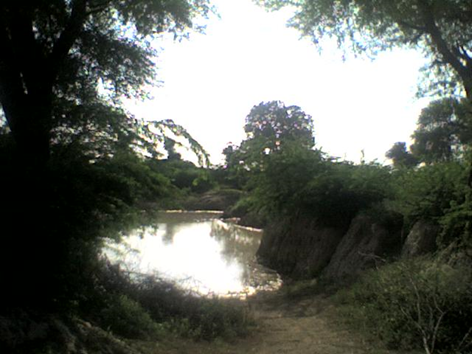
બન્નીના ઘાસિયા મેદાનો સંપૂર્ણપણે દરિયાની ખારાશવાળા છે જે દક્ષિણમાં મેઇન લેંડ, લિનિયર ટ્રેન્ડસ અને ઉત્તરના ટાપુઓને આવરી લે છે. બન્નીનાં ઘાસિયાં મેદાનો એકદમ સપાટ કહી શકાય કે જે દરિયાની સપાટીએથી ૩ થી ૧૦ મીટરની ઊંચાઇએ આવેલાં છે (રોય, 1973૩). આ વિસ્તારની જમીન રેતાળથી ચીકણી માટીની બનેલી છે. જેથી તેની નિતારશકિત ઓછી હોવાથી વરસાદી પાણી આ સંપૂર્ણ વિસ્તારમાં ફરી વળે છે (જીઇસી ૧૯૯૫). દક્ષિણના મેઇન લેંડ અને ઉત્તરના ટાપુઓ આ વિસ્તારના આવક્ષેત્ર છે. સારો વરસાદ પડે ત્યારે અહીં ઘાસ અને ઓછી ઊંચાઇનાં વૃક્ષો ઊગી નીકળે છે. ફોટો દ્વારા વધુ સ્પષ્ટતા મળશે.

ઘાસિયાં મેદાનો વચ્ચે કુદરતી ખાડાવાળા વિસ્તારો પણ આવેલા છે.

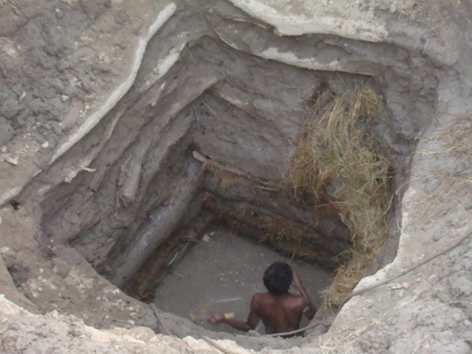
બન્નીનાં ઘાસિયાં મેદાનો વચ્ચે કેટલાક કુદરતી ખાડાઓવાળા વિસ્તારો પણ આવેલા છે જેને સ્થાનિક ભાષામાં તેના ક્ષેત્રફળ આધારે ‘ઢંઢ’ અથવા ‘ઠઠ’ ના નામથી ઓળખવામાં આવે છે જે ભૂગર્ભના ભંગાણની પક્રિયાનો અણસાર આપતાં જમીનનાં સ્વરૂપો અને દરિયો બહાર નીકળી ગયા બાદ રહી ગયેલા ભૂમિ સ્વરૂપો છે. અહીં ચોમાસા બાદ પાણીથી ભરાઇ જતા હોય છે અને બારેમાસ પાણી ભરાઇ રહેતાં યાયાવર પક્ષીઓને આશ્રયસ્થાન પૂરું પાડે છે તેથી તે આકર્ષણનું મુખ્ય કેન્દ્ર છે. છારીઢંઢ એ અહીંનું ખૂબ જાણીતું ભૂમિ સ્વરૂપ છે. ઠઠ એ પ્રમાણમાં છીછરા ખાડાઓ છે, જેમાં ઉનાળે પાણી સુકાઇ જાય છે, જે આ વિસ્તારમાં પીવાના પાણી માટે સ્ત્રોત તરીકેની સવલત પૂરી પાડે છે.

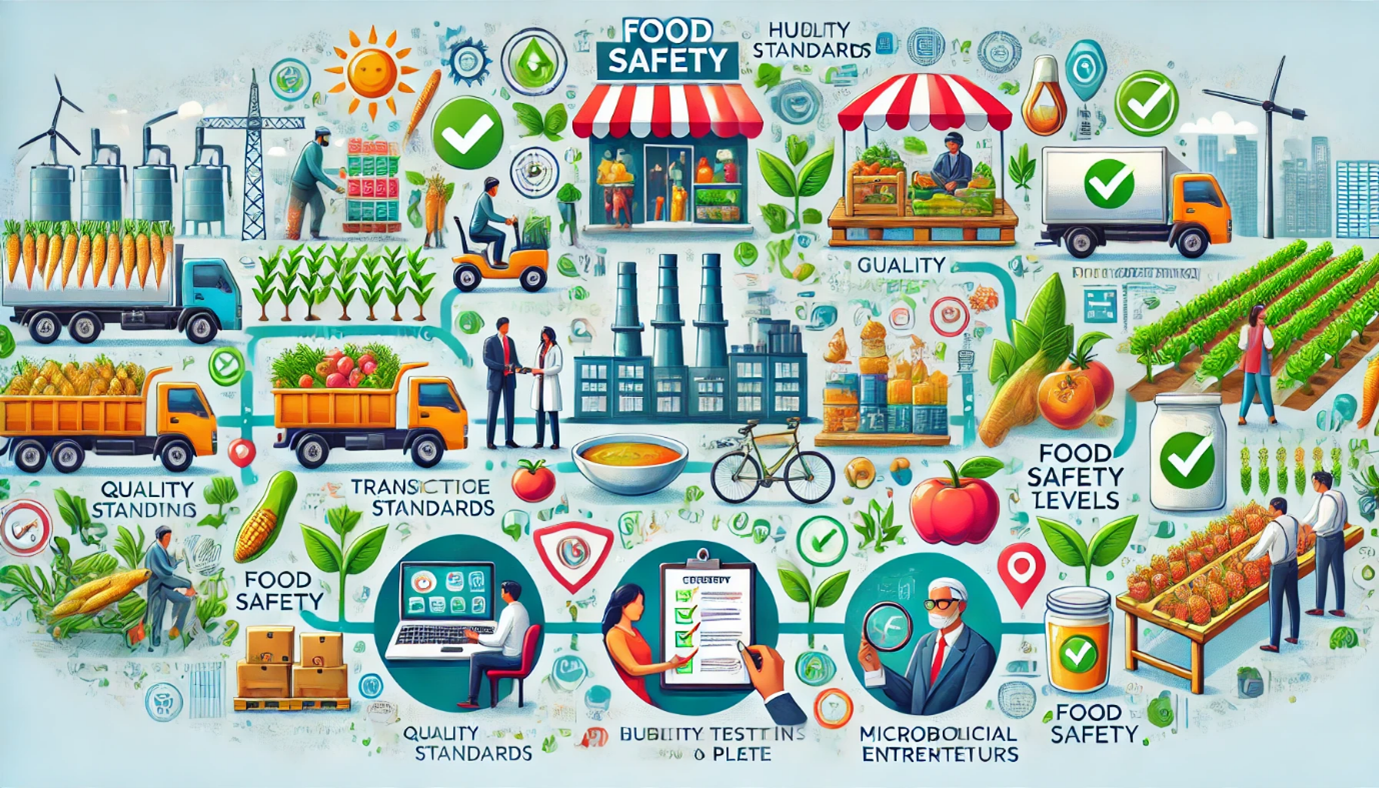
Food Safety for Nutrition Entrepreneurs

  Food Safety for Nutrition Entrepreneurs   Dr. Bhaskar Datta,Associate Professor, Chemistry  (Jointly with Biological Sciences and Engineer...